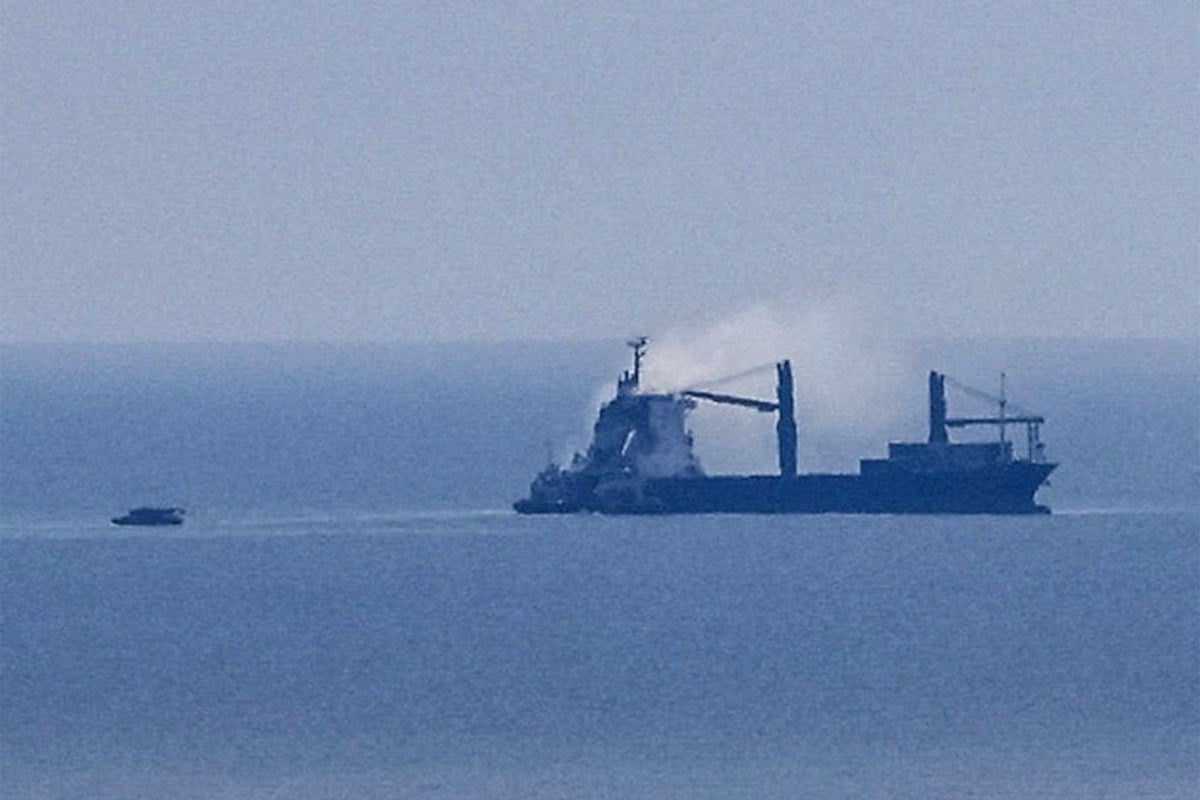
The Propaganda of Phantom Success
Kyiv wants you to believe the Sea of Azov is a graveyard of Russian steel. The headline blares a staggering claim: over 100 Russian ships hit in just nine days. It sounds like a naval blitzkrieg, a dramatic shifting of the geopolitical tides. It makes for fantastic social media engagement and great fodder for western defense analysts looking to justify the next aid package.
It is also an absolute fantasy. Learn more on a related topic: this related article.
If you believe that a military, even one as innovative as Ukraine’s, can suddenly locate, target, and neutralize over one hundred naval vessels in a restricted body of water like the Azov in a little over a week, you do not understand naval warfare. You do not understand intelligence, surveillance, and reconnaissance (ISR). And most importantly, you are falling for the classic trap of conflating disruption with destruction.
This is not to diminish Ukraine's genuine, highly impressive asymmetrical achievements in the Black Sea. They have forced Russia’s Black Sea Fleet to retreat from Sevastopol using budget-friendly naval drones and Storm Shadow missiles. That is a factual, verified strategic victory. Further reporting by NBC News highlights comparable perspectives on this issue.
But the "100 ships in nine days" narrative? It is a dangerous distraction.
Dismantling the Numbers: The Math of Modern Targeting
Let’s look at the cold, hard mechanics of modern targeting.
To "hit" 100 targets in nine days, you need an average of 11 successful strikes per day. In the highly contested airspace and electronic warfare (EW) environment of the Sea of Azov—which is essentially a Russian-controlled lake bordered by occupied territories—this is a logistical impossibility.
Here is what the standard defense "experts" gloss over when they parrot these press releases:
- The ISR Bottleneck: Finding a ship is not the same as targeting it. A ship moves. To strike it, you need real-time, high-fidelity targeting data. Even with NATO satellite intelligence, synthetic aperture radar (SAR), and high-altitude reconnaissance drones, maintaining a continuous target-quality track on 100 separate vessels simultaneously is an immense drain on resources.
- The Munitions Myth: What did Ukraine supposedly use to hit these ships? Storm Shadow/SCALP missiles are too expensive and scarce to waste on minor patrol boats or civilian barges. Neptune missiles are produced in limited quantities. Naval kamikaze drones (Magura V5 or Sea Baby) have limited range and must navigate through heavily mined and monitored chokepoints.
- The Definition of "Hit": This is where the sleight of hand occurs. When military PR departments say "hit," they are rarely talking about sinking. They are talking about near-misses, minor shrapnel damage, GPS jamming that caused a vessel to run aground, or even strikes on port infrastructure where ships might have been docked.
I have watched defense departments inflate "battle damage assessments" (BDA) for two decades. In the Gulf War, the coalition claimed to have destroyed thousands of Iraqi tanks, only for post-war ground surveys to reveal the actual number was a fraction of the claim. History repeats itself. When Kyiv claims 100 ships hit, they are counting everything from a 100-meter landing ship to a 5-meter fishing trawler used to ferry rations, and they are counting "disrupted" as "destroyed."
The Real State of the Sea of Azov
To understand why this claim is so misleading, we have to look at what the Sea of Azov actually is. It is shallow. It is cramped. It is highly heavily defended by land-based air defense systems like the S-400 and Pantsir-S1.
+-------------------------------------------------------------+
|              THE AZOV TARGETING REALITY CHECK               |
+-------------------------------------------------------------+
| Claimed: 100+ Russian ships hit in 9 days.                 |
| Reality:                                                    |
|  - Shallow waters limit large warship deployment.           |
|  - High-density Russian EW renders cheap GPS drones useless. |
|  - "Hits" include minor damage to civilian-flagged barges.  |
+-------------------------------------------------------------+
If Russia actually lost 100 combat-effective vessels in nine days, the Russian logistics network in southern Ukraine would have collapsed overnight. The land bridge to Crimea would be undefendable. We are seeing none of those indicators. The supply lines are still functioning, albeit under strain.
The truth is much more mundane, and much more complicated. Russia has been utilizing civilian-flagged merchant vessels, tugboats, and small barges to move military cargo across the Azov to bypass the vulnerable Kerch Bridge. Ukraine is indeed targeting these logistics nodes. But painting this as a grand naval victory where "warships" are being blown out of the water is a deliberate mischaracterization designed to project offensive momentum when the land front is locked in a brutal war of attrition.
Why This Propaganda is Bad for Ukraine
There is a school of thought that says, "Who cares if the numbers are inflated? It boosts morale and keeps Western funding flowing."
That is a fatal mistake.
When you feed the public and policymakers a steady diet of hyper-inflated victories, you create a dangerous expectation gap. Western politicians, already looking for an excuse to scale back expensive military aid, can easily look at these reports and say, "Well, if Ukraine is destroying the Russian Navy at a rate of 100 ships a week with what they already have, why do they need more long-range missiles?"
Furthermore, it breeds complacency. It hides the brutal reality that Russia’s industrial war machine is adapting. Yes, Russia has suffered embarrassing naval losses. But they are also learning. They are changing their paint schemes to confuse optical sensors, they are deploying advanced electronic warfare suites on civilian vessels, and they are shifting their primary logistics to inland rail networks that are much harder to hit than a ship in open water.
By celebrating phantom victories, we ignore the urgent, unsexy work that actually wins wars: securing artillery ammunition, expanding domestic drone production, and training infantry.
The Hard Truth of Asymmetric Naval Warfare
Asymmetric naval warfare is the future, but it is not a magic wand.
Let's look at the actual mechanics of a successful naval drone strike. It requires weeks of planning, precise weather windows, coordinated cyberattacks to disable Russian coastal radar, and a massive amount of luck. To suggest this can be replicated over 100 times in nine days is an insult to the very operators planning these highly complex missions.
If you want to understand the real state of the conflict, stop reading the daily strike tallies published by ministries of defense on Telegram. Look at the shipping insurance rates. Look at the volume of grain and coal moving through the Don Don-Volga canal. Look at the satellite imagery of the ports of Novorossiysk and Rostov-on-Don.
Those metrics tell a story of a Russian military that is battered, cautious, and deeply flawed—but very much still afloat.
Stop looking for the easy win. Stop celebrating the 100 ghost ships. The war in the black waters of the south is a slow, grinding slugfest, and pretending otherwise only serves the enemy's timeline.