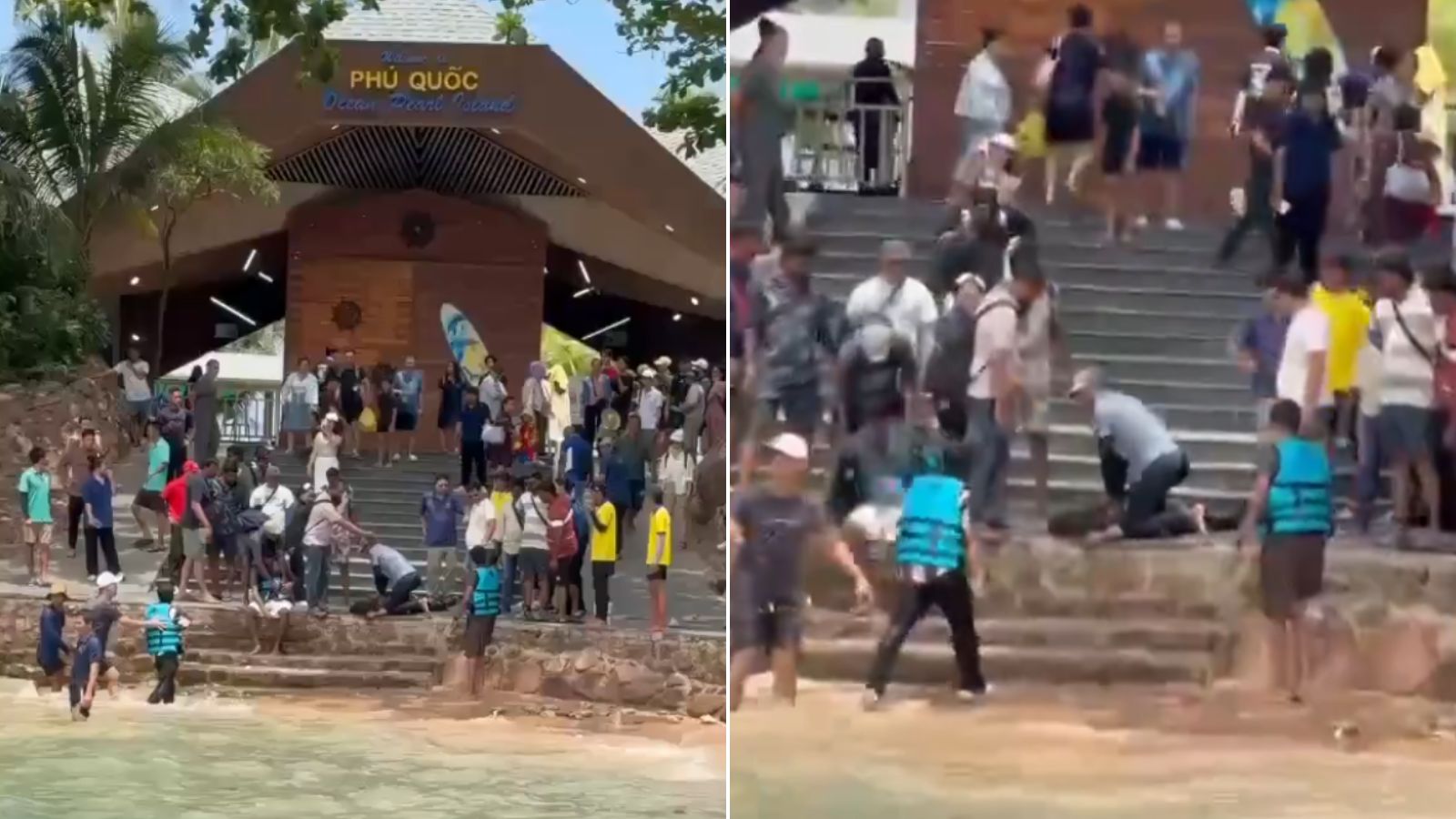
A tragic maritime accident off Vietnam's Phu Quoc island has left 15 Indian tourists dead after a sightseeing vessel capsized in rough waters. The incident exposes severe gaps in maritime safety enforcement and unregulated tour operations in one of Southeast Asia's fastest-growing vacation hotspots. While local authorities blame sudden adverse weather conditions, industry insiders point to a more systemic failure. Overcrowded vessels, unlicensed operators, and a lack of real-time coastal monitoring routinely put lives at risk. This disaster is not an isolated stroke of bad luck; it is the predictable result of prioritizing rapid tourism growth over basic infrastructure safeguards.
The Breaking Point of Sudden Infrastructure Growth
Phu Quoc was once a sleepy island known for fish sauce and pepper plantations. Over the last decade, it transformed into a glittering hub of mega-resorts, casinos, and amusement parks. The rush to cash in on international travelers, particularly the surging market of affluent Indian tourists, outpaced the development of regulatory oversight. Also making waves lately: The Fault Lines in India’s New Zealand Dairy Strategy.
When thousands of visitors descend on a coastal region daily, the demand for island-hopping tours skyrockets. Local fishermen and small-scale entrepreneurs quickly convert modest boats into tourist vessels.
Many of these converted craft lack the stability engineering required for commercial passenger transport. They sit high in the water, making them dangerously susceptible to capsizing when hit by broadside waves or when passengers suddenly shift to one side to take photographs. More information on this are detailed by Al Jazeera.
Maritime records across emerging Southeast Asian markets show a recurring pattern. A destination becomes popular overnight. The local coast guard, often understaffed and equipped with outdated patrol boats, cannot keep up with the volume of daily departures. Inspections become a formality, consisting of paperwork checks rather than rigorous physical evaluations of hull integrity, ballast, and emergency equipment.
The Fatal Convergence of Weather and Weight
Initial reports indicate that the vessel encountered sudden squalls on its return journey from the southern An Thoi archipelago. Witnesses stated the sky darkened within minutes, a common phenomenon during the monsoon transition periods in the Gulf of Thailand. However, weather alone rarely sinks a properly managed commercial vessel.
The real culprit is almost always the compounding factor of overcrowding and improper weight distribution.
- Passenger Manifest Discrepancies: Local manifests frequently underreport the number of souls on board to evade taxation or capacity limits. When an emergency strikes, rescue crews discover they are missing critical headcount data.
- Life Jacket Negligence: Although life jackets are legally mandated, enforcement is notoriously lax. Tourists often refuse to wear them due to heat, or keep them stowed away under seats where they become inaccessible during a sudden roll.
- Top-Heavy Customizations: To accommodate more tourists, boat owners frequently add upper decks or canopy roofs. This raises the vessel's center of gravity, turning a standard hull into a rolling hazard in choppy seas.
Consider a standard 15-meter wooden tourist boat. Under ideal conditions, it safely carries 20 passengers. Add an unapproved upper viewing deck, load it with 35 passengers, and encounter a two-meter wave. The physics are unforgiving. The vessel lacks the righting leverage to recover from a steep heel. Once water breaches the gunwales, sinking happens in less than ninety seconds.
The Fiction of International Safety Standards
Global travelers assume that purchasing a tour through a reputable platform or hotel concierge guarantees a baseline of safety. This is a dangerous misconception.
Foreign booking agencies rely on local destination management companies. These companies, in turn, subcontract the actual transport to the lowest bidding boat captain. The chain of custody for safety accountability is broken at every step.
International maritime codes, such as the International Convention for the Safety of Life at Sea (SOLAS), technically apply to commercial shipping. Smaller domestic passenger vessels fall under local provincial jurisdiction. In practice, this means rules are dictated by municipal officials who are often hesitant to disrupt the local economy by grounding substandard fleets.
A major gap lies in the absence of mandatory Automatic Identification System (AIS) transponders on small tourist craft. When the vessel capsized off Phu Quoc, valuable time was lost simply trying to locate the accident site. Nearby fishing boats responded first, but without an automated distress signal hitting a central command post, official search and rescue assets arrived far too late for the 15 victims trapped beneath the hull.
Balancing Accountability and Economic Survival
Fixing this broken system requires more than issuing fines after a tragedy. It demands a complete overhaul of how coastal tourism economies operate.
The immediate reaction from government officials is usually a temporary ban on all boat tours, followed by public promises of strict crackdowns. This solves nothing long-term. Once the media scrutiny fades, the ban is lifted, and operators return to their old habits because their economic survival depends on high volume and low overhead.
A sustainable solution requires a tiered licensing system managed by an independent national maritime authority, completely separate from local tourism boards.
| Regulatory Layer | Required Action | Economic Impact |
|---|---|---|
| Vessel Certification | Mandatory annual dry-dock stability testing by certified marine engineers. | Increases maintenance costs but eliminates structurally unsound hulls. |
| Real-Time Tracking | Mandatory GPS/AIS installation linked to a centralized coast guard dashboard. | Minimal tech investment that drastically reduces emergency response times. |
| Digital Passenger Logs | Cloud-based manifests updated via mobile app before the engines can legally start. | Eliminates corruption and underreporting of passenger counts at the pier. |
The Passenger Dilemma
For the individual traveler, the lesson from Phu Quoc is grim but necessary. You cannot rely on local authorities to protect you. You must become your own safety inspector before stepping onto any watercraft in developing tourist markets.
Walk away from any vessel where the crew does not actively force every passenger to don a life jacket before leaving the dock. Look at the waterline of the boat; if the exhaust pipes or lower trim lines are submerged while the boat is stationary, it is overloaded. Insist on seeing the physical location of life rings and fire extinguishers. If the crew laughs off your concerns, step back onto the pier. A canceled excursion is vastly superior to a maritime statistic.
The global travel industry faces a reckoning. Destinations like Phu Quoc cannot continue to court high-spending international tourists while maintaining third-world safety infrastructure beneath the surface. Until the cost of losing a license exceeds the profit of cutting corners, the blue waters of popular tropical islands will remain a gamble where the house always wins.