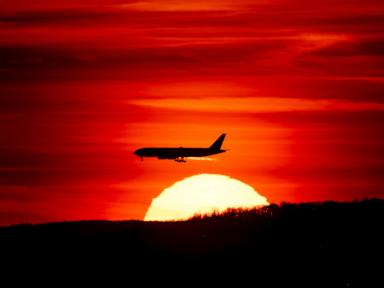
You sit back, pop your headphones on, and stare out the window as the plane climbs above the clouds. Cruising altitude feels safe. Calm, even. But miles above the earth, an invisible hazard surrounds you. Crews flying commercial routes absorb more cosmic radiation than workers at nuclear power plants.
Most travelers never think about it. Flight crews live with it every single day. Recent occupational health findings show that commercial pilots and flight attendants face a significantly elevated risk of dying from radiation-linked cancers. It's a sobering reality check for anyone spending their life in the sky.
Let's break down why this happens, what the numbers actually reveal, and what needs to change.
The Invisible Threat Above the Clouds
Earth's atmosphere acts as a massive shield. It protects us from galactic cosmic rays and solar particle events originating deep in space. Strip away that protective blanket by climbing thirty-five thousand feet into the troposphere, and radiation levels spike.
At typical cruising altitudes, cosmic radiation intensity is roughly one hundred times higher than at sea level. Commercial jetliners fly through this energetic particle soup hour after hour. Every trans-Atlantic hop or red-eye transcontinental flight adds another dose to the cumulative total absorbed by the human body.
You don't feel a thing. There's no burn, no hum, no immediate warning sign. It accumulates quietly over years of service.
Epidemiological studies tracking airline crews over decades point to a troubling trend. Rates of melanoma, breast cancer, and various other malignancies run higher among flight personnel than the general population. Aviation medicine researchers have flagged this occupational hazard for years, yet public awareness remains surprisingly low.
The Numbers Behind the Risk
Data tells a stark story. Multiple occupational health investigations, including comprehensive assessments by public health agencies and independent research groups, show elevated standardized mortality ratios for specific cancers among pilots and flight attendants.
Melanoma stands out as a primary culprit. Pilots and flight attendants experience skin cancer rates up to twice as high as people with ground-based jobs. Cockpit windshields block most UVB rays, but UVA rays stream right through commercial glass. Couple that intense solar exposure with high-altitude cosmic radiation, and you get a toxic cocktail for skin cells.
Breast cancer rates among female flight attendants also trigger alarm bells. Irregular circadian rhythms, sleep schedule disruptions, and melatonin suppression from overnight shifts certainly play a role. But radiation exposure compounds the damage. When you disrupt the body's natural clock while simultaneously bombarding cells with ionizing particles, cellular repair mechanisms struggle to keep up.
Organizations like the CDC and NIOSH have published extensive findings on this topic. They note that flight crews receive more occupational radiation exposure than any other professional group in the United States, including radiology technicians and nuclear plant operators.
Think about that for a second. The person serving your coffee or flying your plane is exposed to more ionizing radiation on the job than a technician standing next to an active reactor.
Why Regulatory Blind Spots Persist
If the danger is so clear, why aren't airlines handing out personal dosimeters to every crew member?
Bureaucracy moves slowly. Aviation safety regulations historically focused on mechanical failures, pilot error, air traffic control protocols, and weather hazards. Biological hazards tied to the upper atmosphere fell through the cracks.
Federal guidelines in many countries recommend occupational dose limits for radiation workers, but enforcement and tracking for airline crews remain inconsistent. Some international carriers monitor flight paths and reroute polar flights during periods of elevated solar flare activity. Others leave it entirely up to individual crew members to track their exposure.
Pilots flying polar routes absorb the heaviest doses. Earth's magnetic field dips at the poles, allowing cosmic radiation to penetrate deeper into the atmosphere. Flying from New York to Tokyo over the Arctic circle exposes you to a fraction of radiation that adds up fast over a thirty-year career.
Practical Steps for Aviation Professionals
If you work in aviation, you can't quit your job over cosmic radiation, but you can take smart precautions to mitigate the risk.
First, track your exposure. Several software tools and flight-tracking calculators estimate cosmic radiation dosage based on routes, flight hours, and altitude profiles. Knowing your numbers gives you leverage.
Second, upgrade your personal skin protection. Daily broad-spectrum sunscreen is non-negotiable for pilots and flight attendants, even when it's cloudy outside or you're sitting inside a pressurized cabin. UVA protection matters just as much at thirty thousand feet as it does on a beach in Miami.
Third, prioritize cellular recovery. Sleep hygiene, antioxidant-rich nutrition, and regular health screenings make a massive difference. Catching skin changes early saves lives. Annual dermatological exams should be mandatory for everyone in the industry.
Airlines need to step up too. Flexible scheduling to reduce continuous high-altitude exposure, better monitoring systems, and transparent health education would go a long way toward protecting the people who keep global transit moving.
Stop pretending the sky is a sterile vacuum. It's time to treat high-altitude radiation as the serious occupational health crisis it actually is. Schedule your next screening, wear your sunscreen, and demand better safety standards from the companies profiting off your time in the air.