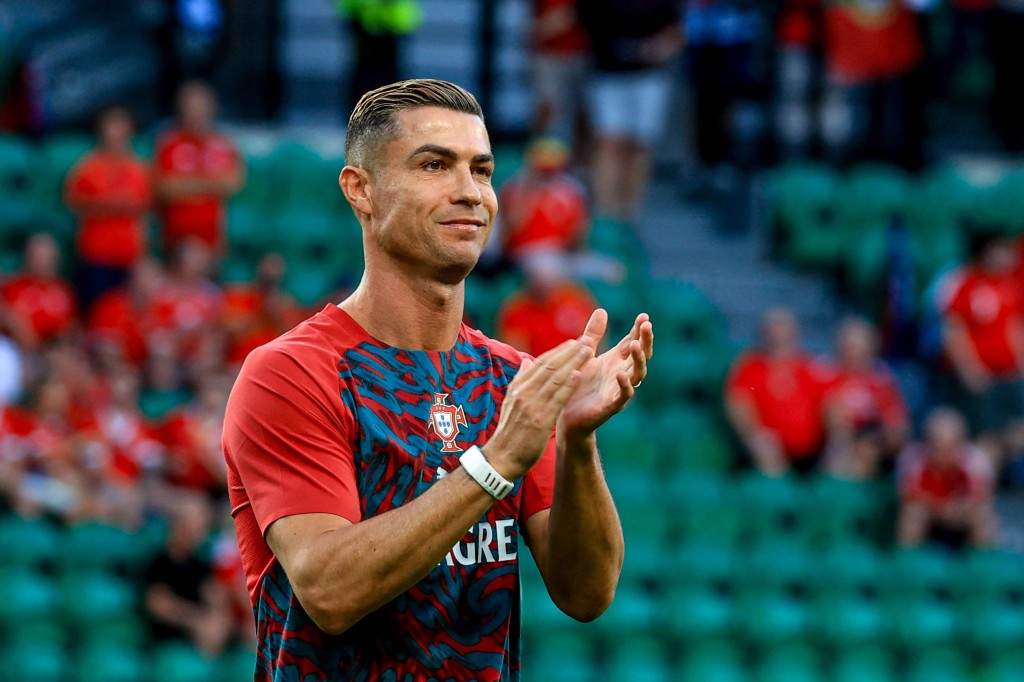
Call it a bitter end if you want. Cry over the final whistle. Write another elegy about the kid from Madeira who dragged a sleepy footballing nation into the cathedral of modern sports.
That reaction is lazy. Sentimental. Comfortably wrong.
Every time a generational athlete approaches the exit ramp, the same predictable script gets recycled. The headline frames the departure as a tragedy. The subtext implies that because the individual story ended without a fairy-tale trophy in hand, the entire chapter was somehow soured or wasted. When the subject is Cristiano Ronaldo and the setting is Portugal, that framing misses the structural reality of how elite squads actually evolve.
Ronaldo did not merely play for Portugal. He forced a cultural reset. Before him, Portugal was routinely cast as a talented, technical, slightly tragic side—capable of producing brilliance in flashes, rarely ruthless enough to turn flair into silverware over a full tournament cycle. Ronaldo brought a different standard. Obsessive conditioning. Relentless penalty-box menace. A refusal to accept moral victories. Euro 2016, the Nations League, over two hundred international caps, more than one hundred and thirty international goals—those numbers do not happen by accident.
Yet the exact traits that built that era are the ones that make an prolonged twilight dangerous for a modern national team.
The Wrong Question Everyone Keeps Asking
When an icon winds down, media coverage and barstool debates default to the same narrow question: Did he get a proper send-off?
That is the wrong question. A national team is not a retirement home for legends, nor is it a monument built to reward past service. International football moves fast. Squad windows are narrow. Tournament football punishes sentimentality ruthlessly.
If you ask whether Ronaldo's exit feels bittersweet, the answer is obvious—of course it does when someone defines an era for two decades. If you ask whether Portugal needed a clean transition away from a single focal point in order to maximize its current talent pool, the answer is even clearer. Yes. Long before the final curtain call became unavoidable.
People Also Ask whether keeping a veteran icon around helps young players "learn the standards." Sounds noble. Usually works the opposite way. When one player's positioning, free-kick routines, penalty hierarchy, and transition targets dictate the attacking shape of the side, younger forwards end up playing around a sun rather than running their own lanes. Standards aren't absorbed by osmosis while standing wide waiting for a back-post cross. They are set by coaching structure, daily training intensity, and clear tactical roles.
Another common question: Does a rough finish tarnish everything he achieved for Portugal? No. Legacy isn't a fragile glass vase that shatters on the last day. A player's career is a body of work, not a single final scene. Treating a late-career decline or an emotional exit as a stain on two decades of excellence confuses recency bias with history.
How Gravity Distorts a Football Pitch
In scouting and match analysis, I have watched clubs and federations burn years and tens of millions of dollars trying to extend the shelf life of all-time greats past their tactical prime. The mistake is almost never about effort or conditioning. Elite professionals like Ronaldo train harder at thirty-nine or forty than most players do at twenty-four.
The issue is tactical gravity.
When a forward is at his peak, pulling defenders out of shape, attacking space at lethal speed, and converting half-chances at an absurd rate, bending the team's attack around him is an advantage. Opponents panic. Full-backs tuck in. Space opens elsewhere.
As age slows acceleration and narrows the zones where a striker thrives—pushing him closer to the penalty spot and away from sustained pressing—that same gravity starts costing the team. Passing lanes become predictable. Attacks slow down waiting for a specific target. High pressing triggers lose synchronization when one player conserves energy for bursts inside the box.
Imagine a scenario where a national coach sets up a modern pressing 4-3-3 with mobile midfielders who thrive on vertical combinations and rapid counter-pressing. If the central focal point prefers to hold his line and pick his moments rather than sprint thirty yards to close down a center-back, the press has a leak. Good international sides—France, Spain, England, Argentina—spot that leak in ten minutes and play right through it.
That is not an insult to Ronaldo's greatness. It is basic geometry and physiology. Time collects from every athlete eventually, even the ones who treat their bodies like precision instruments.
What the "Bitter End" Narrative Misses
The conventional take treats Ronaldo's twilight with Portugal as a sad fall from grace. Look closer at the full arc and you see something far more interesting: a tension between iconography and evolution.
Iconography looks backward. It celebrates monuments, shirt sales, stadium decibels, and unforgettable nights in Lisbon, Paris, or Munich. Portugal's global brand expanded dramatically during the Ronaldo years. Millions of fans who couldn't have named three Portuguese internationals in 1998 knew every detail of Ronaldo's routine, celebration, and record chase.
Evolution looks forward. It asks how a deeply talented generation—midfielders who can control tempo in tight spaces, dynamic wingers, modern full-backs, composed center-backs—plays together without looking over its shoulder.
A transition rarely feels smooth in real time. In sports, endings are messy. Great champions almost never walk off into the sunset holding a trophy on their exact chosen date. Most leave amid debate, lineup arguments, missed chances, and headlines dissecting every minute they stayed on or came off. Calling that "bitter" is just another way of saying reality didn't match a movie script.
The Blind Spots of Going Contrarian
Let's be honest about the downside of pushing back against sentimental narratives.
If you argue that a national team benefits from moving past an all-time icon, you risk sounding cold, ungrateful, or dismissive of historic achievement. Worse, if the team that follows struggles to score in tight knockout games or lacks a cold-blooded finisher when nerves tighten, critics will immediately point to the absence of the old talisman and call the transition premature.
In football, clinical finishing in high-pressure moments is rare. You cannot coach a twenty-two-year-old winger to replicate fifteen years of muscle memory inside a crowded six-yard box during a World Cup knockout tie. Losing a proven killer always carries a real cost—sometimes a painful one.
Acknowledging that risk doesn't invalidate the argument. It keeps the analysis grounded. Every tactical choice is a trade-off between what you gain in structure and mobility and what you give up in proven individual lethality.
Where Authorities Agree—and Where They Diverge
Serious analysts, former players, and tactical thinkers like Jonathan Wilson, Zonal Marking's Michael Cox, and seasoned tournament managers have wrestled with this exact dynamic across decades of international football. When superstars age out of national setups—whether it was Pelé, Johan Cruyff, Zinedine Zidane, or Lionel Messi—the debate always splits along the same fault line.
One camp emphasizes intangibles: dressing-room authority, opponent fear, commercial reach, and the sheer probability that a generational talent can conjure a goal out of nothing when a game is deadlocked.
The other camp emphasizes system coherence: collective pressing, fluid positional rotation, squad longevity, and giving prime-age players full ownership of the pitch.
Both sides have real evidence behind them. The mistake happens when commentators treat the exit itself as proof that the era failed, rather than recognizing it as the natural friction point where one cycle hands off to the next.
Practical Moves for Coaches, Clubs, and Fans
If you run a team, manage a roster, or simply watch the game without rose-tinted glasses, three rules keep you out of trouble during an icon's final stretch:
- Separate tribute from tactics. Honor a legend's history openly, then pick eleven players based on what works best for the next ninety minutes—not the last ten years.
- Plan the succession a cycle early. Never wait until legs are gone and tournament pressure peaks to test how the attack functions without its historic centerpiece.
- Judge eras in full, not by their final frame. A rough last chapter doesn't erase a transformative run. Evaluate the whole arc honestly.
Portugal didn't need a fairy-tale ending to validate what Ronaldo meant to the badge. The transformation had already happened. Letting the curtain fall so the next generation can build its own identity isn't bitter—it's how great footballing nations stay alive.