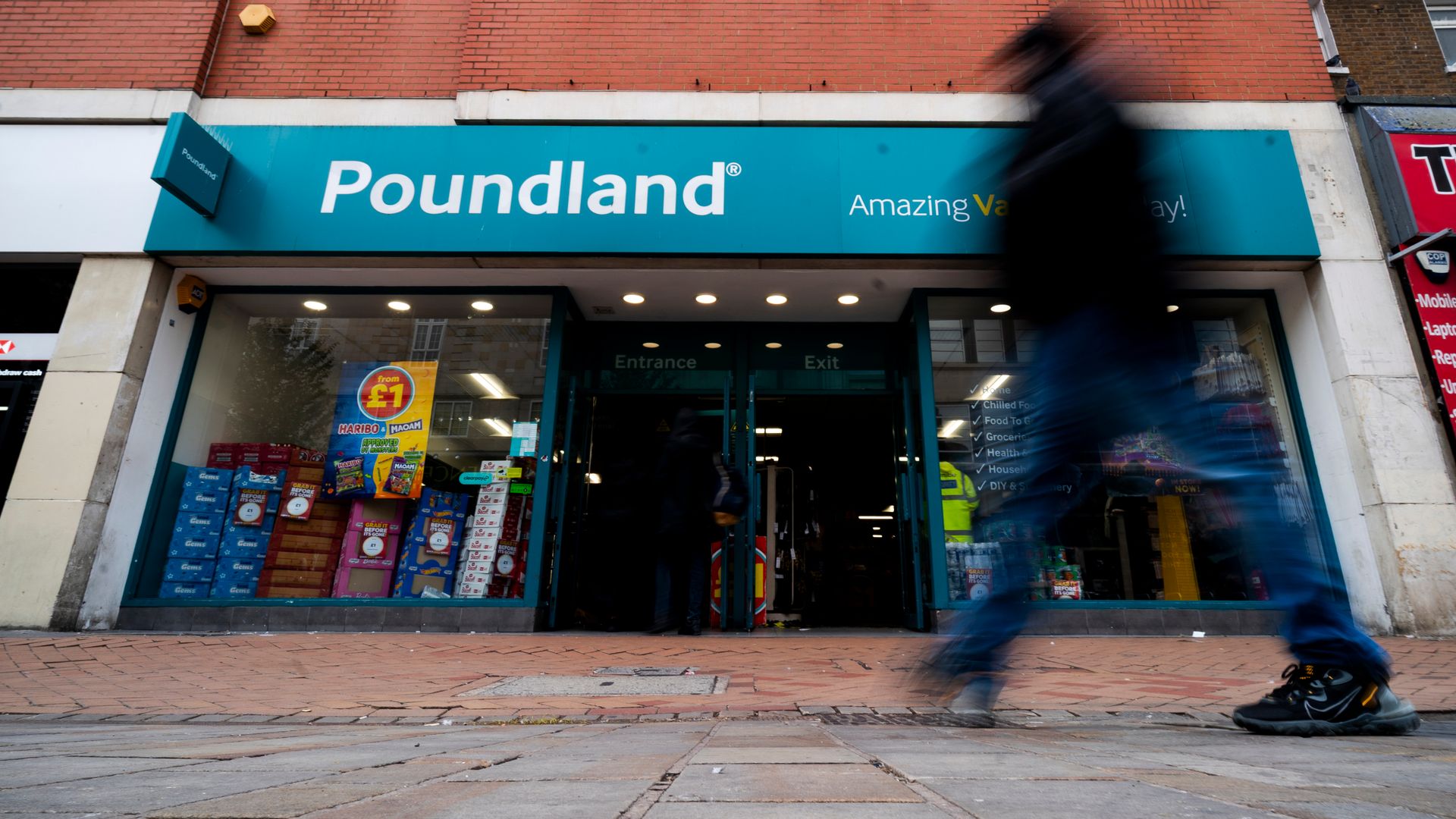
Poundland's parent company, Pepco Group, extracted approximately £18 million in cash and intercompany fees from the British discount chain during a period marked by falling like-for-like sales, store closures, and margin compression. While Poundland battled a severe downturn in UK consumer discretionary spending and rising operational costs, its Warsaw-listed parent insulated its own balance sheet through management charges, brand royalties, and upstream cash pooling arrangements. This financial extraction highlights a classic corporate playbook where parent conglomerates monetize struggling retail subsidiaries long before the turnaround ever materializes.
To understand how an £18 million payout occurs while a retailer is actively losing ground on the British high street, you have to look past the storefront and into the mechanics of corporate treasury management. Retail is brutally simple at the cash register, yet remarkably opaque at the holding-company level. When shoppers walk into a Poundland on a rainy Tuesday in Wolverhampton and buy a multipack of crisps, a roll of bin liners, and a bottle of bleach, that cash doesn't simply sit in a local safe waiting to pay the store manager's wages or fund a store refurbishment. It enters an automated corporate ecosystem designed to protect the parent entity first.
The Anatomy of Parent Company Cash Extraction
Most retail observers focus entirely on EBITDA (earnings before interest, taxes, depreciation, and amortization) or headline store sales. Veteran analysts look at the cash flow statement and the related-party transactions buried in the footnotes of annual filings. In multi-brand retail groups like Pepco Group—which owns the Pepco brand in Central and Eastern Europe alongside Dealz and Poundland in the UK and Ireland—subsidiaries rarely operate as standalone financial islands.
Instead, they operate within a centralized cash-pooling structure accompanied by layered service agreements. Even when a subsidiary's operating profit drops into the red, or its net margins shrink to near zero, cash can still flow upward to the parent company through several completely legal, standard accounting mechanisms:
- Intercompany Management Fees: The parent company bills the subsidiary for centralized executive oversight, legal compliance, human resources architecture, and strategic planning. These fees are fixed or calculated as a percentage of top-line revenue rather than net profit, meaning the parent gets paid even when the subsidiary loses money.
- Intellectual Property and Brand Royalties: Holding companies frequently house trademarks, proprietary software, and private-label brand rights in a central entity. The operating retailer must pay an ongoing licensing fee simply to use its own store signage and sell its own house-branded goods.
- Supply Chain and Sourcing Rebates: Through global sourcing arms—such as Pepco Group's direct sourcing division in Asia—the parent negotiates volume discounts with manufacturers. Those rebates are often retained at the group level rather than passed down to improve the subsidiary's unit economics.
- Upstream Dividends and Loan Repayments: When a subsidiary holds legacy cash reserves or generates positive working capital swings during peak trading seasons like Christmas, the parent can sweep that liquidity via intercompany loan repayments or special distributions.
This is not an accounting trick. It is standard corporate governance for multinational conglomerates. However, when a retailer is publicly struggling, the optics—and the operational consequences—become acute. Every million pounds swept to Warsaw is a million pounds not spent fixing broken store chillers, clearing cluttered aisles, or absorbing wage inflation.
Why Poundland Hit a Wall on the British High Street
Poundland's financial distress did not happen overnight. For over a decade, the chain thrived on a crystal-clear value proposition: everything was a pound. That single price point was a psychological masterstroke. It eliminated comparison shopping in the customer's mind and created a treasure-hunt atmosphere that drove massive footfall across Britain's secondary high streets and retail parks.
Then came structural inflation, followed by the abandonment of the single-price model. Once Poundland introduced multi-tier pricing—selling items for £1.50, £2, £5, and beyond—it stepped directly into the ring with heavyweight grocers and general merchandise discounters. Suddenly, Poundland wasn't in a category of one. It was competing head-to-head with B&M, Home Bargains, Aldi, Lidl, and the major supermarkets on price, quality, and store environment.
| Competitive Factor | Poundland | B&M / Home Bargains | Aldi / Lidl |
|---|---|---|---|
| Core Format | High street & small retail parks | Large out-of-town retail parks | Standalone supermarkets |
| Pricing Strategy | Multi-tier (£1 to £10+) | Everyday low price (EDLP) | Hard discount private label |
| Store Footprint | Often cramped, legacy leases | Spacious, modern, easy parking | Standardized, high-efficiency |
| Supply Chain Edge | Group-shared FMCG & clothing | Massive direct-from-factory scale | Ultra-lean SKU count |
The transition exposed deep operational vulnerabilities. Poundland's store estate, heavily weighted toward traditional high streets, suffered from high business rates, older lease structures, and smaller floorplates that struggled to accommodate expanded clothing and chilled food ranges.
When Pepco Group attempted to standardize operations across its European empire—migrating Poundland onto group-wide Pepco clothing and general merchandise ranges—the rollout hit severe turbulence. British shoppers reacted poorly to sudden changes in familiar everyday essentials, while supply chain friction led to stock availability gaps. Like-for-like sales tumbled. Footfall softened. By the time Pepco Group acknowledged the scale of the operational missteps and wrote down hundreds of millions of euros in goodwill on Poundland's valuation, the UK arm had transformed from the group's cash cow into its primary strategic headache.
The Structural Incentives Behind Corporate Extraction
Why would a parent company pull £18 million out of a subsidiary that desperately needs capital? Because public markets punish conglomerates for capital misallocation, and Pepco Group's institutional investors were looking at Warsaw, not Walsall.
In Central and Eastern Europe, the core Pepco brand had been a growth juggernaut, opening hundreds of stores a year with rapid payback periods and high returns on invested capital. From a cold, capital-allocation standpoint, pouring fresh money into a mature, hyper-competitive UK retail market with sluggish GDP growth and soaring minimum-wage costs makes far less financial sense than deploying that capital into high-growth European markets—or using it to shore up group-level debt covenants.
Here is a hypothetical example to illustrate how a retail holding company views this dynamic. Imagine a conglomerate owns two chains: Chain A in a saturated market generating £1 billion in revenue with a 1% net margin, and Chain B in an emerging market generating £1 billion with a 9% net margin. If Chain A holds £20 million in excess working capital after the fourth quarter, leaving that cash inside Chain A to fund low-return store refits drags down the entire group's Return on Capital Employed (ROCE). By extracting £18 million through service fees and cash sweeps, the parent preserves group liquidity, satisfies bondholders, and starves the underperforming division of easy money—forcing local management to cut costs rather than spend their way out of trouble.
It is ruthless. It is rational from a spreadsheet perspective. And on the shop floor, it often feels like slow suffocation.
When Financial Engineering Collides With Retail Reality
There is a hard limit to how long a parent company can extract cash from a distressed retailer before the underlying asset begins to deteriorate permanently. Retail is a ruthless cash-consumption machine when sales turn negative due to a mechanism known as negative operating leverage.
When store sales rise by 5%, fixed costs—rent, business rates, head office salaries, store heating—stay roughly flat, so profit surges. When store sales fall by 5%, those exact same fixed costs remain stubbornly immovable. Gross profit dollars evaporate, and the business rapidly shifts from generating cash to burning it.
During the UK's severe cost-of-living crunch and subsequent statutory minimum-wage hikes, Poundland faced a double squeeze:
- Labor Cost Escalation: Increases to the National Living Wage and employer National Insurance contributions added tens of millions of pounds to the annual payroll of labor-intensive high street retailers.
- Shrinkage and Theft: Organized retail crime and opportunistic shoplifting surged across UK town centers, directly eroding gross margins on high-turn, low-ticket items.
- Lease Rigidity: Exiting unprofitable high street stores requires either waiting out multi-year lease expirations or paying hefty surrender premiums to landlords.
Under those conditions, an £18 million extraction is not a rounding error. In low-margin discount retail, where net profit margins often hover between 2% and 4%, £18 million represents the net profit generated by roughly £450 million to £900 million worth of customer transactions. Pulling that sum out of the UK subsidiary meant the British operation had to sell hundreds of millions of pounds of toothpaste, batteries, and confectionary just to break even on the parent company's internal ledger.
The Counter-Argument What Pepco Defenders Get Right
To view the £18 million extraction purely as corporate asset-stripping misses half the financial picture. Parent companies do not charge management fees out of thin air; they absorb massive centralized risks and provide infrastructure that a standalone discounter could never afford on its own.
Without Pepco Group's balance sheet backing it, a standalone Poundland facing declining sales and supplier nervousness would have faced immediate credit insurance withdrawals. In the retail sector, credit insurers—firms like Allianz Trade or Atradius—dictate whether suppliers will ship goods to a chain on standard 30-to-60-day payment terms. When a retailer's standalone credit profile weakens, insurers slash coverage. Suppliers then demand cash upfront, triggering an instant working-capital crisis that can push a retailer into administration within weeks.
Pepco Group's corporate umbrella prevented that domino effect. Furthermore, the parent company absorbed hundreds of millions of euros in non-cash impairment charges on its own stock market valuation, took on centralized debt facilities at group interest rates far lower than Poundland could secure independently, and provided access to global apparel sourcing networks. From Warsaw's perspective, £18 million in fees and cash returns was a modest yield on a massive capital commitment—and a fraction of the value wiped off Pepco's own share price due to Poundland's underperformance.
Both realities coexist. The parent company provided a vital financial shield against insolvency while simultaneously draining operational liquidity from the subsidiary's cash registers.
The Warning Signs Inside Any Retail Turnaround
Whenever a conglomerate announces a "back-to-basics" turnaround plan for a struggling retail chain, seasoned industry analysts ignore the press releases and track three concrete financial indicators over the subsequent four quarters:
- Capital Expenditure vs. Depreciation: If a retailer's annual capital expenditure (CapEx) falls below its annual depreciation charge, the business is under-investing in its physical estate. Stores gradually look tired, lighting dims, signage peels, and customers quietly defect to cleaner competitors.
- Working Capital Stretch: Watch trade payables—how long the retailer takes to pay its suppliers. When parent companies extract cash, subsidiaries often compensate by stretching supplier payment terms from 45 days to 75 or 90 days, effectively forcing manufacturers to fund the parent's payout.
- Store Closure Acceleration: Talk of "portfolio optimization" is corporate shorthand for shutting loss-making sites. If closures accelerate without corresponding investments in flagship store conversions, the parent is shrinking the business to harvest cash rather than building for growth.
In Poundland's case, the combination of strategic pivots, supply chain overhauls, and intense competition from better-capitalized rivals left almost zero margin for error. Discount retail relies on relentless volume and razor-sharp execution. You cannot cut your way to prosperity on the British high street when Aldi, Lidl, B&M, and Home Bargains are opening modern stores just half a mile away on a retail park with free parking.
Parent companies can always structure intercompany agreements to ensure they get paid first, but no amount of clever treasury accounting can force a shopper to walk through the front door.