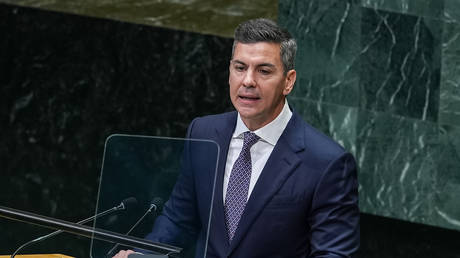
They want you to believe a bank failed, the streets burned, and a president did the honorable thing by stepping down.
It makes for clean cable news copy. Bad bankers get greedy, weak politicians get caught holding the bag, and democracy supposedly corrects itself through a dramatic resignation speech at the presidential palace. Financial pundits nod along. Foreign investors breathe a sigh of relief, convinced that removing the figurehead removes the rot.
That narrative is pure fiction.
When a Latin American president resigns in the wake of a banking collapse, the resignation is not the climax of the crisis. It is the magician’s flourish designed to distract you while the real wealth transfer finishes clearing in the back office.
I have sat in enough emergency sovereign debt restructurings and watched enough central bank liquidity windows slam shut to know how this theater actually works. The mainstream coverage treats a presidential resignation after a financial implosion as a victory for accountability. In reality, it is the oldest institutional escape hatch in emerging market finance—a coordinated offloading of political liability right before the bill for currency devaluation, deposit freezes, and IMF conditionality lands on the public.
The Myth of the Rogue Bank
Mainstream reporting always starts at the same convenient point: the balance sheet of the failed institution. Reporters hunt for a villainous CEO, an off-books loan portfolio, or a sudden run on deposits triggered by a leaked audit.
Look closer at every major regional banking collapse over the past four decades—from Venezuela’s 1994 crisis under Rafael Caldera, to Ecuador’s 1999 feriado bancario that cost Jamil Mahuad his presidency, to Argentina’s 2001 corralito that sent Fernando de la Rúa fleeing by helicopter. Not one of those collapses was an isolated failure of private risk management.
They were sovereign debt crises wearing a commercial banking mask.
Here is the actual mechanic that financial reporters routinely miss because they refuse to read central bank reserve ledgers:
- The Sovereign-Bank Doom Loop: Cash-strapped governments struggle to fund chronic fiscal deficits on international bond markets without paying ruinous yields.
- Regulatory Coercion: Regulators quietly adjust capital adequacy rules to classify domestic government bonds as "zero-risk" assets. Commercial banks are pressured—or incentivized through high coupon rates—to gorge on sovereign paper.
- Duration Mismatch: The banks fund these long-term, illiquid government IOUs using short-term, on-demand retail deposits.
- The Spark: Inflation ticks up, commodity export revenues dip, or the U.S. Federal Reserve tightens rates. Sovereign bond prices plummet. Suddenly, every major commercial bank in the country is technically insolvent on a mark-to-market basis.
When depositors finally panic and line up outside ATMs, the banks do not fail because they lent too much money to reckless real estate developers. They fail because the state used the private banking sector as an off-budget ATM, and the state ran out of cash.
Why Presidents Resign When the Vaults Empty
If the state broke the bank, why does the president quit instead of firing the finance minister and nationalizing the wreckage?
Because in a currency-constrained economy, staying in office during a banking collapse requires executing three policies that guarantee permanent political exile:
- Freezing retail accounts to stop capital flight.
- Devaluing the local currency to wipe out the real value of domestic debt obligations.
- Signing an emergency bailout that slashes public subsidies and hikes utility rates overnight.
No elected leader wants their signature on the decree that turns a middle-class family's life savings into confetti. By resigning before the restructuring plan is finalized, the outgoing president hands the detonator to a caretaker administration or an opposition successor.
Think about the incentive structure. If you stay, you own the austerity. If you resign under the guise of "preserving institutional peace" or "taking political responsibility," you walk away with your pension intact, blame the succeeding caretaker government for the painful IMF medicine, and position your party for a populist comeback four years later.
Economist Carmen Reinhart and Kenneth Rogoff documented this exact cycle extensively in This Time Is Different. Sovereign defaults and banking crises rarely end with genuine structural reform; they end with political scapegoating followed by financial repression—forcing captive domestic savers to absorb the losses of the state.
What Everyone Gets Wrong About Capital Flight
Whenever a bank collapses in Latin America, the standard commentary immediately pivots to moralizing about "capital flight." Talking heads condemn wealthy locals and foreign funds for pulling dollars out of the country at the first sign of trouble, accusing them of starving the economy of liquidity.
Let us dismantle that premise entirely.
Capital flight does not cause a banking collapse. Capital flight is the market’s rational audit of a central bank that is lying about its net international reserves.
Imagine a scenario where a central bank claims to hold $15 billion in foreign reserves, while short-term dollar-denominated liabilities across the commercial banking system total $22 billion. On paper, the peg holds. In practice, the central bank is running a fractional-reserve Ponzi scheme in a currency it cannot print.
The insiders—politically connected conglomerates, treasury officials, and large institutional treasurers—always see the reserve bleed first. They move their liquidity into Miami, Panama, or Zurich months before the headline collapse. By the time a retail depositor hears a rumor on WhatsApp and runs to a branch, the hard currency is already gone.
Blaming capital flight for a bank collapse is like blaming smoke detectors for an arson fire. The people moving their money out are not destroying the currency; they are reacting to the fact that the currency has already been destroyed behind closed doors.
Answering the Questions Investors Are Too Afraid to Ask
Does a presidential resignation stabilize the banking sector?
No. In fact, it usually accelerates the freeze. A sudden executive vacuum paralyzes the central bank board and the deposit insurance agency at the exact moment they need to provide unlimited lender-of-last-resort liquidity. Without clear political backing to print emergency credit lines or guarantee interbank loans, healthy banks immediately stop lending to each other, turning a localized insolvency into a system-wide liquidity seizure within 48 hours.
Are depositors protected by national deposit insurance funds?
Only on paper, and only in nominal local currency. Deposit insurance funds across most developing economies are capitalized at roughly 1% to 3% of total system deposits—a buffer designed to absorb the failure of one small credit union, never a systemic top-three bank. When a major bank goes under, the insurance fund runs dry on day one. The central bank then prints local currency to pay out insured balances, which triggers an immediate spike in the parallel exchange rate. You get your paper bills back, minus 40% of their purchasing power.
Should foreign investors buy the dip after the president steps down?
Buying sovereign or banking equities the morning after a resignation is how amateur emerging-market funds blow up their annual returns. The resignation removes the political noise, not the balance-sheet hole. Until the incoming administration formally announces how the losses will be distributed between bondholders, depositors, and taxpayers—known in restructuring circles as "burden sharing"—the asset prices are pure guesswork.
The Uncomfortable Truth About Dollarization and Pegs
Every time this happens, a loud faction of free-market commentators insists the solution is immediate, full dollarization—abolishing the local central bank altogether so politicians can never print their way into a crisis again.
I have to be honest about the downside of my own skepticism toward central banks: full dollarization is a brutal straightjacket, not a painless cure.
Ecuador proved in 2000 that dollarization kills hyperinflation dead, yet it also stripped the country of any monetary shock absorber when oil prices crashed or the U.S. dollar surged. Without a lender of last resort that can issue currency in an emergency, a dollarized banking system has to maintain absurdly high cash reserve ratios, which chokes off domestic credit and stunts small-business growth for decades.
You trade acute currency crises for chronic economic stagnation. Pretending there is a bloodless technical fix ignores the real disease: fiscal dominance. As long as political survival depends on running deficits that the local economy cannot organically fund, politicians will find a way to raid the financial system—whether through a central bank printing press, state-owned development banks, or mandatory pension fund bond purchases.
How to Actually Read a Banking Crisis Before the Headlines Break
If you operate a business, manage capital, or hold assets in an emerging economy, stop watching presidential approval ratings and stop listening to central bank press conferences. Officials are legally and politically incentivized to lie until the exact second the bank doors are chained shut.
Track three hard metrics instead:
- Commercial Bank Exposure to Sovereign Debt: Pull the monthly regulatory filings from the banking superintendency. When government securities exceed 20% to 25% of total commercial bank assets, the banking system is no longer independent. It is an extension of the treasury.
- Net vs. Gross Central Bank Reserves: Ignore gross reserve numbers. Subtract gold swaps, bilateral swap lines (especially opaque credit facilities with foreign central banks), and commercial bank reserve requirements held at the central bank. When net liquid reserves cross into negative territory, a currency and banking crisis is mathematically locked in.
- The Parallel Exchange Rate Spread: Watch the gap between the official bank exchange rate and the street or crypto-stablecoin rate. Once that spread widens past 15%, commercial banks start bleeding dollar deposits silently through corporate trade invoicing.
By the time a president steps up to a podium with a somber expression and announces their resignation for the good of the nation, the wealth destruction has already occurred. The palace drama is just the closing credits rolling over an empty vault.