Sarah wakes up at 5:00 AM, long before her alarm tells her to. She lies in the dark, listening to the quiet rhythm of her house, but her mind is already racing. Today is the day her health insurance plan updates. For the past six months, she has played a exhausting game of financial roulette, balancing the cost of a breakthrough weight-loss medication against her mortgage, her groceries, and her daughter’s upcoming braces.
To the executives sitting in boardroom meetings at CVS Health, Sarah is a statistic. She is a single data point in a vast ledger of prescription drug plans, premium calculations, and actuarial tables. But to herself, she is a person who finally found a lifeline, only to watch the corporate gatekeepers pull it out of reach.
For millions of Americans navigating the landscape of chronic obesity, the recent news that CVS Caremark—the pharmacy benefit management arm of CVS Health—will restore coverage for Eli Lilly’s blockbuster weight-loss drug, Zepbound, is not just a corporate headline. It is a seismic shift in a deeply personal battle. Along with restoring Zepbound to its major commercial formularies, CVS announced it would add Eli Lilly’s highly anticipated, upcoming oral obesity pill to its covered drug plans.
This decision marks a stunning reversal. Just months earlier, major insurers and pharmacy benefit managers were aggressively cutting back on coverage for GLP-1 medications, panicked by the skyrocketing costs of funding a drug that nearly half the country could technically qualify for. The sudden pivot exposes a deeper truth about the American healthcare system: the fight over weight-loss medication is no longer just about medicine. It is a high-stakes war over economics, human dignity, and how we define health in the modern era.
The Invisible Gatekeepers
Most people believe that when a doctor writes a prescription, the pharmacy fills it, and the insurance company pays its share. The reality is far more convoluted. Between the physician’s prescription pad and the pharmacy counter sits a powerful, often invisible middleman: the Pharmacy Benefit Manager (PBM).
Think of a PBM as a nightclub bouncer for medications. They decide which drugs get past the velvet rope and onto the "formulary"—the list of medications an insurance plan agrees to cover. If a drug is on the list, it is affordable. If it gets kicked off, the price tag explodes into thousands of dollars out of pocket.
Last year, CVS Caremark made the quiet, devastating choice to remove Zepbound from several of its major commercial formularies. The decision sent shockwaves through the patient community. Suddenly, individuals who had finally found relief from a chronic, life-altering condition were met with a cold reality at the checkout counter: pay $1,000 a month, or walk away empty-handed.
The corporate justification was simple math. The demand for GLP-1 medications—the class of drugs that includes Zepbound and its competitor, Wegovy—is unprecedented. If every eligible employer-sponsored insured life in America received these treatments, the cost could bankrupt individual corporate health plans. PBMs acted as financial shields for employers, slashing coverage to protect the bottom line.
But corporations quickly realized that denying coverage creates a different kind of crisis. Employees began leaving companies that didn't cover weight-loss drugs. Productivity suffered. The long-term costs of untreated obesity—including diabetes, heart disease, and joint replacements—began to loom larger than the immediate cost of the medication. The bouncers had to change their minds.
The Chemistry of Hope
To understand why this corporate reversal matters so deeply, one must understand what these drugs actually do. For decades, the cultural consensus on obesity has been cruel and simplistic: eat less, move more, exercise some willpower. It is a narrative rooted in judgment, treating a complex biological disease as a moral failure.
Consider the biological reality of "food noise." For a person with chronic obesity, the brain's signaling system is often locked in a state of constant, simulated starvation. The mind is plagued by an unrelenting, intrusive chatter demanding nourishment, regardless of how recently a meal was consumed. It is a relentless mental static that willpower alone cannot silence.
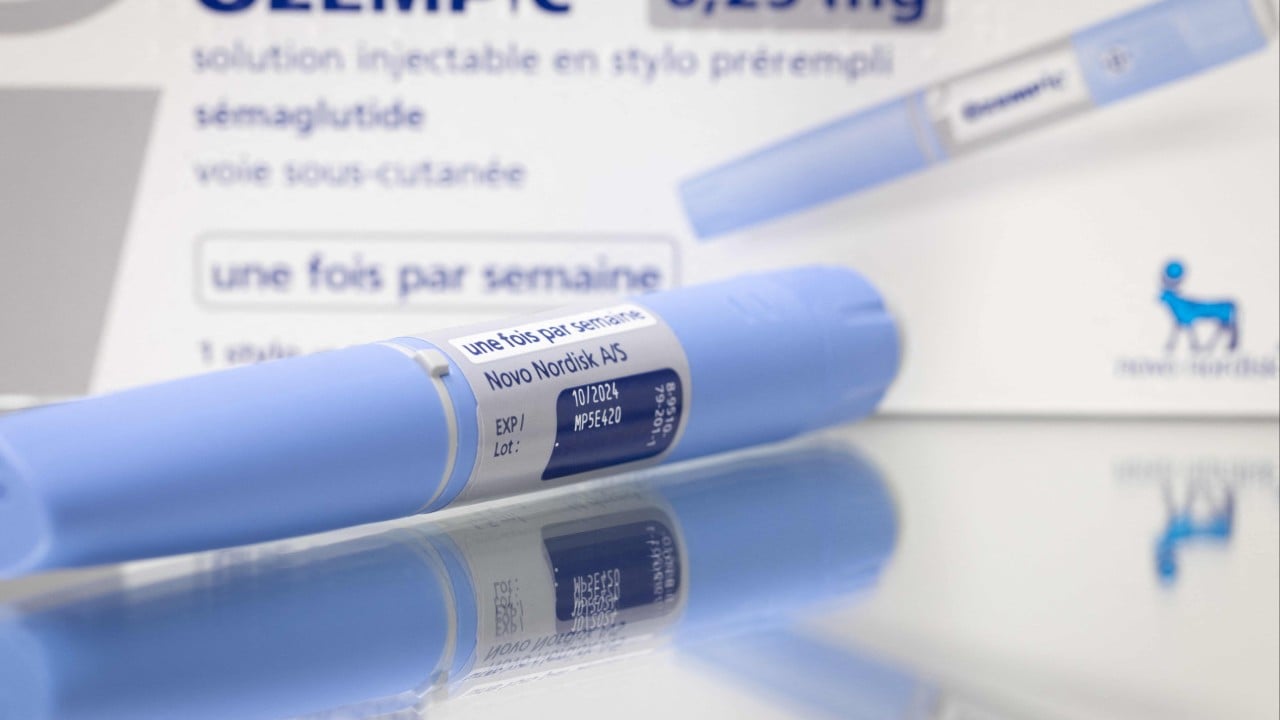
Zepbound, known scientifically as tirzepatide, works by mimicking two natural gut hormones: GLP-1 (glucagon-like peptide-1) and GIP (glucose-dependent insulinotropic polypeptide). When injected weekly, the medication targets the areas of the brain that regulate appetite and satiety.
The effect is immediate and profound. The mental static vanishes. The food noise stops.
For patients, the experience is less about vanity and more about sanity. They describe a feeling of profound relief, a sudden ability to view food the way a non-obese person does—as fuel, rather than an obsession. By restoring coverage for this medication, CVS is not just funding a weight-loss tool; they are validating a medical reality. They are acknowledging that obesity is a metabolic disease requiring pharmaceutical intervention, not a character flaw.
The Shift to the Pill
While the return of Zepbound is a massive victory for patients who prefer or tolerate injections, the truly disruptive element of CVS’s announcement lies in the future: the inclusion of Eli Lilly's experimental oral obesity pill into upcoming drug plans.
Currently, the most effective obesity treatments require a weekly subcutaneous injection. This presents significant hurdles. Injections require cold-chain refrigeration, making storage and shipping expensive and logistically complicated. Many patients harbor a deep, systemic phobia of needles, causing them to delay or avoid treatment entirely. Production lines for specialized injector pens are notoriously difficult to scale, leading to the chronic shortages that have plagued the pharmaceutical industry for the past two years.
An effective, daily oral pill changes the entire equation.
Imagine the logistical simplicity of a traditional amber pill bottle. No refrigeration required. No complex manufacturing of mechanical pens. A doctor can write a prescription, and a patient can pick it up at a standard drive-thru pharmacy, storing it in their medicine cabinet next to their daily vitamins.
For Eli Lilly, the development of an oral alternative is a play for market dominance. For CVS, it is a desperate bid for cost stabilization. Pills are cheaper to manufacture, cheaper to distribute, and far easier to manage at scale. By proactively adding this upcoming pill to their drug plans, CVS is skating to where the puck is going, preparing for a massive demographic shift where obesity management becomes as routine as taking a daily blood pressure pill.
The Cold Economics of Compassion
We must be clear-eyed about why CVS made this move. It was not born out of sudden corporate altruism. It was driven by the fierce, unforgiving pressure of the marketplace.
The pharmaceutical landscape is entering an era of intense competition. Eli Lilly and its chief rival, Novo Nordisk, are locked in a multi-billion-dollar arms race. As supply constraints begin to ease and new manufacturers enter the space, the cost of these medications is facing downward pressure. PBMs like CVS Caremark leverage their massive patient bases to negotiate deep, confidential discounts—known as rebates—from drug manufacturers.
If Eli Lilly wants Zepbound to maintain its market share against competitors, it must offer massive financial concessions to CVS to secure a coveted spot on the formulary. CVS’s decision to restore coverage is proof that the financial terms have finally become favorable enough for the corporate ledger to balance.
Furthermore, the pressure from employers—the actual clients who hire PBMs to manage their healthcare plans—has reached a boiling point. In a competitive labor market, comprehensive health coverage is a primary tool for talent retention. When an employee’s child or spouse is denied a life-altering medication, that employee begins looking for the exit. Corporate America realized that refusing to cover obesity treatments was becoming more expensive than providing them.
The Ripple Effect
The implications of this decision stretch far beyond the walls of CVS pharmacies. When the largest PBM in the United States shifts its stance on a class of drugs, the rest of the insurance market inevitably follows. Competitors will be forced to re-evaluate their restrictive policies to remain competitive.
But as coverage expands, a structural question remains: who ultimately pays the bill?
While corporate health plans may absorb the cost for now, those expenses are frequently passed down to the consumer in the form of higher monthly premiums and rising deductibles. The systemic challenge of American healthcare remains unsolved. We possess the scientific capability to cure and treat devastating chronic conditions, yet we have built a financial infrastructure that treats access to those cures as a luxury asset.
For Sarah, sitting in the morning quiet of her kitchen, the corporate machinations do not matter. The shifting rebates, the actuarial projections, and the strategic positioning of oral pills are background noise. What matters is the notification that finally arrives on her phone.
Her coverage has been approved. Her copay is manageable.
She walks to the refrigerator, opens the door, and looks at the small, clear box containing her medication. For the first time in months, the anxiety in her chest recedes, replaced by a quiet, steady sense of hope. The world outside her kitchen remains loud, complicated, and driven by profit, but for now, she has won the right to heal.