Ink is quiet. It makes almost no sound as it sinks into cheap bleached wood-pulp paper, drying under the harsh fluorescents of a federal courtroom in Manhattan. A pen scratches across a signature line. In that fractional second, the futures of thousands of people shift without them ever hearing the scrape of the nib.
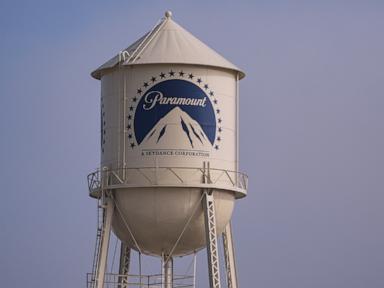
Outside, the November wind rattles the glass of corporate towers where middle managers are still drafting slide decks about synergy that they do not believe in. They think they are safe. They think their quarterly goals are tethered to talent, effort, and audience demand. They are wrong. Their entire professional ecosystem has just been redrawn by a judge's stamp on a settlement between Paramount and a chorus of skeptical state attorneys general.
The Warner buyout was supposed to be a clean surgical strike. Big capital eats smaller capital, the ticker symbols merge into a smoother, rounder number on a Bloomberg screen, and the consumers keep streaming their favorite prestige dramas on their phones while ignoring the price hikes. But corporate mergers are never surgical. They are heavy, grinding tectonic shifts that displace real soil and real people.
Consider Marcus.
Marcus is a fictional composite drawn from the real ghosts haunting the back lots of Los Angeles and the cubicles of mid-tier production houses. He is forty-two. He has spent sixteen years managing digital distribution assets for a studio that now exists primarily as a footnote in a legal brief. When the buyout talks began two years ago, Marcus bought a house with a thirty-year fixed mortgage, trusting the comforting corporate memo that promised business as usual.
Business was never usual again.
When giant media entities collide, the first casualty is not the stock price. It is friction. The corporate accountants look at two redundant departments handling streaming logistics and ask a brutal, bloodless question: Why pay two salaries when one algorithm can do the work of both, poorly?
The settlement approved by the federal judge did not stop the merger. It merely greased the wheels. State attorneys general had raised their hands, standing in the doorway of the boardroom, pointing out that consolidation on this scale smells faintly of monopoly. They argued that when fewer corporations own the cultural pipes through which our stories flow, the price of our collective imagination goes up while its variety goes down.
They were right. But legal settlements rarely stop the freight train. They negotiate the toll. Paramount paid its settlement fee—a staggering sum to a schoolteacher, a rounding error to a conglomerate—and the judges signed off. The green light flashed.
Why do we care? Because media is not just oil or steel. It is the mirror in which we see our values, our histories, and our deepest anxieties reflected back at us. When two titan entities swallow each other whole, the mirror cracks.
Think about how you discover a movie or a television show today. You open an application. You scroll. You are fed recommendations by an invisible hand trained to maximize retention rather than spark discovery. Now imagine that hand belonging to a single, monolithic distributor that no longer needs to compete for your attention because it has successfully absorbed its last meaningful rival.
Competition is messy. It breeds overspending, creative risks, wild swings on weird, unproven scripts, and passionate failures. Monopoly breeds safety. It breeds sequels to sequels, cinematic universes baked out of focus groups, and cost-cutting measures that turn once-proud studios into hollowed-out content factories.
Marcus received his layoff notice on a Tuesday morning. It arrived via a calendar invite titled "Organizational Alignment Discussion." There was no human voice on the other end of the initial notification, only a scheduling link hosted on a platform owned by the company that had just bought his livelihood out from under him.
He packed his desk into a cardboard box that smelled of stale coffee and printer toner. He walked out into the California sun, his life compressed into a cube that fit neatly into the passenger seat of a ten-year-old sedan.
The legal briefs filed in this antitrust battle are stuffed with dense phrases about market share percentages, vertical integration, and consumer welfare standards. They read like mathematical equations written by robots for other robots. But every percentage point drop in competition represents a thousand Marcuses. Every multi-billion-dollar valuation adjustment represents closed doors on soundstages where young creators were hoping to take a chance on a difficult, beautiful story.
We are living through the great consolidation. Every few months, the corporate family tree prunes itself of independent branches until only a few massive trunks remain, stretching up so high their leaves block out the sun entirely.
The settlement is signed. The ink is dry. The stock prices have ticked upward by a fraction of a percent, satisfying the algorithmic gods of Wall Street for another afternoon.
Marcus is driving home now, listening to the radio, wondering what skills he spent twenty years perfecting that an artificial intelligence or a consolidated corporate entity will not render entirely obsolete by next Tuesday.
The screen in your living room will light up tonight just as it always does. The autoplay feature will kick in with a familiar hum. A trailer will play, slick and loud, promising you a world of infinite entertainment built by a company whose name you barely recognize anymore.
And somewhere in the dark, another pen will lift from another paper, moving on to the next acquisition, writing the next chapter of a story where we are all just audience members paying admission to watch the machinery turn.