The black film on the surface of the Black Sea at Tuapse is not merely an environmental disaster. It is a physical manifestation of a strategic shift in the conflict between Russia and Ukraine that has turned civilian infrastructure into a primary front line. Residents of this port city, long accustomed to the rhythmic chugging of the refinery and the smell of sulfur in the air, now wake up to the thick, acrid scent of burning crude and the sight of oil slicks stretching toward the horizon. While official reports often minimize the fallout, the reality on the ground suggests that the intersection of high-stakes drone warfare and heavy industrial concentration has created a permanent state of emergency for Tuapse.
The city’s reliance on the Rosneft refinery, one of Russia’s oldest and most significant export hubs, has transformed from an economic blessing into a geographical curse. When Ukrainian long-range drones strike these facilities, they aren't just targeting fuel tanks; they are dismantling the logistical spine of a regional economy and poisoning the very water that sustains the local tourism and fishing sectors.
The Engineering of Vulnerability
Tuapse is a logistical bottleneck. Nestled between the mountains and the sea, its industrial layout is cramped and aging. This density makes it an ideal target for the modern doctrine of "asymmetric precision." Unlike the carpet bombing of the twentieth century, today's strikes focus on "choke points"—the vacuum distillation units, the pumping stations, and the refined product reservoirs.
When a drone successfully navigates the regional electronic warfare umbrellas and hits a distillation column, the result is an immediate cessation of production that cannot be fixed with a simple patch. These are complex, bespoke pieces of industrial hardware. In an era of heavy international sanctions, sourcing the high-grade steel and specialized sensors required to rebuild these units is a slow, clandestine, and expensive process. The refinery stops refining, but the pressure in the system has to go somewhere. Often, it ends up in the soil and the sea.
The pollution isn't just a byproduct of the explosion itself. It stems from the systemic failure of containment measures during a catastrophic event. Firefighting foam, ruptured pipelines, and the overflow of industrial cooling systems create a toxic cocktail that drains directly into the Tuapse river and out into the bay.
The Silent Coastal Crisis
Ecologists who have monitored the Black Sea for decades point to a terrifying trend. The crude oil processed at Tuapse is particularly heavy. When it enters the water, it doesn't just sit on top. It emulsifies. It forms "chocolate mousse" like clumps that sink and smother the seabed. This isn't a mess you can just skim off the surface with a few booms and a prayer.
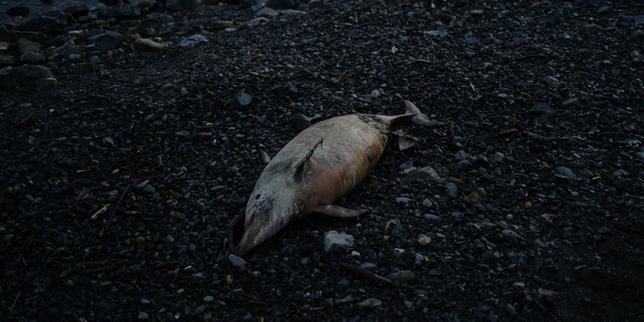
- Biodiversity Loss: The local dolphin populations, already stressed by increased naval traffic and sonar interference, are now facing acute respiratory distress from volatile organic compounds (VOCs).
- The Food Chain: Heavy metals and hydrocarbons accumulate in the sediment. Local shellfish and bottom-dwelling fish ingest these toxins, which then move up the chain to human consumers.
- Economic Paralysis: Tuapse isn't just an oil town; it’s a transit point for the Russian Riviera. The black tides are drifting toward the resort beaches of Sochi and Gelendzhik, threatening a multi-billion ruble summer economy.
Local authorities have attempted to frame the cleanup efforts as "controlled" and "effective." However, satellite imagery and leaked footage from port workers tell a different story. The booms are often poorly deployed, and the volume of leaked oil frequently exceeds the capacity of the local emergency response teams.
The Ghost of Sanctions in the Machine
One of the most overlooked factors in the Tuapse crisis is the degradation of safety technology due to trade restrictions. Before 2022, Russian refineries relied heavily on European and American firms for automated fire suppression and leak detection systems. Companies like Honeywell and Schneider Electric provided the software and hardware that kept these tinderboxes from becoming infernos.
With the withdrawal of these firms, the "brain" of the refinery has been replaced by local workarounds or Chinese substitutes that don't always integrate perfectly with the existing Soviet-era or Western-built skeletons. This tech-debt means that when a strike occurs, the automated shut-off valves might fail, or the sensors might provide lagging data to the control room. The result is a longer burn time and a larger spill.
Furthermore, the personnel left to manage these crises are under immense pressure. The "brain drain" of skilled engineers and the mobilization of technical staff have left gaps in the specialized knowledge required to handle high-pressure chemical fires. You cannot replace twenty years of refinery experience with a manual and a sense of patriotism.
Living Under the Drone Path
For the people of Tuapse, the psychological toll is as heavy as the soot on their windowsills. The city has become a laboratory for a new kind of urban existence where the sound of a lawnmower engine can trigger a panic attack. The drones often arrive in the pre-dawn hours, flying low over the water to avoid radar, their distinct "moped" sound signaling a coming blast.
There is a growing disconnect between the triumphant military rhetoric seen on national television and the lived reality of a town that smells like a gas station. People are moving. Not in a mass exodus, but in a quiet, steady trickle. Those with the means are selling their apartments at a loss and heading inland, away from the coast that was once their greatest asset.
The real estate market in Tuapse is currently a graveyard. No one wants to buy a home within the "blast radius" of a strategic asset, and in a town this small, almost everywhere is within the blast radius.
The Calculus of Attrition
The strategy behind these strikes is transparent: force Russia to divert its sophisticated air defense systems from the front lines to protect its domestic industrial heartland. If Moscow moves its S-400 batteries to Tuapse, it leaves a gap in the Donbas. If it keeps them in the Donbas, its primary source of foreign currency—refined oil—literally goes up in smoke.
This is a war of attrition where the "units" being lost aren't just tanks or soldiers, but barrels of oil and hectares of coastline. The environmental cost is viewed by both sides as collateral damage in a much larger existential struggle. But for the fishermen in the Tuapse harbor watching the iridescent sheen spread across their livelihood, "collateral damage" is an insulting euphemism for the end of their world.
The infrastructure is also suffering from "fatigue." Constant cycles of emergency shutdowns and rapid restarts are brutal on industrial equipment. Turbines and heat exchangers are being pushed far beyond their maintenance cycles. Even without another drone strike, the Tuapse refinery is at risk of a major industrial accident simply due to the stress of operating in a war zone.
The Myth of Restoration
There is a pervasive narrative that once the conflict ends, the environment will simply "bounce back." This is a dangerous fallacy. The chemical footprint of a refinery fire is a multi-generational legacy. The carcinogenic soot settling in the soil of local gardens will be present for decades. The oil that has settled into the deep-water trenches of the Black Sea will continue to leach toxins long after the last drone has been grounded.
Russia’s environmental monitoring agencies are currently more focused on information control than data collection. By classifying the extent of the damage as a state secret, they are preventing the very research needed to mitigate the long-term health effects on the population. We are seeing a repeat of the Soviet-era playbook: prioritize the output of the machine, hide the human and environmental cost, and label any dissenting data as "panic-mongering."
The reality is that Tuapse is being sacrificed. It is being sacrificed to maintain the flow of fuel to the front and the flow of hard currency to the treasury. The city is a pawn in a game of global energy logistics, and the players have decided that the health of the Black Sea is an acceptable loss.
The Technological Counter-Strike
Russia is not sitting idle. There is a frantic effort to develop "trench-style" anti-drone netting for refineries—massive steel cages designed to detonate the drone's shaped charge before it hits the sensitive distillation columns. You can see these structures being welded onto the tops of tanks across the city. It gives the refinery a surreal, medieval appearance, as if a billion-dollar industrial complex is wearing a suit of chainmail.
However, the drones are evolving faster than the nets. Newer models utilize AI-driven terminal guidance that can identify gaps in the shielding or use tandem charges to punch through the wire. It is a classic arms race played out over the rooftops of Tuapse. Every time the refinery adds a new layer of protection, the attackers find a new angle of approach.
This cycle ensures that the threat remains constant. As long as the refinery is operational, it remains a target. As long as it is a target, the city remains a combat zone. There is no middle ground, no "safe" level of production.
The Long Shadow of the Refinery
The international community often views these strikes through the lens of oil prices and global supply chains. They discuss the "impact on Brent Crude" or the "disruption of the Mediterranean market." This clinical analysis ignores the visceral reality of a city being slowly choked by its own industry.
The true story of Tuapse is not found in a spreadsheet of export volumes. It is found in the respiratory clinics where children are being treated for sudden-onset asthma. It is found in the empty restaurants along the boardwalk that used to be full of tourists. It is found in the silence of a harbor that used to be teeming with life, now muffled by a thick layer of industrial sludge.
The transition of Tuapse from a thriving port to a scarred industrial fortress is almost complete. The refinery, once the engine of the city’s growth, has become its primary antagonist. Every ship that leaves the port carrying a cargo of diesel is a victory for the state, but every black cloud that hangs over the bay is a defeat for the people who call this place home. The oil continues to flow, but the cost of every barrel is now being paid in the health and future of the Black Sea coast.
Stop looking for a return to normalcy in Tuapse. The city has entered a new era where the air is a weapon and the sea is a casualty. The only question remaining is how much of the coastline will be left when the smoke finally clears.