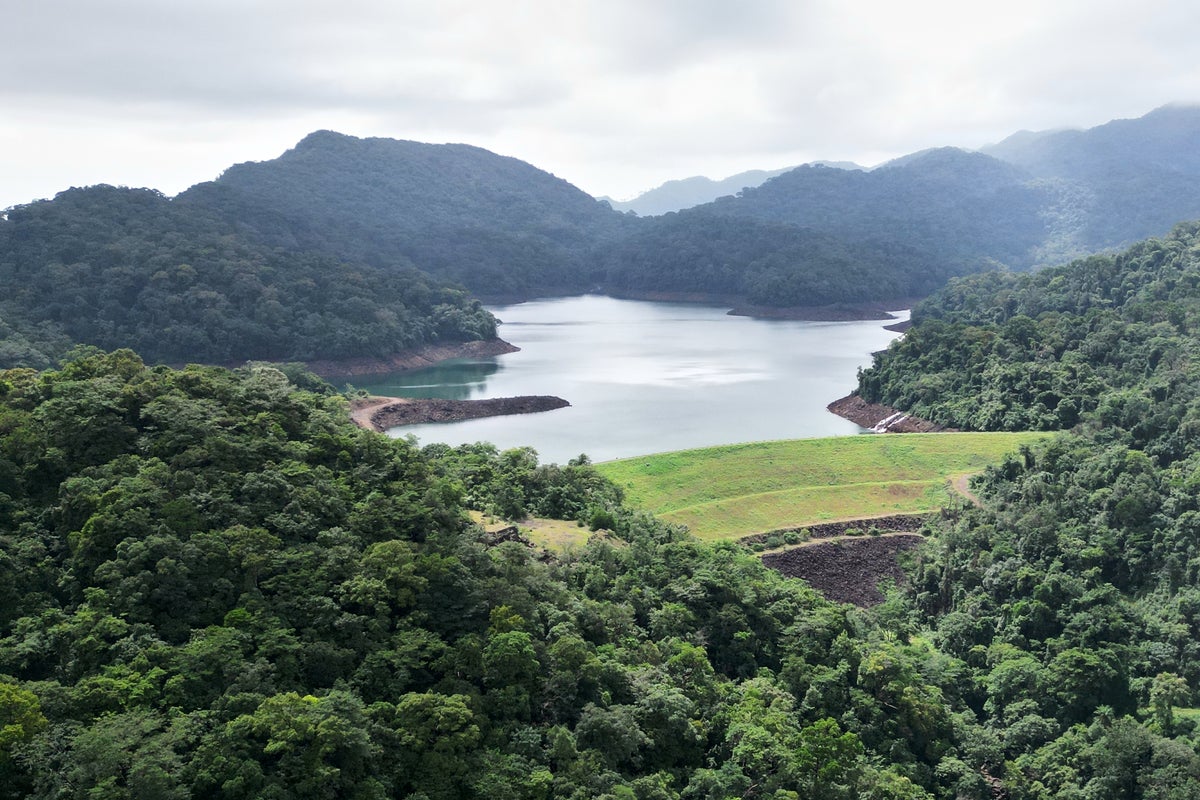
In a small village tucked into the red-clay hills of Malawi, a woman named Amara watches the horizon. She isn't looking for the rain, though the soil is parched and the maize is brittle. She is looking for a truck. Specifically, a white truck with a blue logo that used to arrive every Tuesday morning. That truck carried more than just supplies; it carried the cumulative expertise of ten years of agricultural development. It carried the seeds that didn't wither in the heat and the technicians who knew how to fix the solar-powered irrigation pump.
The truck hasn't come in four months.
Thousands of miles away, in air-conditioned offices with glass walls, pens have moved across paper. Budgets have been "rationalized." International aid, once a steady pulse of global cooperation, is being drained. To the accountants, it’s a line item. To the politicians, it’s a talking point about "prioritizing the home front." But on the ground, where the red dust settles on an empty road, the math looks different. The math looks like hunger.
We have entered an era of the Great Retreat. Developed nations are pulling back, slashing their foreign aid budgets to record lows as they grapple with internal inflation and shifting political winds. It feels like a logical move to the casual observer. Why send money abroad when prices are rising at the local grocery store? Yet, this perspective misses the most fundamental truth of our modern existence: the world does not have walls.
When we stop investing in the stability of others, we aren't saving money. We are simply deferring a much larger, much more dangerous bill.
The Invisible Infrastructure of Peace
Consider for a moment what happens when a development program vanishes overnight. It isn't just that a school goes unpainted or a well remains undug. It is the collapse of a social contract.
Foreign aid and development investment function as a global shock absorber. They are the friction that slows the descent into chaos. When a region loses its primary source of development capital, the vacuum isn't filled by "self-reliance." It is filled by the highest bidder. Often, that bidder is an extremist group offering a meal, or a predatory lender offering a debt trap, or a rival superpower looking for a strategic foothold.
We often view aid as a handout. This is a profound misunderstanding. Development is an investment in market creation. Every person who moves from subsistence farming to a stable income becomes a participant in the global economy. They buy goods. They use technology. They contribute to the collective knowledge of our species.
By cutting these ties, we are effectively burning the bridges to the future markets we claim we want to build. We are shrinking the world.
The Ghost of the 0.7 Percent
There was once a goal, a "gentleman’s agreement" among the world’s wealthiest nations, to commit 0.7% of their Gross National Income to official development assistance. It was a promise made in the 1970s, a pledge that as we grew richer, we would ensure the floor didn't fall out from under the poorest.
Very few have ever met it. Today, most are running in the opposite direction.
The UK, once a leader in this space, famously slashed its commitment from 0.7% to 0.5%. Other nations have followed suit, diverted funds to handle the immediate fallout of domestic crises, or simply let their contributions stagnate against the tide of inflation. This isn't just a budget cut. It is a signal. It tells the developing world that our partnerships are conditional, our promises are ephemeral, and our vision is limited to the next election cycle.
When the money dries up, the experts leave. The doctors who were training local nurses pack their bags. The engineers who were designing flood defenses go home. The institutional memory of how to solve local problems vanishes. You cannot simply "turn the tap back on" in five years and expect the same results. Trust, once broken, takes decades to regrow.
A Tale of Two Investments
Let’s look at a hypothetical scenario to ground the abstract billions in reality.
In Scenario A, we invest $10 million in a regional health initiative in West Africa. This money trains local epidemiologists, builds a network of cold-chain storage for vaccines, and establishes a communication system for rural clinics. It’s "expensive." It’s "foreign." It’s "someone else's problem."
In Scenario B, we save that $10 million. We put it back into the treasury. Three years later, a localized viral outbreak occurs in that same region. Because there are no trained epidemiologists and no refrigerated storage, the virus spreads unchecked. Within six months, it’s at a major international airport. Within nine months, the global economy shuts down again.
Which scenario was actually cheaper?
The cost of prevention is a whisper; the cost of a cure is a scream. Yet, our current political systems are deaf to whispers. They only respond to the scream. By the time the crisis is on our doorstep—whether it’s a pandemic, a climate-driven migration wave, or a supply chain collapse—the price tag has added four zeros.
The Myth of the "Home Front"
There is a seductive lie told in modern politics: that we can choose between helping "them" and helping "us."
This binary is a relic of the 19th century. In 2026, the health of a worker in Southeast Asia determines the price of your medicine. The stability of a government in North Africa determines the security of European borders. The education of a girl in South America determines whether the next great technological breakthrough happens there or nowhere at all.
Investment in development is not charity. It is the most sophisticated form of self-interest.
When we talk about the "importance of development," we shouldn't be talking about pity. We should be talking about resilience. We are currently living in a fragile, interconnected web. If one part of the web begins to tear because we refused to maintain it, the entire structure sways.
Consider the "invisible stakes." These are the things that don't make the evening news. It’s the peace treaty that didn't collapse because of a food security program. It’s the radicalization that didn't happen because a young man found a job in a funded tech hub. It’s the migration that didn't occur because a family could actually farm their own land.
We only notice these things when they fail. We only value the "invisible" when it becomes a visible disaster.
The Moral Weight of the Ledger
Beyond the economics and the security risks, there is a human core that we have begun to ignore. We have become desensitized to the "other." We see a photo of a drought-stricken region and we swipe past. We hear a statistic about child mortality and we change the channel.
But behind every decimal point in a budget cut is a person like Amara.
She doesn't care about the geopolitical shifts in Western Europe. She doesn't understand the nuances of debt-to-GDP ratios in the United States. She only knows that her daughter’s school is closed and the water from the well is no longer safe to drink. She knows that the promise of a better life, which was whispered to her a decade ago, has been retracted.
When we cut aid, we aren't just withdrawing money; we are withdrawing hope. And hope is the only thing that keeps people invested in the current global order. If you take away someone’s hope that they can improve their life through cooperation and hard work, you leave them with nothing to lose.
People with nothing to lose are the most powerful force for instability on the planet.
The New Architecture of Giving
If the old model of government-led aid is dying, what replaces it? The answer lies in a more radical, decentralized form of development.
We need to stop thinking about "aid" and start thinking about "catalytic capital." This means using what little public money is left to de-risk private investment in the developing world. It means building systems where local entrepreneurs can access global markets without needing a middleman. It means investing in the brains of the people living there, rather than just sending bags of grain.
But even this requires a foundation of trust. It requires the "white trucks" to keep showing up. It requires a commitment that lasts longer than a four-year term.
The irony is that as we pull back, our competitors are leaning in. While the West debates the "burden" of aid, other global powers are busy building roads, bridges, and digital networks across the Global South. They aren't doing it out of the goodness of their hearts; they are doing it because they know who owns the 21st century. They are buying the future while we are trying to hoard the past.
The Silent Road
Back in Malawi, the sun begins to set. Amara walks back to her home. The solar pump is silent. The maize stalks are brown and rattling in the wind like old bones.
She is resourceful. She will find a way to survive this season. She will walk three miles to the next village for water. She will skip meals so her daughter can eat. But the anger is starting to grow—a quiet, cold realization that she was a secondary thought in a room where she was never invited.
Every time a diplomat speaks about "global values" or "the rules-based order," people like Amara look at the empty road where the truck used to be. They see the gap between our words and our wallets.
We are currently saving pennies and losing the world. We are winning the argument at the dinner table while the house burns down around us. The budget has been balanced, the spreadsheets are clean, and the fiscal year is closed.
And somewhere, out on a dusty road, the silence is getting louder.