The radiator in Elena’s apartment doesn’t just click anymore; it groans. It sounds like something under immense pressure, a metallic protest against the reality of a world that has suddenly become very expensive and very dangerous. Elena is sixty-four. She lives in a brick walk-up in a city that used to feel predictable. Now, she spends her Tuesday evenings staring at a utility bill that looks more like a ransom note.
The numbers on the page are a direct consequence of a horizon she cannot see. Thousands of miles away, the geopolitical friction between the West and Iran has ignited a bonfire of the global energy market. When the headlines talk about "rising energy costs due to the Iran war," they are talking about the flickering light in Elena’s kitchen. They are talking about why she chooses between a warm bath and a hot meal.
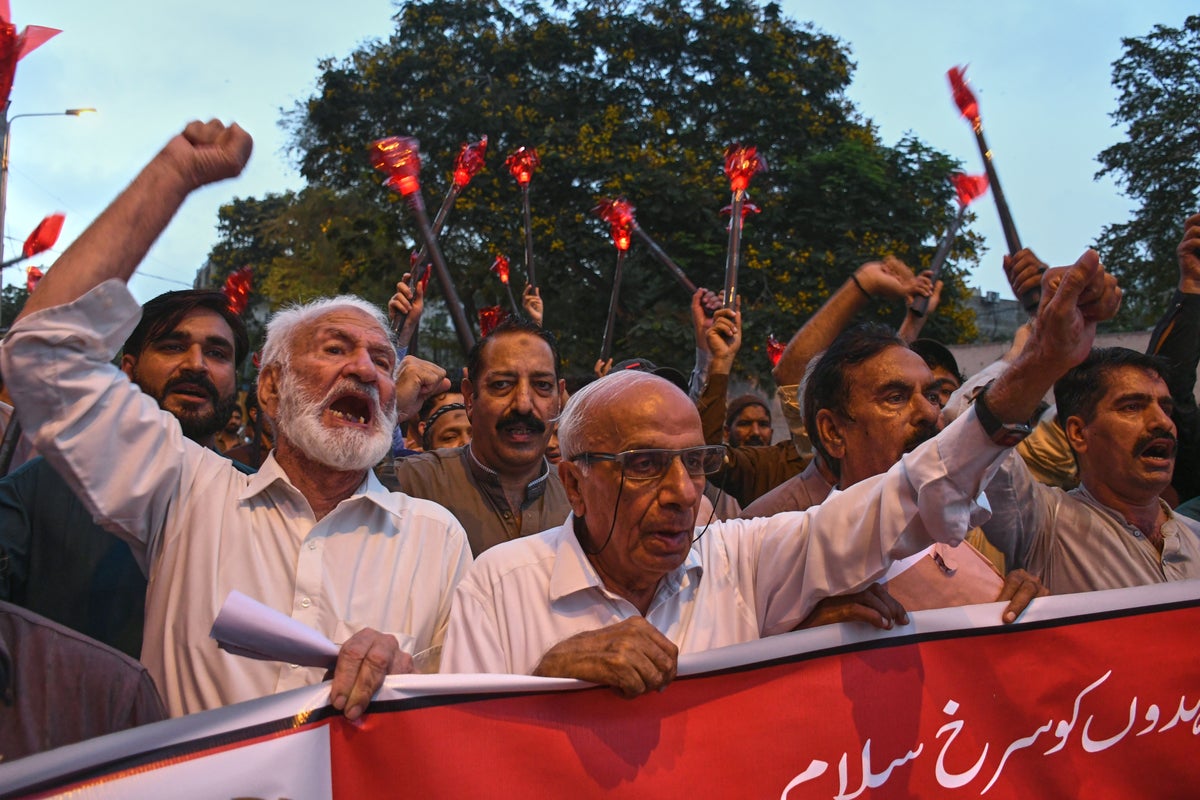
This is the backdrop of May Day 2026. What was once a symbolic celebration of the eight-hour workday has transformed into a desperate, loud, and sprawling scream for survival.
The Invisible Pipeline to the Kitchen Table
To understand why the streets are filling with protesters, you have to follow the ghost of a barrel of oil.
When conflict in the Middle East throttles supply lines, the reaction is instantaneous. It isn't a slow leak; it’s a flash flood. The global energy grid is a nervous system, and right now, it is experiencing a massive, sustained trauma. For the average worker, this doesn't just mean it costs eighty dollars to fill a gas tank. It means the "hidden energy" in everything else—the electricity used to bake bread, the diesel used to ship medicine, the plastic used to wrap a child’s toy—is inflating at a rate that wages cannot touch.
Consider a hypothetical bakery owner named Marcus. Marcus doesn't care about the nuances of maritime law in the Strait of Hormuz. He cares about his industrial ovens. Last year, his monthly overhead for power was manageable. This month, it has tripled. To keep the lights on, Marcus has to raise the price of a sourdough loaf by two dollars. His customers, who are also paying triple for their own home heating, can no longer afford the bread.
The loop closes. The economy gasps.
This isn't just "inflation" in the academic sense. It is a fundamental shift in the cost of existing. When we speak of May Day demonstrations, we are speaking of the people caught in this gear-turn. They aren't just activists with slogans; they are people like Marcus and Elena who have realized that the math of their lives no longer adds up.
The Anatomy of the May Day Surge
Historically, May Day—or International Workers' Day—focused on the "Three Eights": eight hours for work, eight hours for rest, and eight hours for what we will. But in 2026, the demand has shifted. The cry in the streets of London, Paris, New York, and Berlin isn't just about hours. It is about the "Energy Wage."
Protesters are demanding that governments decouple local energy prices from the volatile whims of international conflict. There is a profound sense of betrayal in the air. The logic is simple: why should a worker in Ohio or Lyon lose their livelihood because of a drone strike on a refinery half a world away?
The crowds are larger this year. More diverse. You see the traditional union jackets, yes, but you also see white-collar workers in fleece vests and students who realize their future inheritance is being burned away in a furnace they didn't light.
The stakes are invisible until they aren't. They are invisible until the local library closes its doors three days a week because it can't afford to heat the reading room. They are invisible until a factory in the Midwest shutters its doors, not because of a lack of demand, but because the cost of the "input energy" exceeded the value of the "output product."
The Fragile Logic of a Wartime Economy
The conflict involving Iran has created what economists call a "risk premium" that refuses to subside. Even when the oil is flowing, the fear that it might stop tomorrow keeps the prices high. Speculators on trading floors in Chicago and London are betting on chaos, and every time they win, a family in the suburbs loses a little more of their safety net.
It is a strange, modern form of collateral damage. In traditional warfare, the damage is measured in craters and casualties. In an interconnected energy war, the damage is measured in "energy poverty"—a term that used to be reserved for developing nations but is now a haunting reality in the world’s wealthiest cities.
Energy poverty is a quiet thief. It starts by taking away the "extras"—the movie tickets, the brand-name cereal. Then it takes the essentials. It takes the ability to keep a home at a healthy temperature during a cold snap. It takes the reliability of a commute. Finally, it takes the dignity of a person who works forty hours a week but still cannot afford to keep their children warm.
Why the Streets are the Only Option Left
When you ask a protester why they are out there, they rarely start with geopolitics. They start with their bank statement.
"I did everything right," a young nurse named Sarah tells a reporter in a hypothetical but representative scene on a rainy street corner. She’s wearing a raincoat over her scrubs. "I went to school. I got a good job. I work overtime. But my utility bill is now 40% of my take-home pay. I’m not protesting for a revolution. I’m protesting for a light switch that doesn't feel like a luxury."
This is the emotional core that the standard news reports miss. They focus on the "disruption" of the marches—the blocked traffic, the shouting, the heavy police presence. But the real disruption happened months ago, inside the homes of the marchers. The protest is merely the externalization of an internal crisis.
The government’s response has been a mixture of subsidies and "belt-tightening" rhetoric. But subsidies are a bandage on a severed artery, and "belt-tightening" feels like an insult to someone who is already skipping meals. The demand on May Day is for a radical reimagining of energy sovereignty.
The Mirage of the Green Transition
There is a bitter irony hanging over the 2026 demonstrations. For years, the promise was that a transition to renewable energy would insulate the world from the volatility of Middle Eastern oil. Yet, here we are, still tethered to the same old ghosts.
The transition hasn't been fast enough to save Elena or Marcus. In some cases, the rush to pivot has left the current grid more vulnerable, with fewer backups when the primary fuel source becomes a weapon of war. The protesters know this. They aren't anti-green; they are pro-survival. They see the towering wind turbines on the horizon, but they also see the "Service Disconnection" notice on their dining table.
The gap between the future we were promised and the present we are enduring is where the anger lives. It is a gap fueled by the realization that we are still fighting 20th-century battles with 21st-century consequences.
The Cold Reality of the Coming Months
The sun will set on May Day, the banners will be folded, and the streets will be swept. But the price of oil will not care.
The conflict continues to simmer, a low-grade fever that threatens to turn into a full-blown infection at any moment. As long as the energy supply is a pawn in a larger game of geopolitical chess, the worker will always be the piece that is sacrificed first.
We are entering an era where the cost of living is inextricably tied to the cost of "killing." Every escalation in the Gulf is a de-escalation of the quality of life in the West. It is a direct, brutal correlation.
Elena sits in her apartment as the evening chill sets in. She looks at the thermostat. She considers the groaning radiator. She thinks about the thousands of people she saw on the news today, shouting into the wind, demanding a world where a cold winter isn't a financial death sentence.
She reaches out and turns the dial down, just a few degrees. She puts on a second sweater. The room grows darker as she turns off the lamp to save a few cents. In the silence of her kitchen, the "rising energy costs" aren't a headline or a statistic. They are a physical weight, a coldness that settles into the bones and refuses to leave.
The window is dark. The street is quiet. But the pressure under the surface is still building, waiting for the next spark to turn the groaning of the pipes into the roar of the crowd.



