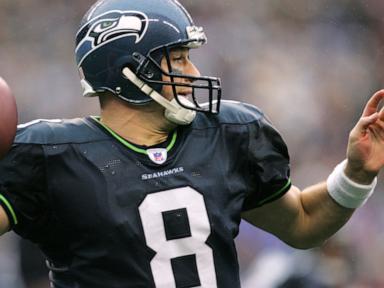
The sound lives forever in the memory of anyone who has ever stood near a sideline. It is not the clean crack of a baseball meeting ash, nor the sharp thwack of a tennis ball against gut string. It is dull, heavy, and wet. It is the sound of two bodies traveling at twenty miles an hour coming to an abrupt, violent cessation. It is canvas meeting leather, shoulder meeting jaw, skull meeting turf.
For generations, we called it a bell-ringer. We laughed it off when a player staggered toward the wrong huddle, shook his head like a wet dog, and lined up for the next snap. We slapped him on the back, admired his grit, and praised his toughness. We rewarded the willingness to absorb punishment with cheers that shook the concrete foundations of suburban stadiums.
Now, the bills are coming due. And they are written in neuropathology reports.
A recent Australian study has laid bare a grim reality that modern contact sports can no longer sweep under the rug. Researchers examining the brains of deceased rugby league players found evidence of chronic traumatic encephalopathy, or CTE, in thirty-one individuals. Thirty-one lives altered at a cellular level. Thirty-one minds that slowly unraveled under an invisible accumulation of damage.
To understand what CTE actually means, you have to strip away the clinical sterility of medical journals and look at what happens inside a human skull during a tackle. The brain is not bolted into place. It floats in cerebrospinal fluid, a delicate, gelatinous organ suspended within a rigid cage of bone. When a player’s body is stopped dead by a shuddering collision, the skull stops moving. But the brain does not. It drifts forward, slamming against the inner wall of the frontal bone, then rebounds violently backward, striking the occipital bone.
This is rotation and acceleration. This is shear stress.
Every single sub-concussive hit—the routine blocks, the standard tackles, the everyday collisions that do not result in a momentary blackout—causes microscopic tears in the axons, the delicate wiring that allows brain cells to communicate. The body attempts to heal this damage. It unleashes an inflammatory response, flooding the tissue with proteins designed to repair the breach. But when those hits come by the hundreds, then by the thousands, season after season, year after year, the healing mechanism breaks down. A rogue protein called tau begins to misfold. It clumps together, forming toxic tangles that suffocate healthy neurons.
By the time the player retires, hangs up the boots, and sits down in a quiet living room to watch the game on television, the process is already underway.
Consider a hypothetical player we will call David. David played ten seasons in the top tier of rugby league. He was renowned for his fearlessness, a back-rower who treated his body like a battering ram. He was the kind of player coaches loved and fans wrote songs about. When he walked away from the game at thirty-two, his knees ached, his shoulder clicked when it rained, and he felt a persistent, dull ache behind his eyes.
At first, David chalked it up to the price of admission. Glory leaves scars; everyone knows that. But by thirty-eight, the scars started moving inward.
He began losing his keys inside his own kitchen. Then he forgot the names of his childhood friends. Then came the inexplicable rages—flashes of incandescent fury over a spilled cup of coffee or a mislaid pair of shoes, followed immediately by crushing waves of shame. David’s wife watched the man she married slowly dissolve, replaced by a stranger who lived in a state of perpetual, low-grade panic, tormented by headaches that no pill could touch.
When David’s family eventually consented to donate his brain to science after his premature death, the diagnosis came back with clinical coldness. Stage III CTE. The tau protein had choked his frontal and temporal lobes. The man who once flew across the turf had been fighting a war against his own biology for a decade, and his brain was riddled with the physical evidence of every glorious, terrifying collision.
The thirty-one cases identified in the Australian study are not statistical anomalies. They are warning flares. They tell us that the problem is not confined to the NFL grids of North America or the boxing rings of Las Vegas. Wherever humans run at high speeds and collide with calculated ferocity, the brain pays the tab. Rugby league is a game of relentless attrition, characterized by continuous contact, minimal padding, and an ethos of unyielding physical bravery. The very traits that make the sport a masterpiece of athletic theater—its relentless speed, its bone-crunching intensity—are the exact mechanics that put players at risk.
For decades, sports administrators and fans alike engaged in a collective bargain. We looked away from the neurological cost because the product on the field was too intoxicating to interrogate. We preferred the myth of the miraculous recovery. We wanted to believe that human physiology was resilient enough to absorb the shockwaves of modern athleticism without a permanent penalty.
That myth is dead.
The publication of these findings forces a reckoning that goes far beyond the boardroom of sports leagues. It reaches into the living rooms of parents deciding whether to sign their children up for junior tackle leagues. It challenges the culture of silence that has long governed locker rooms, where admitting to a foggy head was treated as an admission of cowardice.
Change, when it comes, is always slow and bitterly contested. Leagues are beginning to alter their protocols, tightening concussion assessments, penalizing high tackles with greater severity, and limiting full-contact practice sessions during the week. Independent doctors now sit on sidelines, scanning for the telltale stumble, the momentary stillness that indicates a brain has been violently scrambled.
Yet these measures, while necessary, feel like trying to bail out an ocean liner with a teaspoon. They address the acute concussions—the moments when a player is knocked unconscious or clearly dazed. They do nothing to solve the more insidious danger: the accumulation of thousands of sub-concussive hits over a career, each one individually negligible, collectively catastrophic.
What happens to a sport when its foundational aesthetic—the bone-jarring collision—is revealed to be a slow-motion tragedy?
The answer is not necessarily the death of the game. Humans have an ancient, unquenchable appetite for physical contest, for the public testing of courage and strength. We crave the spectacle of heroes pushing their bodies to the absolute precipice. But that appetite must evolve. We cannot continue to consume entertainment that requires the quiet, unacknowledged destruction of the minds that create it.
We are forced to look at the heroes of our weekends through a different lens. Not as indestructible gladiators untouched by mortality, but as human beings paying an invisible, exorbitant price for our amusement.
The stadium lights will still go on next Friday night. The roar of the crowd will still roll across the grass like an incoming tide. Two players will still line up across from each other, eyes locked, breath pluming in the chill air, waiting for the whistle. But the silence that follows the hit will carry a different weight now. We know what is happening in the dark beneath the bone. We know that the sound we used to cheer is the sound of a life being rewritten. And once you hear that truth, you can never unhear it.