The tear gas has a way of lingering in the throat long after the canisters grow cold on the pavement of the Boulevard de la République. It tastes of burning chili and wet copper. For those standing outside the iron gates of Senegal’s National Assembly in Dakar, the sting in the air is not just a chemical irritant. It is the sensory backdrop to a tectonic shift in how a nation is governed.
Inside the chamber, the air conditioning hums, cutting through the heavy tropical humidity. The sound of plastic gavels striking wooden desks echoes a deeper fracture. Lawmakers have just passed a sweeping constitutional overhaul. To the casual observer tracking global headlines, the event reads like a standard piece of bureaucratic machinery: a parliament reclaiming its oversight, a presidency trimmed of its imperial excesses.
But out on the asphalt, where young men and women wave placards reading Hands off my Constitution! before being scattered by police batons, the reality feels entirely different. This is not a dry debate over legal sub-clauses. This is a high-stakes political chess match being played with the foundational architecture of the state, fueled by a bitter rivalry at the absolute summit of executive power.
To understand the sudden urgency behind this reform, one must look past the heavy legal texts and look at the human friction driving them.
The Two Architects
For years, the political destiny of Senegal was bound to a singular partnership.
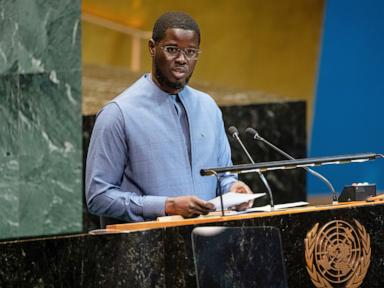
Consider the bond between Bassirou Diomaye Faye and Ousmane Sonko. It was forged in the crucible of opposition, in prison cells, and during midnight strategy sessions when the previous regime sought to crush their populist movement, PASTEF. Sonko was the fiery ideologue, the magnetic orator who could mobilize tens of thousands of young Senegalese with a single speech. Faye was the methodical strategist, the quiet organizer who worked the logistics from the shadows.
When legal maneuvers barred Sonko from running in the 2024 presidential election, he pointed to his trusted lieutenant and declared: "Diomaye is Sonko." The strategy worked. Faye swept into the presidency on a wave of euphoria, and promptly appointed Sonko as his Prime Minister.
Power, however, alters the geometry of any relationship.
By late 2025, the seamless alignment began to crack. Whispers of a quiet civil war within the palace walls turned into open political maneuvers. Faye sought to assert the traditional majesty of the presidency, making unilateral appointments and reshuffling the party leadership to isolate Sonko’s core loyalists. Sonko, holding the true keys to the party’s grassroots base, resisted. He openly clashed with the president over economic policies, particularly regarding debt restructuring and negotiations with international financial institutions.
The breaking point arrived with dramatic speed. In May, President Faye exercised his supreme executive authority and dismissed Sonko from the prime minister's office.
But Sonko did not retreat into exile. He pivoted. Returning to the National Assembly as a deputy, he was swiftly elected as its President—the speaker of the house. The move set the stage for an unprecedented institutional cohabitation. The fiery populist now controlled the legislative engine, while his former brother-in-arms held the presidential pen.
Redrawing the Boundaries
The constitutional package passed by the National Assembly is the direct weaponization of that cohabitation. It fundamentally rewrites the rules of engagement between the palace and the parliament.
Under the old rules, the presidency of Senegal was an explicitly imperial office. The head of state determined the policy of the nation, dominated the legislature, and held the unilateral power to dissolve parliament or bypass it on crucial resource deals. The new amendments systematically dismantle this concentration of authority.
- Coordinated Rule: The text alters Article 42, declaring that the president can no longer set state policy unilaterally; it must now be done "in consultation with the Prime Minister."
- Legislative Oversight: The National Assembly now holds stricter controls over the president’s power to dissolve the legislature. Furthermore, the government is now legally mandated to inform parliament of all contracts and agreements related to the exploitation of natural resources—a massive shift in a country currently developing major offshore oil and gas fields.
- The Constitutional Court: The old, seven-member Constitutional Council—frequently criticized by opposition movements as an instrument of the presidency—will be abolished. In its place stands a new, nine-member Constitutional Court with expanded jurisdictions, designed to act as a more independent arbiter of institutional disputes.
- The Depoliticized Presidency: In a move that cuts straight to the heart of party control, the reform makes the office of the President of the Republic entirely incompatible with the leadership of a political party or coalition.
On paper, these changes fulfill long-standing demands from civil society to curb "hyper-presidentialism." For decades, West African democracies have suffered under the weight of executives who treat constitutions like soft clay.
Yet, context dictates meaning. For the opposition leaders and civil society activists dodging tear gas in the streets of Dakar, the timing of this sudden conversion to legislative supremacy is entirely transparent. They do not see an idealistic rebalancing of powers. They see a calculated act of political retribution by a parliament speaker who found himself locked out of the executive mansion and decided to tear down the master bedroom.
The Retroactive Safe Valve
The deeper, more controversial layer of this legislative overhaul lies within the accompanying electoral reforms. It is here that the personal stakes for Ousmane Sonko become blindingly clear.
The newly adopted electoral amendments rephrase the rules regarding who can be barred from running for office. Under the old system, even minor infractions or defamation convictions could result in a permanent lifetime ban from the ballot box—the exact mechanism used to disqualify Sonko from the 2024 race. The new law limits automatic disqualification strictly to major financial crimes, corruption, and felonies, capping standard political bans at five years.
Crucially, the law is retroactive.
Imagine a legal bridge constructed specifically to span a chasm created for one man. By making the law retroactive, parliament has effectively erased the legal barriers stemming from Sonko's past convictions. The path is now cleared for his potential bid in the 2029 presidential election.
Opposition lawmakers have vociferously decried the move as a dangerous manipulation of the legal system. They argue that retroactivity violates the fundamental principle of res judicata—the idea that a final court decision cannot simply be legislated away to favor an individual. They call it a "tailor-made" law designed to serve a singular ambition rather than the enduring health of the Republic.
The True Cost of Precedent
The immediate tragedy of this political warfare is not found within the text of the amendments, but in the precedent it leaves behind.
When a constitution becomes a blackboard where rivals erase and rewrite rules depending on who holds the chalk, the concept of institutional stability begins to rot. Senegal has long been celebrated as an exceptional beacon of stability in a region marred by military coups, civil conflicts, and constitutional overreaches. It is a pride deeply felt by its citizens, a collective identity built on the peaceful transition of power.
But when laws are passed with an explicit eye toward the next election cycle, the long-term horizon vanishes. The immediate threat is an institutional gridlock that could paralyze the state. If the president retains the unilateral right to appoint a prime minister, but the parliament holds the power to strip that prime minister of policy leadership and choke executive decisions, governance slows to a crawl.
The government has announced that these sweeping constitutional changes will ultimately be put to a national referendum. The final decision will belong to the citizens of Senegal. But a referendum held in an atmosphere of intense polarization rarely yields a nuanced debate on constitutional theory; it becomes a raw headcount of tribal political loyalties.
As evening falls over Dakar, the smell of tear gas slowly dissipates into the sea breeze coming off the Atlantic. The street sweepers move in to clear the rocks and the charred remnants of barricades. Inside the National Assembly, the lights remain on, casting long shadows across the empty desks. The lawmakers have gone home, leaving behind a document that redefines the contours of Senegalese democracy.
Whether this moment represents the dawn of a truer, more balanced republic or the beginning of a chronic institutional fracturing remains to be seen. What is certain is that the old equilibrium is gone, broken by the ambitions of two men who once shared a prison cell and now share a divided state.