Oleksii Reznikov sat in a room where every decision was measured in human lives, steel, and time.
For two years, his world was a blur of high-stakes negotiations, quiet corridors in European capitals, and the constant, crushing pressure of a nation fighting for its survival. As Ukraine’s defense minister during the opening chapters of the full-scale Russian invasion, he became the face of a country demanding the heavy armor, air defense systems, and artillery necessary to keep the frontline from collapsing.
Then came the shift.
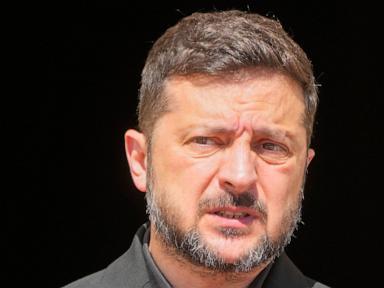
President Volodymyr Zelenskyy made the decision to replace his long-serving defense chief. It was a move aimed at refreshing leadership and addressing growing public fatigue over domestic scandals and procurement friction, even as Reznikov himself was not directly implicated in wrongdoing. But political departures in wartime rarely follow standard corporate playbooks. Instead of fading quietly into retirement or accepting a face-saving lateral transfer, Reznikov was offered a different seat at the table.
He said no.
When offered a new government post—specifically, a role as an ambassador—Reznikov chose to walk away from the administration entirely. It was a rare moment of explicit refusal in a system defined by tight discipline and existential stakes.
To understand why a veteran politician turns down a lifeline from a wartime president, you have to look past the political machinery. You have to look at how power operates under intense pressure.
When a government faces an existential crisis, unity is everything. A president’s inner circle functions like a single organism, where disagreement is kept behind closed doors and public alignment is non-negotiable. When leaders fall out of favor, standard political protocol offers them an exit ramp. They are given a new title, a foreign posting, or an advisory position. It keeps the political peace. It sends a message that the administration remains unified and that experienced personnel are simply being redeployed.
Accepting that offer is usually the path of least resistance. Refusing it breaks the script.
By turning down the post, Reznikov drew a clear boundary between public service and political compromise. A diplomatic posting abroad can often function as a golden parachute, removing an influential figure from the domestic political chessboard while keeping them bound to the official government line. For a man who spent months convincing foreign ministers to part with billions of dollars in military hardware, taking a muted diplomatic posting may have felt like stepping into a gilded cage.
Politics in the middle of a conflict is not just about battlelines; it is about trust.
When national survival is at stake, procurement delays, military budgeting disputes, and administrative friction carry enormous weight. The public demands total transparency, while the state demands absolute discretion. Caught between these two relentless forces, leadership figures often find that their capital has simply burned out.
Reznikov’s refusal highlights a fundamental truth about high-level governance during crisis: authority is finite. Once the internal dynamics shift, staying on in a diluted capacity often diminishes the work that came before.
A quiet exit on one's own terms can be a far stronger statement than staying attached to a government machine that has decided it is time for a new direction.
Power is defined as much by what a person turns down as what they accept. In the high-altitude politics of a nation at war, knowing when to step off the stage entirely is perhaps the final, most deliberate choice a leader can make.