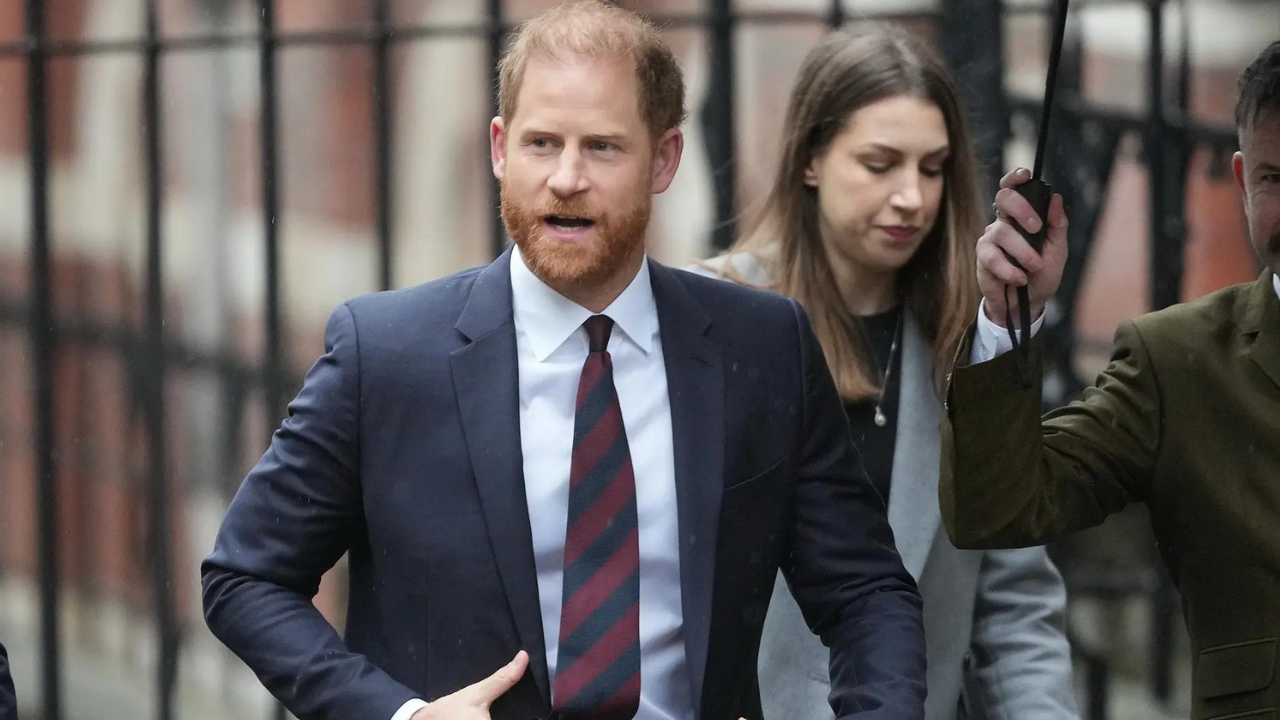
Prince Harry just hit a brick wall in his crusade against the British press. The U.K. High Court completely dismissed his high-profile privacy lawsuit against Associated Newspapers Limited, the publisher of the Daily Mail and Mail on Sunday. It wasn't a partial loss. It wasn't a technicality. It was a total wipeout.
The Duke of Sussex, alongside big names like Elton John and Elizabeth Hurley, alleged that the publisher used illicit tactics to dig up dirt on their personal lives. We are talking about severe accusations: car bugging, wiretapping, and hiring private investigators to break into voicemail boxes. But High Court Judge Matthew Nicklin cut straight through the drama. He ruled that suspicion isn't proof.
This brings a crashing end to Harry’s years-long legal blitz against the tabloids. While he walked away with wins in earlier battles against Mirror Group Newspapers and News Group Newspapers, this third and final offensive collapsed under the weight of its own assumptions.
The High Court Ruling That Repercussed Across Fleet Street
The core problem with the case was simple. The claimants couldn't prove how the journalists got their stories.
Lawyers for Prince Harry argued that because the published stories contained deeply intimate, private details, the reporters must have broken the law to get them. The court completely rejected that logic. Judge Nicklin noted that simply showing an article contains private information doesn't mean it was sourced illegally.
Associated Newspapers fought back by showing their stories came from normal reporting: friends, leaky social circles, and official spokespeople. The judge accepted the honesty of the journalists' evidence. In a massive 436-page ruling, the court tossed out every single one of the 97 allegations brought by the group.
"The more serious and less likely an allegation is, the more convincing the evidence must be before a court can find it proved," Judge Nicklin wrote.
For Associated Newspapers, this is a massive victory. They called it a magnificent vindication of their journalism. For Harry, it’s a stinging defeat that leaves him vulnerable to astronomical legal bills. Estimates suggest the combined costs for both sides could top $67 million.
Why This Case Was Different From Harry Past Victories
People are wondering why Harry lost this round after winning before. In 2023, he won his phone-hacking lawsuit against Mirror Group Newspapers, securing around $180,000 in damages. In 2025, he received an apology and a massive payout from the publisher of The Sun.
Those earlier cases succeeded because there was hard, undeniable evidence. There were call logs, payment records to known private investigators, and internal company emails that proved systemic wrongdoing.
This case against the Daily Mail was different. Because the alleged events happened between 1993 and 2011, the evidence relied heavily on inference. Harry testified that press snooping made him paranoid beyond belief, but emotional testimony doesn't replace hard data. Without a smoking gun, the court had no choice but to throw the case out.
What This Loss Means For The Duke Next Steps
This ruling leaves Harry in a tough spot. It damages his reputation as a giant-killer in the legal arena and hits him right where it hurts: his finances. A separate hearing on July 29 and 30 will determine exactly how much of the publisher's legal fees he will have to cover.
If you are following the broader royal fallout, the timing couldn't be worse. Harry learned about the verdict while visiting London for an Invictus Games event. His trip has already been bogged down by public arguments with Buckingham Palace over where he can stay and what kind of police protection he gets.
If you want to protect your own privacy or understand how these legal standards affect the public, you need to look at the precedent set here. Courts will not punish publishers based on a hunch. If you ever find yourself facing a breach of privacy, your first step must be securing concrete digital forensics, not just pointing out that a secret got leaked.
Harry wanted to change the landscape of British media. Instead, he proved that even a prince can't win a legal battle on anger alone.