The 132-room executive mansion at 1600 Pennsylvania Avenue serves two distinct and frequently competing functions. It is both the high-stakes command center of the free world and the deeply personal sanctuary of a single family. When these two realities collide, the resulting friction usually stays hidden behind closed doors and heavily vetted press releases. But during the Trump administration, the firewall between the West Wing political machine and the East Wing private residence collapsed entirely. The specific flashpoint that exposed this institutional breakdown involved a direct executive order that overrode the First Lady’s explicit wishes regarding who could sleep under the White House roof.
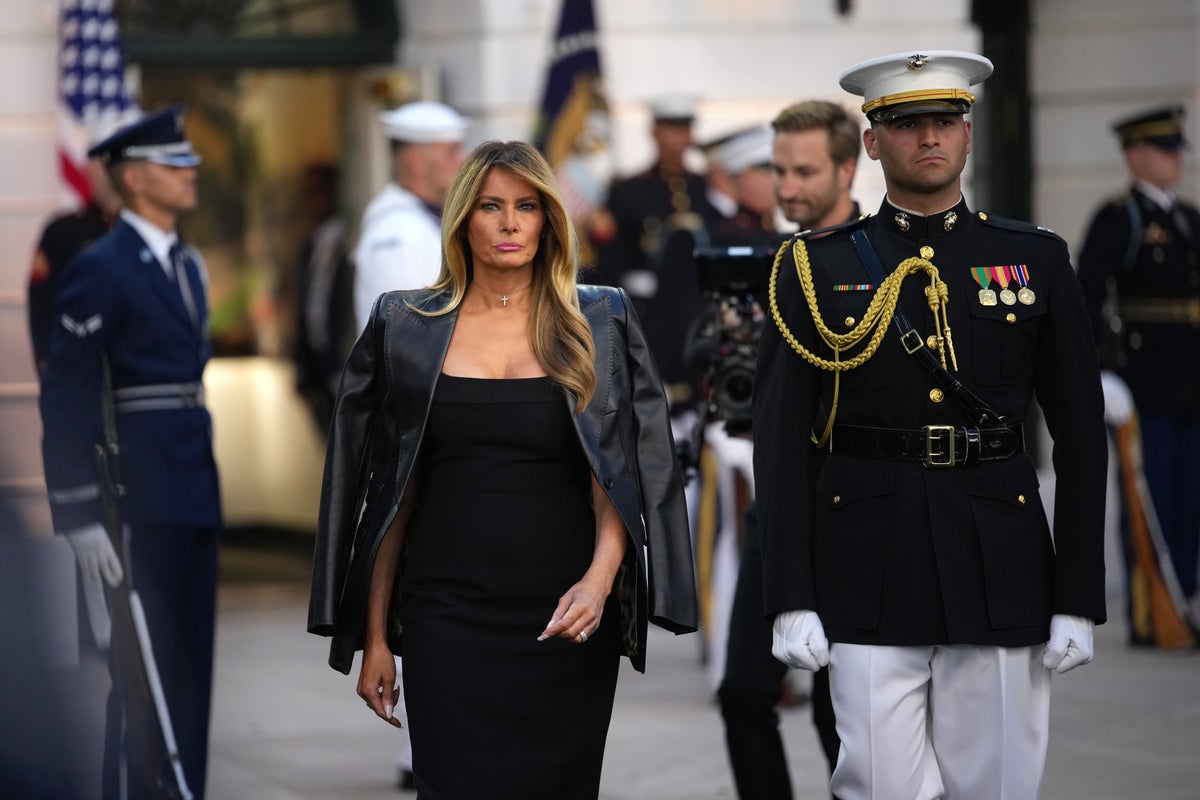
Melania Trump viewed the second and third floors of the White House not as an extension of the oval office but as a fortified domestic refuge. For months after the inauguration, she remained in New York, ostensibly to let her son finish his school year, but structurally establishing a clear boundary line. When she finally moved to Washington, she managed the residence with strict protocols, treating it like a private boutique hotel where access was tightly controlled. Yet, the political realities of Donald Trump’s presidency repeatedly breached that perimeter. The most glaring violation occurred when the president insisted on granting overnight residency to high-profile political operatives and campaign surrogates, directly overruling his wife’s objections and transforming the historic Lincoln Bedroom into a late-night war room.
This was not a mere domestic dispute. It represented a fundamental shift in how the modern White House functions as an institution, signaling a broader breakdown of traditional norms where family space was weaponized for political loyalty.
The Historic Sanctity of the Second Floor
To understand why this internal clash mattered, one must understand how the White House is partitioned. The East Wing and the residence staff operate under a completely different mandate than the West Wing. The Chief Usher manages a permanent staff of curators, cooks, and maids whose sole job is to maintain continuity and protect the first family's privacy. Historically, presidents respected this division. Even during the highly charged Clinton and Obama administrations, the private quarters remained off-limits to routine political staff.
The Trump era obliterated these historical divisions. Senior advisors found themselves wandering into areas previously reserved for family, while campaign operatives treated the residence as a hospitality suite.
The primary figure driving this specific intrusion was not a foreign dignitary or a blood relative, but rather the rotating cast of fierce media defenders and legal fixers whom Donald Trump kept on a short leash. Figures like Rudy Giuliani, Corey Lewandowski, and various campaign legal strategists frequently blurred the lines between official government business and personal late-night counseling. When the president decided that certain advisors needed to stay overnight to facilitate midnight strategy sessions, the East Wing balked. The First Lady maintained that the residence should never be used as lodging for non-family political operators. She lost that battle.
The West Wing political apparatus viewed the residence as an underutilized asset. To them, a bedroom in the White House was the ultimate currency for securing loyalty and maintaining constant access to the president's ear.
How the West Wing Overruled the Residence
The mechanism of this institutional override was simple power dynamics. While the First Lady technically has final sign-off on the guest lists for the private quarters, the president possesses the ultimate executive authority over the entire complex. When a president demands that an aide or a surrogate be accommodated on the third floor, the Chief Usher's office has no real choice but to comply.
This created a palace environment defined by deep suspicion. The East Wing felt besieged by a West Wing staff that they believed did not respect personal privacy or basic decorum.
- The First Lady's staff insisted on advanced security screening and formal schedules for all visitors.
- The West Wing ignored these protocols, frequently bringing guests up the private elevator without notifying the residence staff.
- The private kitchen was suddenly forced to cater to late-night political meetings that ran until the early hours of the morning.
This constant encroachment turned the private quarters into an ideological battleground. It exposed a deep-seated reality of the Trump presidency. Everything, including the physical sanctuary of the home, was subordinate to the immediate needs of the political narrative.
The Weaponization of the Lincoln Bedroom
The Lincoln Bedroom has long held a mythic status in American politics. It was never actually Abraham Lincoln’s bedroom; it was his office and cabinet room, where he signed the Emancipation Proclamation. Over the decades, presidents have used it to honor close friends, major donors, and historical figures.
Under the Trump administration, the room took on a distinctly transactional character. It became a tool to reward media surrogates who defended the administration during its frequent crises. The First Lady’s team argued that using the room in this manner cheapened the historical significance of the mansion and invited unnecessary scrutiny. The West Wing counter-argument was pragmatic and unyielding. The president needed his defenders close, and there was no greater way to solidify an alliance than offering a night in the most famous house in America.
This created a direct operational conflict. The residence staff found themselves caught between a First Lady trying to maintain traditional standards of dignity and a president running a non-stop, chaotic political defense operation from his television room.
The Broader Institutional Fallout
The blurring of these lines had real consequences for the daily operation of the executive branch. When the private quarters become an extension of the political staff's bullpen, the necessary distance required for sound decision-making vanishes. Presidents need a space to disconnect from the frantic pace of the West Wing. When that space is populated by the very operatives driving the daily media cycles, the administration becomes an echo chamber.
The tension over overnight guests was a visible symptom of a larger systemic issue. The Trump White House rejected the traditional structures that kept the presidency stable.
By treating the residence as a political perk, the administration alienated the institutional staff who keep the White House running across different presidencies. Career ushers, housekeepers, and security personnel were forced to navigate a minefield of conflicting orders. A command from the First Lady to keep the floor clear would be immediately countermanded by a West Wing memo demanding a room be prepared for an arriving surrogate. This created an atmosphere of administrative paralysis.
The situation highlighted the unique vulnerability of the modern First Lady’s office. Despite having a dedicated staff and significant public visibility, the East Wing possesses no real structural defense against a West Wing determined to prioritize political utility over domestic boundaries.
The fight over the White House guest list was never a trivial disagreement about hospitality. It was a localized manifestation of a profound executive philosophy that refused to recognize any boundary between the public trust, the political campaign, and private life. The executive mansion was built to withstand foreign invasions and political crises, but it was never designed to handle an administration that viewed its historic walls merely as the ultimate backdrop for a continuous political rally.