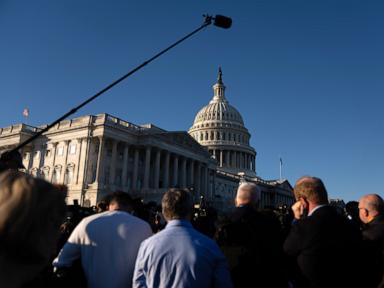
According to standard reporting on Israeli parliamentary transitions, such as accounts covering moments when the Israeli opposition hurries to seize control as a new Knesset is sworn in, legislative battles begin before a governing coalition formally takes the oath of office. In a unicameral parliamentary system operating without a formal, rigid constitution, the brief window between the swearing-in of newly elected Members of Knesset (MKs) and the formal vote of confidence for an incoming government represents a high-stakes institutional vacuum. During this transition phase, opposition blocs systematically target procedural levers—specifically the election of the Knesset Speaker and the staffing of the Arrangements Committee—to constrain the incoming executive branch, delay legislative agendas, and exploit narrow seat margins.
The Structural Mechanics of the Knesset Transition Window
To understand why legislative maneuvers immediately follow the swearing-in ceremony, one must examine the institutional architecture established by Israel’s Basic Laws, particularly Basic Law: The Knesset and Basic Law: The Government. Unlike presidential systems with fixed executive terms and separated powers, the Israeli executive derives its legitimacy directly from the confidence of the 120-member legislature.
When an election concludes and the President of Israel tasks a party leader with forming a government, two parallel tracks run simultaneously: coalition negotiations and the convening of the newly elected parliament. The swearing-in of the new Knesset occurs on a fixed statutory timeline, regardless of whether coalition agreements have been finalized or ratified.
This timing mismatch creates an asymmetric operational environment:
- The Incoming Coalition's Vulnerability: Until a new government wins a formal vote of confidence, the outgoing caretaker government remains in office, yet the newly elected majority bloc does not yet command the institutional apparatus of the parliament.
- The Opposition's First-Mover Advantage: If a cohesive opposition bloc—or a temporary tactical alliance of disparate anti-coalition factions—can assemble a simple majority of 61 MKs on the floor during the inaugural session, it can capture key procedural offices before the incoming Prime Minister locks in coalition discipline.
- The Absence of Upper-Chamber Buffers: Because the Knesset is unicameral, control over floor scheduling and committee assignments equates to total gatekeeping power over the legislative pipeline. There is no senate or upper house to moderate or delay procedural bottlenecks initiated in the primary chamber.
Political scientists analyzing parliamentary regimes classify these dynamics under veto-player theory. In Israel's proportional representation system—characterized by a low electoral threshold (3.25 percent) and high party fragmentation—governing coalitions frequently rely on razor-thin majorities of 61 to 64 seats. In such an arithmetic environment, every single MK functions as a potential veto player. When an opposition bloc moves rapidly at the swearing-in stage, it is not attempting to pass substantive laws; rather, it is attempting to raise the transaction costs of governance for the incoming administration.
The Two Primary Procedural Chokepoints
Media narratives often describe post-election maneuvering in broad strokes as a race for control. In operational terms, this race focuses on two specific institutional mechanisms: the Knesset Speakership and the Arrangements Committee.
1. The Knesset Speaker (Yoshev Rosh HaKnesset)
The Speaker of the Knesset is far more than a ceremonial moderator of floor debates. Under the Knesset Rules of Procedure, the Speaker exercises substantial agenda-setting authority, determines the order in which bills are brought to the plenum for preliminary and subsequent readings, rules on procedural motions, and serves as Acting President of the State when the President is incapacitated or abroad.
Historically, the Speaker was elected at the inaugural session. Following amendments to the Basic Laws, the election of a permanent Speaker can be delayed until the vote of confidence for the new government, leaving the longest-serving MK to preside as Interim Speaker. However, if a majority of 61 MKs demands an immediate vote to replace the Interim Speaker or elect a permanent Speaker prior to the government's formation, the plenary must hold that vote.
- Offensive Utility for the Opposition: Capturing the Speakership allows an opposition bloc to control the legislative calendar during the critical weeks of coalition building. An opposition-aligned Speaker can fast-track private member bills designed to fracture the incoming coalition—such as legislation disqualifying indicted politicians from serving as Prime Minister, or bills targeting the specific ideological priorities of prospective coalition partners.
- Defensive Necessity for the Coalition: For the incoming Prime Minister, securing a loyalist in the Speaker's chair is a prerequisite for legislative stability. Without control of the gavel, the executive loses the ability to shield its nascent coalition from poison-pill votes on the floor.
2. The Arrangements Committee (Va'adat HaHaskamot)
Between the swearing-in of a new Knesset and the establishment of permanent standing committees (such as the Finance Committee, the Foreign Affairs and Defense Committee, and the Constitution, Law and Justice Committee), the Arrangements Committee serves as the supreme organizational body of the parliament.
The committee's mandate includes:
- Committee Allocation: Determining the partisan composition and chairmanships of all permanent Knesset committees.
- Legislative Routing: Deciding which standing or special committees will review urgent bills before permanent committees are fully constituted.
- Immunity and Procedural Waivers: Granting or denying exemptions from the mandatory 45-day waiting period required between the submission of a private member bill and its preliminary reading on the floor.
The third function—waiving the 45-day cooling-off period—is the decisive tactical weapon during a transition. Normally, bills proposed by individual MKs must sit on the Knesset table for 45 days before advancing, giving the government time to coordinate responses, negotiate compromises, or mobilize votes. If an opposition coalition controls the Arrangements Committee, it can grant rapid waivers to contentious bills, forcing immediate plenary votes while the incoming coalition is still resolving internal cabinet disputes.
Cause-and-Effect Chains in Narrow-Majority Parliaments
Standard political reporting tends to frame these events as zero-sum personality clashes. A rigorous institutional analysis reveals specific cause-and-effect chains that govern how procedural aggression impacts legislative outcomes.
Cause 1: Premature Floor Votes on Wedge Issues
When an opposition bloc uses the Arrangements Committee to waive waiting periods and bring ideological wedge bills to the floor, prospective coalition partners are forced to take public positions before binding coalition agreements are signed.
Effect: Escalation of Coalition Demands. Small, pivotal parties within the incoming coalition recognize their leverage during unscripted floor votes. To prevent defections on early procedural ballots, the Prime Minister-designate must offer greater concessions—such as senior cabinet portfolios, expanded budget allocations, or explicit policy commitments—thereby weakening executive cohesion before the government even takes office.
Cause 2: Split-Ticket Procedural Alliances
In deeply polarized legislatures, the opposition is rarely a monolithic ideological bloc. Instead, it frequently comprises ideologically incompatible factions—for example, secular center-left parties, right-wing nationalists opposed to the incumbent leader, and Arab-majority parties—united solely by their opposition to the incoming government.
Effect: Tactical Convergence Without Governing Viability. While these factions cannot form an alternative governing coalition due to irreconcilable differences on security, religion, and statehood, they can readily unite around negative procedural votes. Voting together to install an opposition Speaker or pass a single blocking statute requires zero long-term policy alignment. This creates a paradox: a bloc incapable of governing can nonetheless paralyze the legislative machinery of the bloc that won the election.
Cause 3: Institutional Retaliation and Norm Erosion
The Knesset relies heavily on unwritten parliamentary conventions alongside its formal Rules of Procedure. Historically, committee chairmanships were distributed proportionally, and the Speaker maintained a degree of non-partisan institutional neutrality during transitions.
Effect: The Weaponization of Procedure. When one bloc breaks convention to seize procedural control during a transition, the opposing bloc inevitably reciprocates once it secures a majority. Over successive election cycles, this tit-for-tat escalation degrades institutional trust, transforms routine administrative votes into existential confidence tests, and accelerates legislative turnover.
Operational Limitations of Opposition Procedural Offensives
While rapid procedural action at the swearing-in of a new Knesset offers immediate tactical advantages to an opposition, the strategy faces strict structural boundaries. Analysts and political practitioners recognize that procedural control is a wasting asset unless backed by durable parliamentary arithmetic.
- The 61-Seat Ceiling: Procedural maneuvers cannot manufacture a permanent majority. If the incoming coalition successfully finalizes its agreements and commands at least 61 reliable votes on the floor, it can immediately vote to replace an opposition Speaker, reconstitute the Arrangements Committee, and overturn any interim committee appointments.
- Voter Fatigue and Public Legitimacy: Aggressive procedural obstructionism carries reputational risks. Electorates in parliamentary democracies generally expect the bloc that secured a clear electoral mandate to be given the opportunity to govern. If an opposition uses technicalities to indefinitely stall the formation of a government, it risks alienating moderate swing voters in the event of a snap election.
- Internal Opposition Fragility: Maintaining discipline across a heterogeneous opposition requires constant negotiation. The incoming Prime Minister can exploit these fissures by offering targeted policy incentives or committee chairmanships to individual opposition factions in exchange for abstaining on key procedural votes. A single abstention can collapse a 60-to-60 tie, neutralizing the opposition's temporary advantage.
- Judicial Review Constraints: In Israel, the High Court of Justice exercises judicial review over parliamentary procedures when allegations arise of severe abuse of power or violation of foundational democratic principles. While the Court traditionally exercises restraint regarding internal Knesset proceedings, extreme procedural manipulation—such as an Interim Speaker indefinitely refusing to schedule a legally mandated vote—can trigger judicial intervention, stripping the opposition of its unilateral control.
Analytical Framework for Tracking Knesset Transitions
To evaluate whether an opposition's opening gambit during a Knesset swearing-in represents a genuine threat to an incoming government or merely symbolic theater, observers should monitor four quantifiable indicators rather than relying on partisan rhetoric:
- The Defection Margin: Calculate the exact number of seats separating the incoming coalition from the 61-seat threshold. A coalition with 64 or more seats possesses a buffer that absorbs isolated defections; a 61-seat coalition operates with zero margin for error, making every procedural vote an existential threat.
- Arrangements Committee Seat Distribution: Track the exact partisan breakdown proposed for the Arrangements Committee. If the incoming coalition fails to secure a clear majority on this specific committee during the first week of the session, its legislative timetable is compromised.
- Waiver Approvals for Private Member Bills: Monitor the volume of 45-day waiting period exemptions granted by the Arrangements Committee. A spike in approved waivers indicates that the opposition is actively dictating the plenary agenda.
- Coalition Agreement Signing Velocity: Compare the timeline of signed coalition agreements against the statutory deadline for government formation. Delays in finalizing specific ministerial portfolios—particularly Finance, Defense, Justice, and Interior—correlate directly with vulnerability on the Knesset floor.
Strategic Outlook for Parliamentary Transitions
In fragmented multi-party systems without constitutional rigidity, the period immediately following a parliamentary swearing-in will remain a contested operational phase. As long as electoral thresholds allow small parties to act as kingmakers and coalition majorities hover near the minimum threshold, opposition blocs will treat the inaugural session as their primary window to extract concessions and disrupt executive momentum.
For incoming governing coalitions, the decisive countermeasure is front-loading coalition discipline prior to the swearing-in ceremony. Rather than treating the swearing-in as a ceremonial milestone while delaying difficult portfolio negotiations, a Prime Minister-designate must secure binding written commitments on two non-negotiable items before the first gavel falls: unified backing for the coalition's candidate for Knesset Speaker, and an agreed partisan formula for the Arrangements Committee. Securing those two procedural locks neutralizes the opposition's first-mover advantage and converts a vulnerable transition window into a controlled legislative launch.