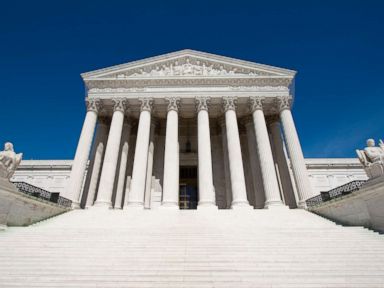
The Department of Justice has launched an emergency petition asking the Supreme Court to permit the immediate administrative discharge of 29 transgender military service members. Solicitor General D. John Sauer argued that lower court injunctions shield active-duty personnel whose presence allegedly undermines military readiness and unit cohesion. The legal move bypasses an upcoming federal trial set for January 2027 and seeks to dismantle the remaining judicial protections shielding active-duty personnel from an executive order signed early in President Donald Trump’s second term.
The legal push appears to target a fraction of the military—29 individuals out of a total active force exceeding 1.3 million. However, focusing strictly on headcounts misses the broader legal strategy at play. Behind the emergency petition lies a deliberate effort to establish unprecedented executive control over military personnel policy, stripping federal courts of their historic oversight authority.
The Mechanism of Pretext
When Secretary of Defense Pete Hegseth rolled out the administration’s updated transgender policy in early 2025, it went far beyond previous policy iterations. The 2018 policy drafted under former Defense Secretary Jim Mattis carved out a grandfather clause. It allowed troops who had already transitioned or were serving under previous guidelines to remain on active duty.
The current policy offers no such carve-outs. It mandates the immediate identification and separation of service members diagnosed with gender dysphoria, creating waiver criteria so narrow that federal judges have termed them virtually non-existent.
"An unprecedented degree of animus towards transgender people animates and permeates the Ban," lawyers for the plaintiffs wrote in court filings, noting that the policy was issued without any underlying study demonstrating a negative impact on military readiness.
The administration bases its legal argument on military deference—a doctrine established in the 1981 Supreme Court case Rostker v. Goldberg, which dictates that judiciary bodies must yield to executive authority on national defense standards. Department of Justice attorneys assert that federal judges lack the expertise to question what constitutes a "deployable force."
Yet, lower courts have identified severe logical gaps in this stance. U.S. District Judge Ana Reyes noted in her ruling that the policy appeared "soaked in animus and dripping with pretext," pointing out that the Pentagon presented zero empirical evidence showing that the 29 named service members—many holding high security clearances and commendations—impacted combat effectiveness.
Strategic Erasure Ahead of Trial
The timing of this Supreme Court emergency application is tactical. A two-week federal trial scheduled for January 2027 in Washington, D.C., will force the Pentagon to produce internal emails, staff memoranda, and expert witness testimony under oath. During discovery, defense officials would be compelled to prove that these service members actually hindered operational capabilities.
By petitioning the High Court via the emergency docket—often referred to as the shadow docket—the administration hopes to secure a procedural victory before evidence is evaluated in a court of law.
Consider a hypothetical scenario in corporate litigation: a company facing a high-stakes audit asks a judge to throw out the plaintiff's employment records before a forensic accountant can review them. If granted, the underlying merits of the claim are rendered moot because the affected employees are already gone.
This emergency maneuver seeks the same outcome. If the Supreme Court lifts the injunction, the 29 plaintiffs—led by Army Reserve Second Lieutenant Nicolas Talbott—will face immediate administrative discharge boards. Once removed, their legal claim of ongoing "irreparable harm" collapses, effectively neutralizing the lawsuit before a trial can occur.
| Policy Era | Grandfather Provision | Medical Exemption | Standard for Discharge |
|---|---|---|---|
| Obama (2016) | Full Protection | Full Medical Coverage | Standard Conduct/Fitness |
| Trump I (2018) | Grandfathered Existing Troops | Restricted | Diagnosis of Gender Dysphoria |
| Biden (2021) | Full Protection | Full Medical Coverage | Standard Conduct/Fitness |
| Trump II (2025) | None | Effectively Disallowed | Universal Administrative Separation |
Institutional Costs and Operational Fallout
The drive to remove these 29 individuals carries broader institutional consequences. Modern military forces rely heavily on technical specialists, intelligence analysts, cyber warfare technicians, and experienced non-commissioned officers. Replacing a trained service member requires significant taxpayer resources and years of instruction.
When the Pentagon uses administrative discharge mechanisms to remove personnel for non-performance factors, it creates structural instability within specialized units. Senior commanders are forced to expend administrative hours on separation boards rather than mission readiness.
The U.S. Court of Appeals for the D.C. Circuit highlighted this disconnect in June 2026, when Judges Robert Wilkins and Judith Rogers ruled 2-to-1 to leave the protective injunction in place. Judge Wilkins observed that the executive policy seemed driven by a desire to target a specific group rather than genuine operational necessity.
The administration's stance assumes that uniform standards require total social homogeneity. However, decades of military history, including the repeal of "Don't Ask, Don't Tell" in 2011, show that cohesion relies on leadership and discipline, not the exclusion of minority groups.
The Expanding Boundaries of Executive Power
The battle over these 29 service members serves as a test case for executive authority. If the Supreme Court grants the Solicitor General's petition, it establishes a precedent: the White House can bypass formal trial proceedings and clear out targeted personnel simply by invoking military necessity.
This extends far beyond military policy. It touches on the separation of powers and whether emergency dockets can be used to alter civil rights protections without trial court findings.
The Supreme Court is expected to issue its response on the emergency stay before its official fall term begins. If the justices side with the administration, the Pentagon will begin separation proceedings within 72 hours, effectively ending open service for trans troops and signaling that executive military decisions remain beyond the reach of judicial oversight.