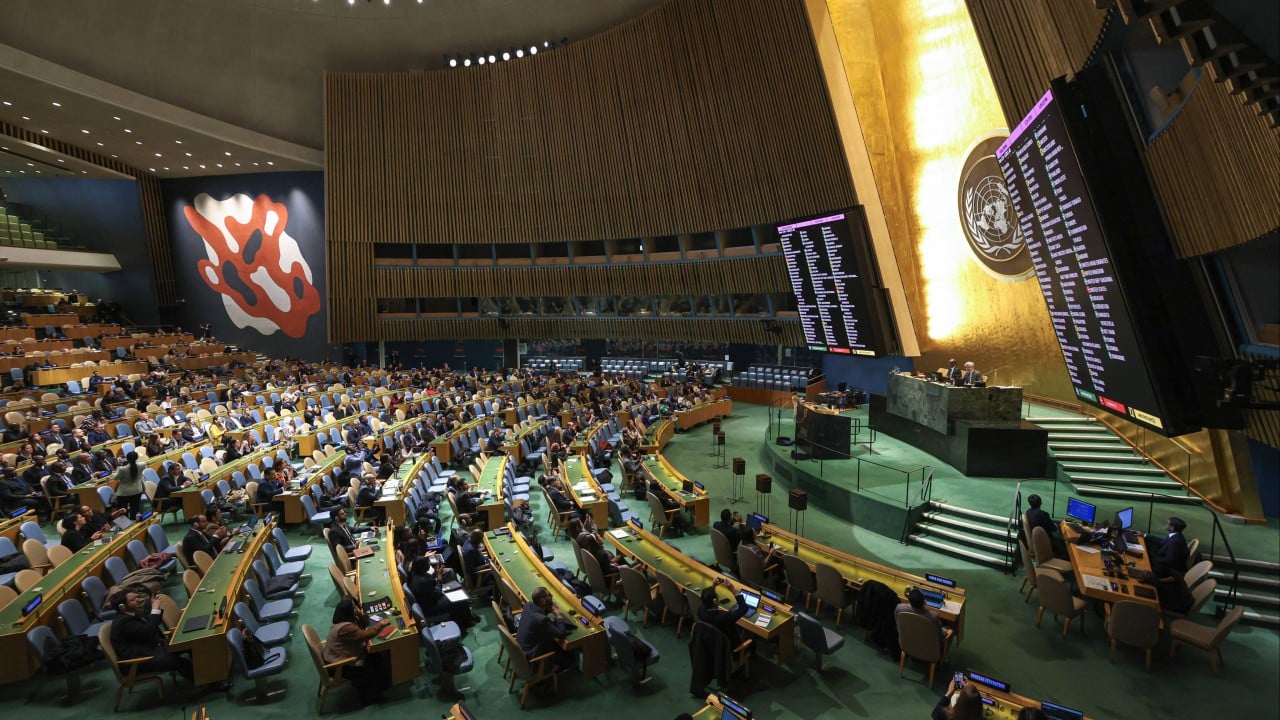
Governments love to hide behind legal technicalities when past atrocities surface. For decades, powerful nations facing demands for transatlantic slave trade reparations have waved away claims using a simple excuse: it wasn't illegal back then. That convenient defense is now shattering.
A major shift just hit the international stage. The United Nation's Committee on the Elimination of Racial Discrimination published guidance stating that countries are legally bound to consider reparations. This isn't just about ancient history or moral guilt. It is about modern legal obligations under a binding 1965 convention. Don't miss our recent coverage on this related article.
The End of the Intertemporality Defense
Critics of compensation claims have long relied on the intertemporality principle. This legal concept argues that acts must be judged by the laws of the era in which they occurred. Since chattel slavery and the trafficking of at least 12.5 million Africans between the 15th and 19th centuries were permitted under historical legal frameworks, governments claim they carry zero modern liability.
The new UN guidance completely flips that script. Pela Boker-Wilson, a committee expert from Liberia who helped draft the document, noted that states must move past empty expressions of regret. The mandate argues that regardless of historical legality, nations are bound by current international treaties to address active structural inequalities. If systemic racism persists today because of historical theft and displacement, modern governments have a present-day duty to fix it. If you want more about the context of this, Reuters provides an informative summary.
Beyond Writing Checks
Money matters, but cash payouts alone won't solve centuries of institutional damage. The UN framework outlines transformative steps that go far beyond financial transfers.
- Opening archives: Governments must unseal historical records to expose how wealth was accumulated.
- Revising memorials: Public spaces need honest reckonings with history instead of sanitized monuments.
- Truth commissions: Independent bodies must document ongoing socio-economic disparities directly linked to racialized chattel slavery.
Resistance remains fierce. Major Western powers, including the United States, Israel, and nations within the European Union, routinely block or abstain from these resolutions. Washington previously argued that the organization was never built to establish mandates for historical wrongs. Yet, momentum keeps building globally, driven by coalitions from the African Union and Caribbean nations pushing for true reparatory justice.
What Happens Next in Courtrooms
This new guidance is designed to be cited directly in domestic and international courtrooms. Activists and legal teams no longer have to rely purely on moral arguments. They have a structured UN interpretation linking active anti-discrimination laws directly to historical accountability.
If you want to track where this movement goes next, stop looking at political speeches and start watching the courts. Legal strategies are pivoting from charity to liability. Governments can issue all the formal apologies they want, but the demand for systemic restructuring is here to stay.