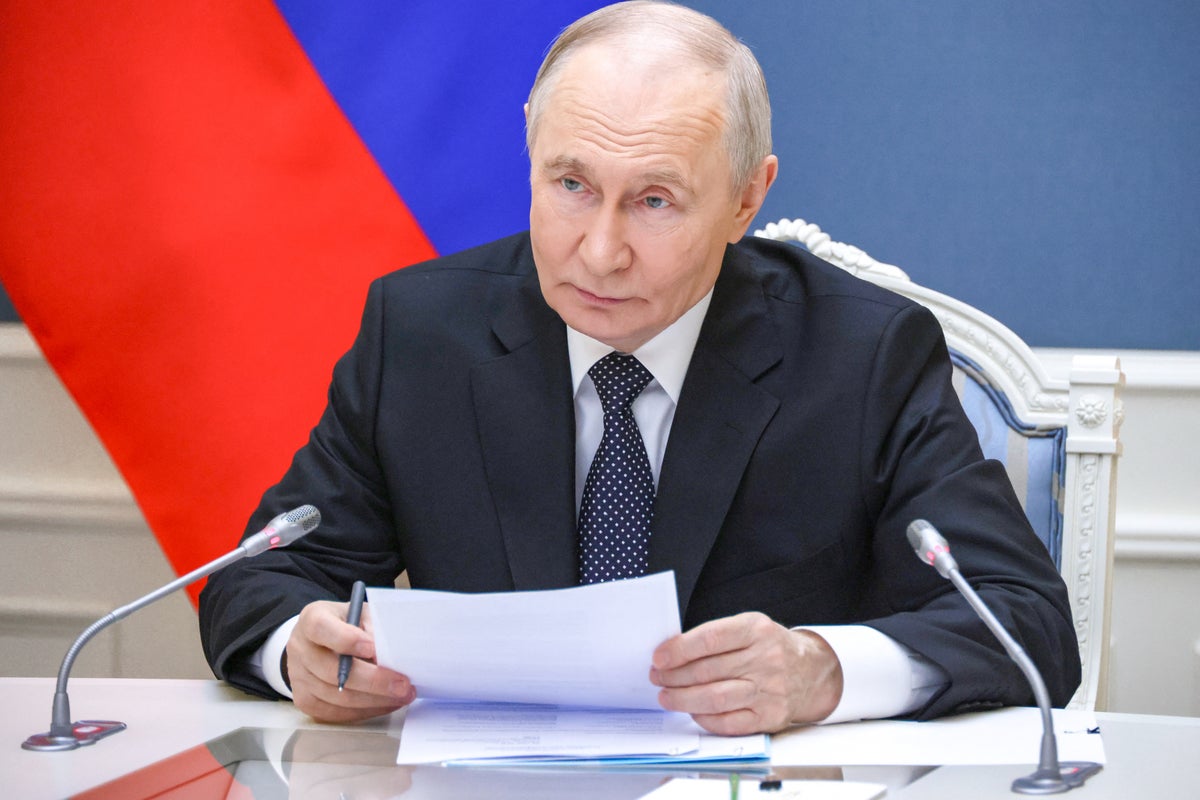
Vladimir Putin wants you to believe he is the most reluctant nuclear actor on earth. Just as Russia wrapped up massive, multi-domain nuclear war games alongside Belarus, the Russian president took to a video call to assure everyone that pulling the nuclear trigger remains an extreme, exceptional measure of last resort. It's a line we've heard before.
Don't let the calm, bureaucratic language fool you. While Putin talks about restraint, the reality on the ground looks entirely different. Sixty-four thousand troops just spent three days simulating the end of the world. Intercontinental ballistic missiles rumbled down Belarusian forest roads, nuclear-powered submarines slipped out of Arctic ports, and strategic bombers scrambled into the sky.
When a leader coordinates a massive display of atomic might and calls it a defensive measure, he isn't trying to de-escalate. He is drawing a line in the sand. This latest show of force is a direct message to NATO and a response to shifting dynamics within the five-year-old conflict in Ukraine.
Inside the War Games
This wasn't a standard, routine military exercise. The scale of these joint maneuvers was staggering. According to official data from the Russian Defense Ministry, the drills mobilized more than 200 missile launchers, 140 aircraft, 73 surface warships, and 13 submarines. Eight of those submarines were armed with nuclear-tipped intercontinental ballistic missiles (ICBMs).
Forces test-fired Yars and Sineva ICBMs from the northern Plesetsk Cosmodrome and remote maritime zones. At sea, frigates launched Zircon hypersonic missiles, while MiG-31 fighter jets simulated strikes using air-launched Kinzhal systems.
The real story lies in the involvement of Belarus.
Minsk didn't just provide a venue; its forces were actively issued nuclear munitions for preparation and transport. Belarusian troops even test-fired a short-range Iskander ballistic missile at a training ground inside Russia. Belarusian President Alexander Lukashenko, long dependent on Moscow for political survival, openly fawned over the hardware. He inspected the Iskander units and remarked that he had dreamed about having those machines for a long time.
The integration goes deeper than simple cross-border training. Russia has systematically expanded its nuclear footprint into Belarus, deploying tactical nuclear warheads and the recently introduced intermediate-range Oreshnik missile system. The Oreshnik is a hypersonic monster. Traveling at speeds up to Mach 10, its multiple conventional warheads can inflict damage mimicking a nuclear strike without crossing the atomic threshold. By placing these systems in Belarus, Moscow directly threatens NATO's eastern flank, specifically Poland, Lithuania, and Latvia.
The Strategy Behind the Threats
Why stage these massive drills now? The timing reveals everything about the Kremlin's current anxieties.
Ukraine has drastically stepped up its long-range drone campaign. A recent weekend drone barrage struck the suburbs of Moscow, killing several civilians and hitting industrial facilities. For years, the Kremlin managed to insulate regular Russian citizens from the daily realities of the war. These deep-strike drone attacks shattered that illusion. Putin needed a domestic and international distraction, a reminder that Russia holds the ultimate trump card.
There is also the shifting legal framework of Russian defense. In 2024, Putin formally revised Russia’s nuclear doctrine, officially lowering the bar for using atomic weapons. Under these updated rules, any conventional attack on Russian soil by a non-nuclear state that is backed or supported by a nuclear power is viewed as a joint attack on the Russian Federation. This doctrine explicitly extended Russia's nuclear umbrella to cover Belarus.
Kremlin hawks have spent months urging Putin to take a harder line. They want direct, conventional strikes on European factories producing Ukrainian drones. They argue that European NATO members are too terrified of a total nuclear exchange to strike back. By executing these drills, Putin is signaling to Western leaders that the hawks might eventually get their way if long-range strikes inside Russia continue.
Reading Between the Lines
Western analysts view these exercises with a mix of concern and skepticism. NATO officials routinely dismiss the public statements as irresponsible sabre-rattling. They point out that Russian nuclear drills almost exclusively utilize dummy warheads, and the frantic movement of military hardware is largely theater designed for satellite surveillance.
Yet, ignoring the drills entirely is a dangerous gamble. The Federation of American Scientists tracks global nuclear stockpiles closely. Russia commands the largest arsenal in the world with roughly 5,580 warheads, slightly edges out the United States at 5,044, and dwarfs China’s growing stockpile of 620. When the nation with the largest atomic arsenal on earth practices moving live-compatible warheads to unplanned, forward-deployed locations in a client state, the risk of miscalculation skyrockets.
The geopolitical landscape is shifting fast. Just as these drills peaked, Putin kicked off a high-profile diplomatic visit to China. Concurrently, Moscow and Beijing issued joint statements blasting Western missile defense initiatives, proving that Russia's nuclear posture isn't just about Ukraine. It's about a broader, global pushback against Western military dominance.
If you are trying to understand the next phase of this standoff, don't watch Putin’s lips. Watch the logistics. Keep a close eye on weapon transit corridors into Belarus and watch how NATO adjusts its air defense posture along the Polish border. The "last resort" rhetoric will keep repeating, but the real indicators of escalation will be written in the flight paths of hypersonic missiles and the movement of heavy transport trucks through the forests of Eastern Europe.