Two miles. That is how far the riverbed has retreated since I first walked its banks twelve years ago, carrying a notepad and a camera that overheated in the afternoon glare.
At the time, I thought I was covering an agricultural story. I was looking at cracked soil, stunted maize, and reservoir gauges dipping into the red. I interviewed agronomists who spoke in the clean, detached language of rainfall anomalies and crop yield projections. Then I met Amara.
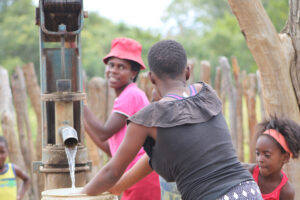
Amara is a composite name—a hypothetical stand-in for dozens of women I have interviewed across East Africa and South Asia over the last decade—yet every detail of her morning is drawn directly from field notebooks filled with dust and sweat. Her day begins at four in the morning, in the pitch dark, because the well nearest her village dried up three summers ago. Before she can boil tea, before she can wake her children for school, before she can tend the half-acre of sorghum that keeps her family solvent, she must walk. Two miles out with an empty yellow jerrycan. Two miles back with forty-four pounds of water balanced on her crown.
By seven o'clock, she has already expended the caloric equivalent of a five-mile run. Her workday has not officially started.
When we talk about global warming, we usually reach for planetary metaphors. We talk about melting ice sheets, rising tides, and degrees of Celsius creeping upward on a graph. Those metrics are real, and they are terrifying. Yet they obscure a quieter, far more intimate catastrophe unfolding inside millions of households right now. Climate change is not an equal-opportunity destroyer. It acts like a magnifying glass held over existing social fractures, concentrating heat and pressure onto the weakest points of our economic architecture.
According to warnings from CGIAR—the world’s largest publicly funded agricultural research partnership—if governments and institutions fail to intervene, climate change will push tens of millions of women further behind men by 2050, reversing decades of hard-won gains in income, health, and autonomy.
The Invisible Tax on Time
To understand why a changing climate targets women with such surgical precision, you have to look at the unpaid economy that keeps the rural world spinning.
In low- and middle-income countries, women make up nearly half of the agricultural workforce. They plant, weed, harvest, and process the food that feeds entire nations. Yet in the eyes of banks, land registries, and extension agencies, they are often ghosts. Across much of the developing world, women own less than twenty percent of the agricultural land they farm.
Imagine trying to run a small business where you do not own the storefront, cannot take out a loan to buy inventory, and are legally barred from signing a lease—and then a flood washes away your stockroom. That is the structural reality facing rural women when weather patterns turn hostile.
Consider what happens next when a drought settles over a farming district. Men, who generally hold land titles, identification documents, and social mobility, frequently migrate to cities or neighboring regions in search of wage labor. Women stay behind. They cannot easily leave because they are bound to the care of children, aging parents, and livestock. Suddenly, a woman who was already managing a household is now the sole farm manager, water collector, firewood gatherer, and caregiver—all while the natural resources she relies on are shrinking.
I remember sitting under a corrugated tin roof during a monsoon failure in central India, watching a woman named Sunita—another real composite of farmers I have known—sort through a pile of shriveled lentils. She told me she had pulled her fourteen-year-old daughter out of secondary school that week. Not because she didn't value education. She had fought her husband for three years to keep the girl enrolled. She pulled her out because fetching water now took four hours a day instead of one, and someone had to watch the younger toddlers while Sunita worked the fields.
Economists call this "time poverty." In plain terms, it means a woman's day is stretched so thin by survival tasks that there are zero hours left for paid work, education, or rest. CGIAR researchers have found that as temperatures rise and rainfall becomes erratic, the hours women spend on unpaid care and domestic labor spike dramatically. Every extra mile walked for water is an hour stolen from a classroom, a market stall, or a community meeting.
When Biology Meets Extreme Heat
There is a physical toll here that rarely makes it into economic briefings, though anyone who has stood in a paddy field at noon in May knows it instinctively.
Heat does not affect all bodies the same way. Pregnant and lactating women are uniquely vulnerable to extreme temperatures. Dehydration and prolonged heat stress trigger a cascade of physiological crises—increasing the risks of preterm birth, stillbirth, low birth weight, and maternal hypertension. Yet in regions where agricultural labor is the primary livelihood, pregnant women rarely have the option of retreating into air-conditioned rooms when a heatwave hits. If they stop weeding or harvesting, the family does not eat.
Nutrition follows the same grim hierarchy. In households facing climate-induced food shortages, cultural norms across many regions dictate that women and girls eat last and least. When crop yields drop because of an unseasonal frost or a prolonged dry spell, women are the first to absorb the caloric deficit.
I once watched a health worker in a drought-stricken district weigh mothers alongside their infants. The babies were holding steady, protected by their mothers' fierce rationing. The mothers themselves were wasting away, suffering from severe iron-deficiency anemia and chronic exhaustion. An undernourished woman cannot work as hard in the fields; her lowered productivity reduces household income further; lower income buys less food. It is a closed loop of deprivation, tightened with every degree of warming.
The Architecture of Exclusion
Why don't women simply adapt? Why don't they switch to drought-resistant seeds, install drip irrigation, or buy crop insurance?
The question sounds reasonable from a distance, until you trace the plumbing of agricultural finance and information.
Suppose an agricultural ministry develops a brilliant new variety of heat-tolerant chickpea. To get those seeds into the ground, extension agents travel to villages to hold training sessions. Often, those agents are men. They hold meetings at times when women are cooking or collecting water, and they invite "heads of households"—a title almost universally assigned to men. The information stops at the front door. Even if a woman hears about the new seeds, she likely lacks the cash or credit to buy them because she has no collateral to offer a bank.
Digital tools, often hailed as the great equalizer in modern farming, frequently stumble over the same barrier. Across low- and middle-income countries, hundreds of millions fewer women than men own mobile phones or have access to mobile internet. If weather alerts and market prices are delivered via SMS, a woman without a phone is flying blind into a storm.
CGIAR’s projections for 2050 are built on this exact compounding math. Left unchecked, climate shocks do not merely pause gender equality; they actively throw it into reverse. Analysts warn that under a high-emissions scenario without targeted gender-responsive policies, tens of millions more women and girls could be pushed into extreme poverty and chronic food insecurity over the next twenty-five years. The wage gap widens. School completion rates for girls plummet. Rates of child marriage—often used by desperate families as a financial coping mechanism during severe droughts—climb back up after years of steady decline.
Flipping the Ledger
It would be easy to read these projections and surrender to fatalism. The scale of the atmospheric shift feels vast, and the social norms tangled up with it are centuries old. Honestly, there are moments in the field when the sheer weight of what rural women are asked to carry feels insurmountable. You look at a dry riverbed, you look at a ledger of unpaid hours, and you wonder how policy papers can possibly bridge that chasm.
Then you see what happens when someone actually puts tools, capital, and authority directly into women’s hands.
Several years ago, I visited a cooperative of women farmers in western Kenya who had gained access to small-scale solar irrigation pumps through a microfinance initiative designed specifically around their schedules and collateral limits. Before the pumps, they farmed entirely at the mercy of the rains, harvesting once a year if they were lucky.
The change was not merely agricultural; it was tectonic. With reliable water, they shifted from subsistence grains to high-value vegetables—kale, tomatoes, onions—harvesting three times a year. Because they controlled the equipment and the bank accounts, they controlled the revenue. Within two years, the cooperative had built a cold-storage shed, negotiated bulk transport to regional markets, and funded secondary school fees for every girl in their collective.
The science backs up what those women proved in the dirt. Studies consistently show that when women farmers have the same access to productive resources as men—land, seeds, fertilizer, credit, and training—their farm yields increase by twenty to thirty percent. That single shift could raise total agricultural output in developing countries enough to pull over a hundred million people out of hunger.
What Real Intervention Looks Like
Closing this gap before 2050 does not require inventing futuristic technology. It requires dismantling the specific bottlenecks that keep existing solutions out of women's reach.
First, land rights have to move from paper to practice. In dozens of countries, laws nominally allow women to inherit and own property, yet customary practices routinely override statutory law. Securing joint land titles—putting a woman’s name alongside her husband’s on the deed—fundamentally alters her bargaining power inside the home and unlocks access to formal credit.
Second, climate finance must stop treating women as passive victims and start funding them as infrastructure builders. Right now, a tiny fraction of global climate adaptation funding reaches local communities, and an even smaller sliver is explicitly designed with gender equity in mind. Direct cash transfers, women-led savings groups, and tailored crop insurance payouts triggered automatically by satellite rainfall data bypass traditional gatekeepers and put liquidity directly where emergencies happen.
Third, agricultural science itself has to change how it listens. When plant breeders consult both men and women before designing new crop varieties, they discover different priorities. Men often prioritize high market yield; women frequently prioritize cooking time, storage durability, nutritional density, and ease of processing—traits that directly reduce their daily labor burden. Designing a bean that cooks thirty minutes faster saves firewood, reduces smoke inhalation in the kitchen, and gives a woman back half an hour of her life every single evening.
The Weight of a Jerrycan
We tend to measure history by its loudest moments—treaties signed in grand halls, temperatures breaking records on evening broadcasts, stock markets plunging after a storm. We rarely measure it by the quiet accumulation of small burdens carried in the dark before dawn.
Yet the trajectory of the next quarter-century is being decided right now in those early morning hours, on dusty footpaths leading to shrinking wells. If we continue to treat climate policy as a purely technical exercise—a matter of carbon accounting and seawalls—we will build a future that leaves half the human race stranded on the wrong side of survival.
Think back to Amara, standing at the edge of that dry riverbed at four in the morning, lifting forty-four pounds of water onto her head before the sun even clears the horizon. Every policy brief, every climate summit, every billion-dollar adaptation pledge comes down to a single, brutal question: by 2050, will she still be walking those two miles alone in the dark, or will we finally have the sense to hand her the keys to the well?


