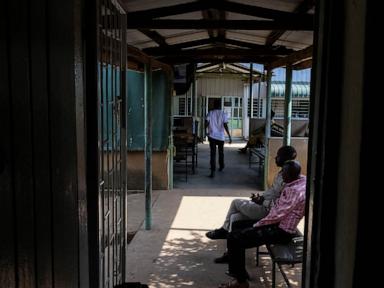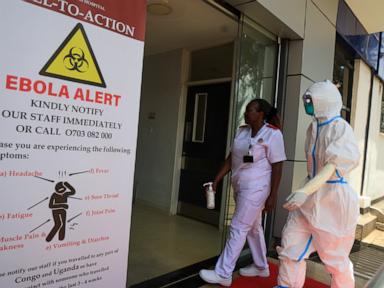
Five people walked out of an isolation ward in Kenya after negative Ebola tests, while two others remained behind closed doors.
On paper, that is a neat sentence. A two-part balance sheet. Five out, two in. A headline a hurried reader can skim over coffee without feeling the floor shift beneath their feet.
Not a chance.
When a hospital door swings open for five people suspected of carrying Ebola, the sound is never ordinary. Rubber soles squeak against linoleum. A nurse checks a clipboard one last time. Somewhere down the corridor, a heavy latch clicks shut behind two patients whose bodies are still fighting, or whose laboratory results have not yet given permission to breathe.
Relief.
That is the word that arrives first when five people clear testing and walk free. Then comes a quieter, heavier word: wait.
I have stood near infectious disease wards long enough to know that fear in those hallways rarely looks like panic. Mostly, it looks like stillness. It looks like a mother staring at a plastic-wrapped water bottle, wondering if she should touch it with bare hands or wait for someone in a white gown to set it down. It looks like health workers whose eyes are visible above masks, tired in a way sleep does not immediately fix, carrying the double weight of caring for the sick and protecting every neighbor outside the perimeter.
To understand why five discharges and two remaining hospitalizations in Kenya matter so deeply, we have to look past the raw count. Numbers tidy up chaos. Real life is messier.
What a Negative Test Actually Buys
A negative Ebola test does not erase the memory of a fever. It does not instantly undo the days spent watching a thermometer climb, or the look on a relative's face when an ambulance pulls up to a compound where everyone knows the stakes.
What it buys is time. And oxygen. And the right to sit on a familiar bench without wondering who is flinching across the room.
Ebola is terrifying because of what it does to trust. Long before a virus reaches the bloodstream, it reaches the space between people. A handshake hesitates. A shared cup stays untouched. A funeral—normally the moment a community gathers close to mourn and honor the dead—becomes a site of danger if proper precautions are not taken. Even a routine cough or a spike in temperature can turn a household into a quarantine zone of dread.
Let's use a hypothetical scenario to see how quickly that dread takes shape. Suppose a man in a bustling Kenyan market town develops a high fever, body aches, and vomiting after caring for a sick relative who recently traveled across a border. Nothing is certain yet. Malaria looks like that. Typhoid can look like that. A bad viral illness can look like that, too. Yet in a region attuned to hemorrhagic fever risks, uncertainty carries teeth. By the time he reaches a screening tent and undergoes testing, his family is already living inside two parallel timelines: one where he comes home by dusk, and another where health officials knock at midnight to trace everyone he sat beside on a matatu.
When the test comes back negative, the second timeline collapses.
For the five patients discharged in Kenya, that collapse must have felt like gravity returning after weightlessness. Imagine stepping out of controlled air and bright fluorescent light into open breeze. Imagine hearing ordinary street noise—horns, voices, footsteps—without the filter of clinical alarm. Every negative result in an outbreak response is a quiet victory for public health surveillance, laboratory diagnostics, and rapid isolation protocols, because every false alarm or suspected case ruled out shrinks the shadow of fear over a community.
Still, medicine is not a magic wand. Sometimes a patient tests negative once early in illness when viral levels are too low to detect, requiring repeat testing depending on symptoms and exposure history. Sometimes a person is cleared of Ebola only to need care for whatever else made them sick in the first place. A negative Ebola test means one specific monster is not the culprit, even when the body still hurts.
The Two Who Stay Behind
Now turn toward the two patients who remained hospitalized.
Hospital.
Just saying the word changes the room. Behind those doors, the story is unfinished. Two beds still occupied. Two families checking their phones every hour. Two sets of clinicians moving carefully through standard and transmission-based precautions, watching vital signs, managing fluids, supporting organs, and waiting for laboratory confirmation or clinical recovery.
Why do two remain when five are released? In real-world clinical care, suspected cases rarely move in lockstep. People arrive at different stages of illness. Some had closer or more recent exposure histories. Some present with persistent symptoms that require extended observation or repeat testing before clinicians can safely discharge them. Others may have confirmed infection and are undergoing intensive supportive treatment, where survival depends heavily on early hydration, electrolyte balance, and attentive nursing care.
Think of it like runners leaving a starting line together. Five reach the next marker early and are waved through. Two are still on the course, breathing hard, every step measured.
We often treat outbreaks as if everyone experiences them on the same clock. We don't. One person gets the all-clear on Tuesday; another is still holding their breath on Friday. That gap—between the ones who walk out and the ones who stay in—is where the emotional weight of infectious disease response lives.
A community can celebrate five releases and still feel a knot in its stomach for two. Compassion doesn't divide neatly into percentages. If you know one of the two still inside, statistics stop being comforting. You don't care about regional readiness or global health metrics in that moment. You care whether their fever is dropping. You care whether they are eating a spoonful of porridge. You care whether a nurse is sitting near enough to hear them call out in the night.
Why Kenya's Response Resonates Beyond Its Borders
Kenya occupies a critical crossroads in East Africa. Busy transport corridors, cross-border trade, dense urban neighborhoods, and international travel hubs make vigilance non-negotiable. When suspected Ebola cases surface in a country like Kenya, the stakes are never purely local.
History has taught the world this lesson the hard way. Across past outbreaks in Central and West Africa, delayed detection, rumor, stigma, and mistrust allowed manageable clusters to spiral into devastating crises. Conversely, when health authorities isolate suspected cases quickly, test rigorously, communicate clearly, and keep frontline workers protected, spread can be stopped before it gains momentum.
Consider what happens next when a health system handles suspected cases transparently: people are more likely to seek care early instead of hiding symptoms out of fear of stigma or isolation.
That is a point worth pausing on, because stigma is one of the quietest accelerators of any outbreak. If neighbors treat a recovered patient like a permanent hazard, or if people fear that walking into a clinic means being cut off from loved ones without explanation, sick individuals may wait too long to get tested. Releasing patients promptly once negative tests are confirmed—and sharing clear updates about those who remain hospitalized—does more than free up a bed. It signals competence. It tells the public that the system is paying attention, following science, and letting people go home as soon as it is safe to do so.
Let's use a metaphor to capture how fragile public trust can be. Think of a clay water pot left in the sun. It holds water well enough while whole, cool, and undisturbed, yet a single sharp knock or sudden heat can hairline-crack the wall, and once a crack forms, every drop seeps out slowly. Public health trust works much like that pot. Rumors knock against it. Secrecy heats it up. Honest, steady communication keeps it intact.
At the same time, we should be candid about what we cannot see from a short headline. Without full clinical details, we don't know whether the remaining two patients are awaiting confirmatory repeat swabs, recovering from another acute illness, or battling confirmed Ebola under strict care. Uncertainty is part of infectious disease reporting, especially in the early stages of investigation. Admitting what isn't known isn't weakness; it is honesty. Real expertise knows the difference between a verified fact and a guess.
The Invisible Labor Behind Every Discharge
Behind every person who walks out of an isolation unit stands an army of people whose names rarely make the front page.
Laboratory technicians running assays with precision when mistakes are unaffordable. Contact tracers walking dusty lanes and busy streets with notebooks or tablets, speaking gently to skeptical families, explaining why checking a temperature each morning matters. Ambulance drivers, cleaners, waste-management crews, and ward nurses working shifts that leave marks on their faces from straps and goggles.
Heat.
Anyone who has worn personal protective equipment in warm weather knows what it feels like after two hours. Sweat runs down your ribs. Your glasses or visor can fog. Every movement takes a little more effort, and you cannot casually rub your nose or wipe your brow with a gloved hand. You stay focused because discipline is your shield—and your patient's safety net.
When five patients are discharged after negative tests, those workers get a brief exhale. Not a victory parade. Just a moment where the pressure eases a fraction. Five fewer suspected cases to monitor in the ward. Five families given back their peace of mind.
Yet the shift isn't over while two patients remain hospitalized. Care continues. Vigilance continues. Infection prevention protocols remain strict because a single lapse at the finish line can undo days of careful work.
What This Moment Asks of the Rest of Us
Most of us reading about five released patients and two still hospitalized are far from the ward doors. We may be scrolling on a phone thousands of miles away, or sitting in another town where Ebola feels like a distant news item rather than an immediate neighbor.
Still, distance has a way of shrinking when infectious diseases are involved. Not because panic is warranted—panic clouds judgment—but because global health is a shared web. Strong diagnostic labs, well-supported health workers, and calm, accurate public communication in Kenya strengthen safety far beyond Kenya's borders.
And closer to home, moments like this test how we talk about illness. Do we reach for sensationalism, or do we look for accuracy? Do we treat people under medical observation like threats, or like human beings going through one of the scariest weeks of their lives?
There is courage in walking into a clinic when your body feels wrong and you don't know what the test will say. There is courage, too, in staying put inside a hospital room when others have already gone home, waiting for your turn to hear good news.
Five walked out into the open air. Two stayed behind the glass.
Outside, the wind kept moving through the trees, indifferent to the hospital walls, carrying the sound of ordinary life waiting for the day every door can stand wide open.