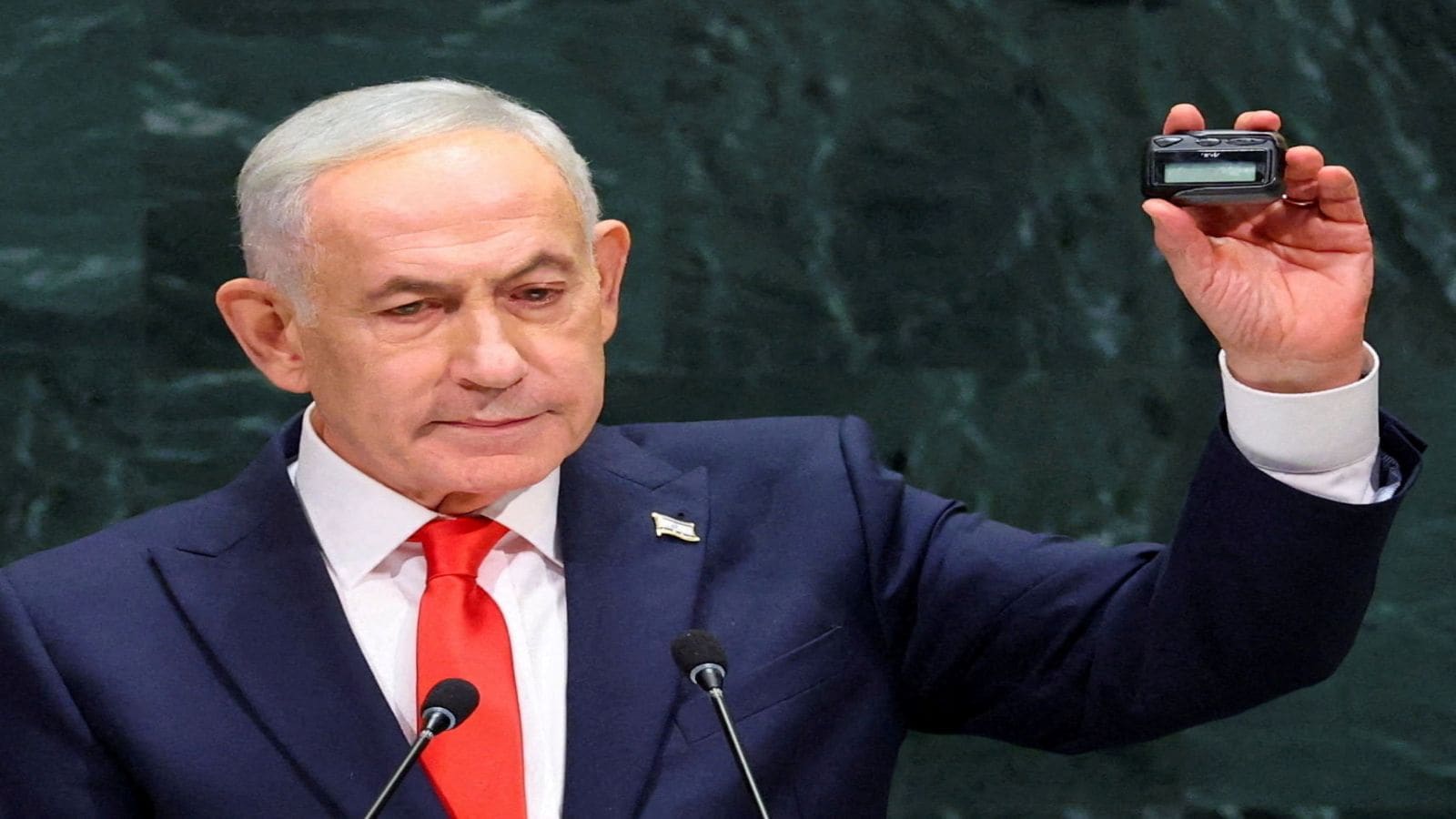
Paper slips fall into plastic ballot boxes all day long in Jerusalem, Tel Aviv, and Haifa, sounding like dry leaves hitting tin. On October 27, 2026, millions of Israelis stepped behind privacy curtains in the country's first parliamentary election since the October 7, 2023 attacks. Yet for many voters, the heaviest weight in the booth wasn't domestic tax policy or neighborhood bus routes. It was a post sent from six thousand miles away.
Days earlier, U.S. President Donald Trump had issued a "Complete and Total Endorsement" of Prime Minister Benjamin Netanyahu, praising him as a "Strong, Brave, and Brilliant" ally and urging voters to help "finish the job" in the war against Iran.
On paper, an endorsement is a simple line of text. In real life, it lands inside a living room where coffee is going cold, a reservist's duffel bag sits half-packed near the door, and a parent wonders whether a foreign leader's applause means safety or another round of sirens.
What Happens When Washington Steps Into a Living Room
Foreign politics usually feels abstract until it reaches through your phone screen and tells you how to vote. Traditionally, American presidents avoided openly picking sides in Israeli elections, worried that taking a public stance could backfire or alienate half the country. Trump tore up that playbook. When asked by Axios whether he could work with another Israeli leader besides Netanyahu, Trump gave a shrug wrapped in warning: "Maybe I will, maybe I won't. Who wants to take the chance?"
That single sentence carries a quiet threat that any voter can feel.
To see how that lands on the ground, consider a hypothetical family—let's call them Tamar and Yonatan, living in a modest apartment in Ramat Gan. Tamar teaches history at a local high school; Yonatan drives a delivery van and has spent months on reserve duty since late 2023. Over breakfast, they argue over a poll showing that 64% of Israelis said Trump's endorsement wouldn't change their vote, 17% said it made them less likely to back Netanyahu, and 12% felt more inclined toward Likud.
"Twelve percent sounds small," Tamar says, tapping her mug. "Until you remember how razor-thin the Knesset math is."
She's right about the math. In a 120-seat parliament where a governing majority requires 61 seats, early counts after the October 27 vote put Netanyahu's bloc hovering in the mid-50s—short of a majority, with Gadi Eisenkot's opposition bloc trailing close behind and soldier ballots still to be tallied. When a country is split down the middle, even a tiny nudge in one direction can tip coalition talks or keep a traditional Likud voter from defecting to a rival right-wing party.
Yonatan isn't convinced. "If a guy in Washington says he might not work with whoever comes next," he replies, pulling on his boots, "doesn't that mean Bibi is the only one who can keep weapons and backing flowing right now?"
Both of them are wrestling with the same dilemma. Neither is stupid, and neither is cold. They are trying to read tea leaves written in Washington while living with the consequences in the Levant.
The Invisible Ledger Behind Every Endorsement
Politics is never just a favor. It is a ledger.
Think of a foreign endorsement like a loud, flashing neon sign hung outside a small shop. It draws eyes from down the block, sure—it signals that a powerful customer likes what's inside. Yet neon buzzes, hums, and costs power every hour it stays lit. Someone eventually has to pay the electric bill.
Analysts watching the 2026 race pointed out a sharp question that rarely makes it into campaign slogans: what does an endorsement from a transactional leader cost? As Middle East analyst Ahron Bregman put it around the election, "You don't get a free meal from Trump," wondering aloud whether Netanyahu might have agreed to restraints—such as holding off on certain strikes against Iran ahead of both the Israeli vote and the American midterms. Meanwhile, Vice President JD Vance took a different tack, declining to endorse Netanyahu and telling reporters his focus was on American midterm races.
Even inside Trump's own orbit, the message wasn't a single choir singing one note.
That tension matters because voters like Tamar and Yonatan don't live inside diplomatic cables. They live inside real security pressures, economic strain, and deep exhaustion. Since October 2023, the war in Gaza has claimed more than 74,000 Palestinian lives and injured over 175,000, while devastating roughly 90% of Gaza's infrastructure, according to Palestinian authorities. Internationally, Netanyahu has faced an International Criminal Court arrest warrant issued in November 2024 over alleged war crimes and crimes against humanity, alongside South Africa's genocide case at the International Court of Justice. Add to that the regional conflict involving Iran, and the stakes stop looking like a routine election. They look like a fault line.
Honestly, it is dizzying to keep track of all the moving pieces at once. War on multiple fronts, shifting coalition numbers, domestic fatigue, foreign pressure—any ordinary person looking at the headlines could feel whiplash. Admitting that doesn't make you uninformed; it makes you human. When the ground keeps shifting under your feet, certainty feels like a luxury nobody can quite afford.
History Has a Way of Humbling Predictors
Anyone who claims a single endorsement settles an election hasn't watched enough history.
Back in April 2026, Hungarian Prime Minister Viktor Orbán had Trump's backing and still lost Hungary's parliamentary election. Backing from a loud, high-profile ally can energize a base or spook fence-sitters, yet domestic grievances—cost of living, trust in institutions, war weariness, accountability—have a stubborn habit of collecting their due at the ballot box.
In Israel, the political map has been fractured for years, with fierce debates over leadership, security failures, judicial and institutional power, and what the country's future should look like after the trauma of October 7. Even where Trump's endorsement nudged some center-right voters to view Netanyahu as useful for dealing with the White House, opposition leader Gadi Eisenkot pushed back cleanly in Tel Aviv, reminding voters that while appreciation for the U.S. is one thing, only Israelis decide their next prime minister.
That distinction gets to the heart of the friction. An ally's voice can echo loudly across oceans, yet sovereignty still lives inside the polling booth.
Why This Moment Feels Different for Everyone Watching
When you step back from the partisan shouting, three quiet truths stand out about moments like this:
- Leverage cuts both ways. A strong endorsement can boost a leader's standing in coalition bargaining, yet it can also harden opposition and remind voters of outside entanglement.
- Short-term boosts rarely erase long-term exhaustion. Voters carrying grief, economic strain, or security anxiety weigh daily reality far heavier than a social media post from abroad.
- Real security is built at home as much as abroad. Washington can send signals, arms, or praise, but social cohesion and democratic trust cannot be imported on a cargo plane.
Think about what happens in the quiet hours after the polls close. Counting stretches into the night. Double envelopes from soldiers sit in bins waiting to be opened. Neighbors who haven't spoken since a heated argument over dinner last month pass each other on the stairwell, both tired, both hoping their side—and their family—comes through intact.
An endorsement from afar can flare bright for a week on television and social feeds. Then the cameras pack up, the headlines move on to the next crisis, and the people who actually cast those slips of paper are left to live with every consequence—not in a press room, not in a post, but right there on their own street.