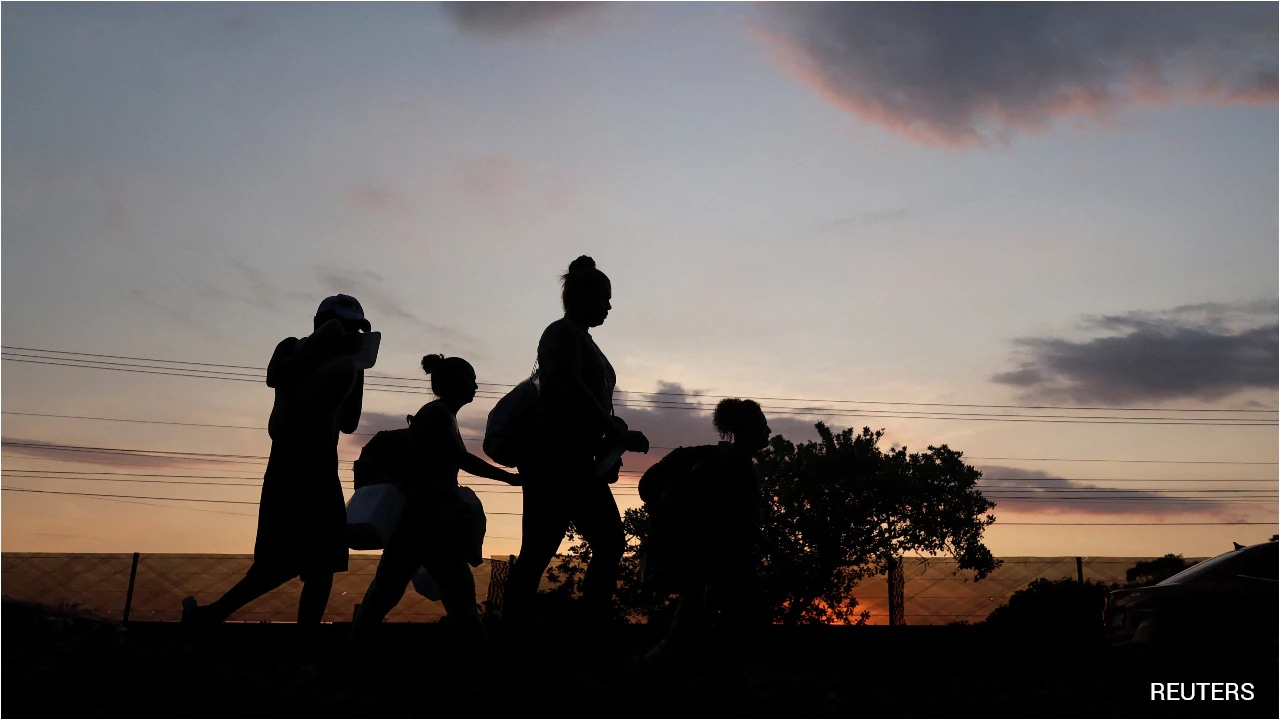
Two thousand miles is a long way to walk in worn-out sneakers.
To understand what happens when a headline flashes across a cable news ticker—Trump Threatens To Double Tariffs On Mexico Over Migrant Caravan—you have to look at two different worlds colliding at a concrete bridge over the Rio Grande. On one side of the equation sits a desperate, slow-moving column of human beings walking north through Central America. On the other sits a cold, mathematical lever of international trade policy: the import tariff.
When political leaders threaten to weaponize trade taxes to stop migration, the rhetoric sounds clean. Decisive. Simple. Press a button in Washington, make a foreign government pay a penalty, and watch the border secure itself.
Except trade doesn't work like a light switch. It works like a bloodstream. And when you clamp down on an artery, the pain rarely stays where you aimed it.
The Arithmetic of a Border Standoff
Let us strip away the campaign-trail thunder and look at the mechanics of the threat itself.
During his presidency and subsequent political campaigns, Donald Trump repeatedly turned to tariffs as his preferred Swiss Army knife for foreign policy. The logic was straightforward, at least on paper. Mexico relies heavily on the United States as its primary export market—roughly eighty percent of Mexican exports head north across the border. By threatening to slap escalating tariffs on all Mexican goods, starting at five percent and potentially doubling or rising to twenty-five percent if Mexico failed to halt migrant caravans, the White House sought to turn economic pain into border enforcement.
According to historical trade records from the 2019 tariff standoff, this exact playbook brought Mexican officials to the negotiating table in Washington within days. The Trump administration argued that tariffs were the ultimate deterrent, forcing Mexico to deploy its National Guard to its southern border with Guatemala and expand the "Remain in Mexico" asylum policy. Supporters of the strategy pointed to the resulting drop in border apprehensions over the following months as proof that linking trade penalties to immigration enforcement produced immediate results.
Critics, however—including trade economists, domestic manufacturers, and leaders within Trump's own party—warned that the strategy rested on a dangerous misunderstanding of who actually writes the check when a tariff is levied.
Follow the Avocado, Follow the Wiring Harness
To see how a tariff threat travels from a podium in Washington to a kitchen table in Ohio, consider a hypothetical character named Elena.
Elena doesn't work in politics. She manages purchasing for a mid-sized automotive parts supplier outside Toledo. Every morning at six, she checks shipping manifests coming out of Monterrey and Juárez. Her plant takes precision-machined metal housings from Mexico, combines them with American-made sensors, and ships finished assemblies to truck factories in Michigan.
Wait.
Notice what just happened in that supply chain. A single part crosses the U.S.-Mexico border not once, not twice, but sometimes four or five times before a pickup truck ever rolls onto a dealership lot. Under North American trade integration—first under NAFTA and later under the USMCA—the United States and Mexico stopped simply selling finished goods to one another decades ago. They started making things together.
If the federal government suddenly doubles tariffs on imports from Mexico, the Mexican factory doesn't wire money to the U.S. Treasury. Elena's company in Ohio pays that tax the moment the freight truck clears U.S. customs in Laredo, Texas.
Now Elena has three terrible choices. She can absorb the new tax and watch her company's thin profit margin evaporate, forcing layoffs on the assembly floor. She can pass the cost along to the automaker in Michigan, which will inevitably tack an extra few thousand dollars onto the sticker price of a family SUV. Or she can try to move her supply chain elsewhere—a process that takes years, millions of dollars in tooling, and specialized labor that doesn't appear overnight.
That is the invisible toll booth of tariff warfare. When economists at institutions like the Peterson Institute for International Economics and the Federal Reserve analyzed the tariff battles of 2018 and 2019, their findings pointed in the same direction: the overwhelming burden of import tariffs fell directly on American businesses and American consumers, not foreign exporters.
What Happens on the Road North
While Elena stares at spreadsheets in Toledo, another reality unfolds fifteen hundred miles south on a sun-baked highway in Chiapas.
Imagine another composite figure—let's call him Mateo—walking alongside hundreds of other families from Honduras, El Salvador, and Venezuela. Mateo knows nothing about ad valorem tax rates or customs brokerage fees. He knows that extortion gangs burned his brother's small repair shop, that local crops failed after two seasons of drought, and that staying home felt like waiting for a slow execution.
For people like Mateo, a migrant caravan is not a political stunt. It is an improvised survival mechanism. Traveling in a massive group offers safety in numbers against cartel kidnappers, corrupt local officials, and the lethal isolation of desert crossings.
Here lies the core tension that divides policymakers in Washington and Mexico City: Can economic coercion against a trading partner actually stop the forces driving human migration?
Supporters of aggressive tariff threats argue yes—at least in the short term. When faced with the prospect of crippling duties on cars, medical devices, produce, and beer, the Mexican government has strong incentives to crack down on transit routes. During the 2019 crisis, Mexico dispatched thousands of troops to intercept caravans long before they reached Texas or Arizona. From an enforcement perspective, threatening Mexico's economic lifeline forced an action that diplomatic summits had failed to achieve for years.
Yet migration researchers and regional diplomats point out the flaw beneath that short-term fix. Deploying troops to break up caravans doesn't erase the violence in Port-au-Prince, the economic collapse in Caracas, or the cartel violence in Michoacán. Instead, critics argue, bottlenecking migrants in northern Mexican border cities creates humanitarian pressure cookers—overcrowded shelters where desperate families become easy prey for human smugglers, who simply pivot from visible highway caravans to hidden, far more dangerous crossings through remote mountains and rivers.
The History of Mixing Trade and Politics
If this collision feels disorienting, that is because it breaks a rule that guided American economic statecraft for nearly eighty years.
After the catastrophic Smoot-Hawley Tariff Act of 1930 triggered global retaliatory tariffs and deepened the Great Depression, U.S. presidents of both parties spent decades separating trade rules from unrelated diplomatic disputes. The goal was predictability. Businesses invest billions of dollars when they trust that the rules of commerce won't change overnight because of a crisis on a highway two thousand miles away.
Using tariffs as an immigration enforcement tool deliberately shatters that predictability.
When a president threatens to double tariffs on a top trading partner—Mexico regularly trades over $800 billion in goods annually with the United States, vying with Canada and China as America's largest trading partner—the shockwaves hit before a single penny of tax is ever collected. Markets wobble. Currency exchange rates swing, weakening the Mexican peso (which ironically makes Mexican exports cheaper and blunts the tariff's impact). Agricultural growers in California and Texas panic over retaliatory tariffs aimed squarely at American corn, pork, dairy, and soybeans.
Let's be honest about the confusion surrounding these debates. On television, the argument gets reduced to a cartoonish binary: either you are "tough on the border" and love tariffs, or you are "weak on immigration" and favor free trade.
Real life refuses to fit inside that box. You can recognize the urgent, undeniable strain that uncontrolled border crossings place on American border towns, shelters, and municipal budgets—and still recognize that slapping a twenty-five percent tax on avocados, auto parts, and medical supplies acts like drinking poison to punish your neighbor.
The Echo Across the Border
Consider what happens next when a trading partner refuses to blink.
In trade disputes, threats rarely travel in one direction. Mexico's trade ministry has repeatedly prepared targeted retaliation lists designed for maximum political pain in the United States. They don't put tariffs on random items; they target apples from Washington state, cheese from Wisconsin, bourbon from Kentucky, and pork from Iowa. Every tariff threat sent south carries a return address stamped on the backs of American farmers and factory workers who had nothing to do with border policy.
Meanwhile, the deeper structural issues—an outdated U.S. asylum processing system overwhelmed by modern migration volumes, underfunded immigration courts with multi-year backlogs, and chronic instability across Latin America—remain untouched by customs duties.
A tariff can force a foreign president to deploy soldiers to a bridge for six months. It cannot adjudicate an asylum claim. It cannot hire border judges. And it cannot rebuild an economy in Central America.
The Weight of Every Crossing
Step back from the podiums, the cable panels, and the customs ledgers for a moment, and look at the concrete bridge over the Rio Grande at dusk.
An eighteen-wheeler idles in the northbound inspection lane, its trailer packed with dashboard displays destined for an assembly line in Indiana. Fifty yards away, behind a chain-link fence topped with concertina wire, a mother holds a sleeping toddler wrapped in a silver Mylar blanket, waiting for a border agent to call her number.
Both are caught in the same political current, tethered together by a policy threat that treats human desperation and global commerce as interchangeable bargaining chips. When the dust settles and the headlines move on, the bill for that gamble doesn't vanish into thin air—it gets paid quietly, one grocery receipt, one factory shift, and one exhausted footstep at a time.