The parchment envelope sits on a mahogany desk in Rome, thousands of miles away from the flat, wind-scoured plains of the American Midwest.
Inside is a piece of paper that smells faintly of industrial printer ink and municipal bureaucracy. It does not bear the gold-embossed crest of the Holy See. It carries the mundane, slightly smudged return address of an election authority in Cook County, Illinois.
Pause.
Think about the sheer collision of worlds happening on that desk. On one side, you have the Sovereign of the Vatican City State, a man whose daily decisions echo across continents and centuries, commanding the spiritual allegiance of more than a billion souls. On the other, you have a registered voter from the south suburbs of Chicago, filling in little oval bubbles with a black ballpoint pen to decide who gets to sit on a county board, who oversees local water reclamation, and who represents a congressional district in a midterm election.
When the news broke that Pope Leo XIV—born Robert Francis Prevost in Chicago, raised in Dolton, educated in the classrooms of the Midwest before his long missionary arc carried him to Peru and eventually to the Chair of Saint Peter—had cast an absentee ballot in the Illinois midterm election, the internet reacted with its usual blend of meme-fueled amusement and partisan reflex. Pundits treated it like a novelty act. A trivia question waiting to happen.
They missed the point entirely.
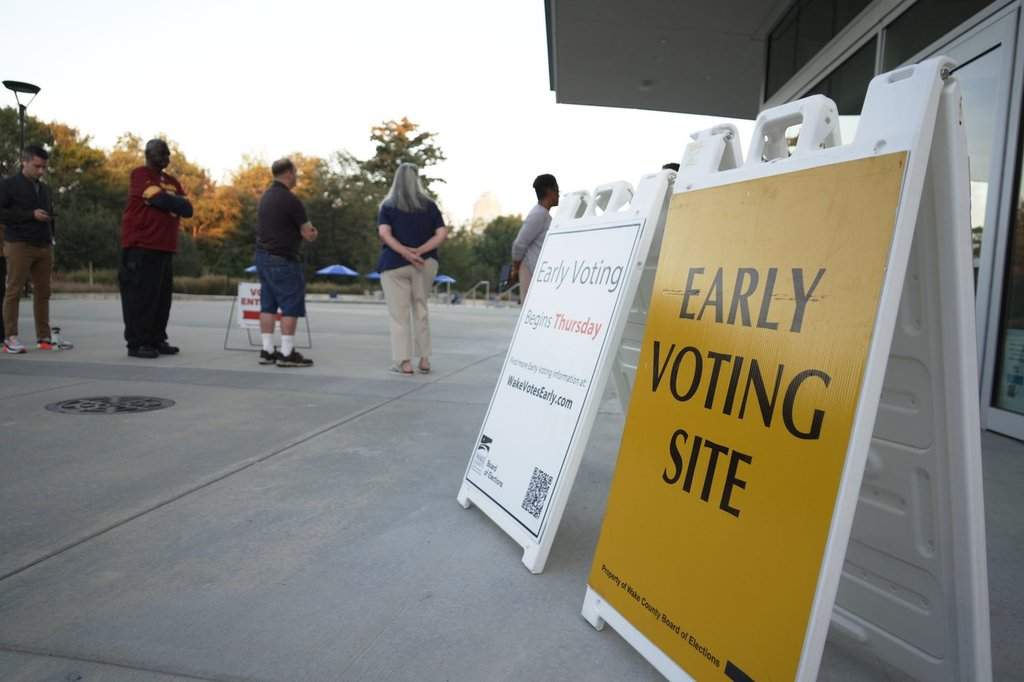
To dismiss this as a quirky footnote in papal history is to misunderstand both the weight of American citizenship and the radical, stubbornly human nature of democracy itself. We live in an era where millions of eligible voters living ten minutes from their local polling place stay home because it is raining, because traffic is heavy, or because they have convinced themselves that a single slip of paper cannot possibly tilt the axis of history. Meanwhile, the Bishop of Rome—an absolute monarch within the walls of his own sovereign city-state—went through the bureaucratic friction of requesting, completing, and mailing an overseas ballot so his voice could be counted in a midterm race back home.
That contrast should sting. It should make every cynical non-voter pause and look in the mirror.
The Architecture of a Dual Identity
I still remember the first time I voted from abroad. It was a cramped, humid apartment in a city where I did not speak the native language fluently, staring at a PDF ballot printed on flimsy local paper. My hands were sweating slightly as I checked the boxes for local school board candidates whose names I had spent three hours researching on grainy municipal websites. Halfway through folding the security envelope, a wave of absurdity washed over me. Who was I kidding? I was six thousand miles away. Nobody in my hometown knew I was doing this. Nobody would notice if I tossed the whole packet into the trash and went out for coffee.
Yet, when I finally dropped that thick envelope into a red postal box on a rainy Tuesday afternoon, the feeling wasn't trivial. It was an anchor dropping into deep water. It was the sudden, visceral realization that belonging to a place is not a passive condition of geography. It is an active, repeated choice.
For Pope Leo, that choice carries an extraordinary historical charge. Before his election to the papacy, Robert Prevost was an Augustinian friar, a missionary bishop in Chiclayo, Peru, and later the prefect of the Dicastery for Bishops in Rome. Throughout those decades of global service, he remained rooted in the soil of northern Illinois. His family history, his early formation, his understanding of community—all of it was forged in the neighborhoods south of Chicago, where parish life and local politics have always been intertwined like roots under old oak trees.
When a cardinal steps out onto the central loggia of St. Peter’s Basilica and accepts the papacy, he takes on a new name and a universal mission. He becomes the spiritual father to a global flock that transcends national borders, political parties, and regional loyalties. Historically, popes have guarded that universality fiercely, stepping back from anything that might suggest partiality toward a specific earthly government.
Which raises the question that immediately lit up cable news panels and legal forums across the country. Can the Pope even do this? Does becoming the head of the Catholic Church strip an American of his citizenship, or somehow disqualify him from participating in a state election?
The answer lies in the stubborn, remarkably clear mechanics of United States law.
What the Law Actually Says About a Voting Pope
Under the Uniformed and Overseas Citizens Absentee Voting Act—a mouthful of legislation known in election offices simply as UOCAVA—any U.S. citizen living outside the country retains the right to vote in federal elections in the state where they last resided before leaving the United States. In Illinois, state law goes a step further, allowing overseas voters who maintain ties to the state to receive ballots that cover not just federal offices, but state and local contests depending on their registration status.
Critics and curious onlookers immediately pointed to the Immigration and Nationality Act, which outlines the specific actions that can cause an American to lose their citizenship. Serving as a foreign head of state is certainly a red flag under federal statutes—if you take that office with the explicit intention of relinquishing your U.S. nationality.
Consider the crucial distinction here. U.S. Supreme Court precedent, forged over decades of cases involving dual nationals and citizens serving in foreign governments, has established a high bar for expatriation. Citizenship is not a fragile glass ornament that shatters the moment you step into an unusual role abroad. Unless an individual voluntarily and intentionally renounces their allegiance to the United States before a consular officer, the government cannot simply strip it away.
Think of citizenship not as a membership card that expires when you move away, but as a heavy wool coat you carry across oceans. You can drape other vestments over it. You can wear the white cassock of the papacy. Unless you deliberately take that coat off and hand it back, it remains yours.
Still, legality is one thing. Optics are another entirely.
Let us construct a hypothetical scenario to see why this makes political strategists nervous. Imagine a mid-level operative in Washington—let’s call him Marcus—whose entire career depends on predicting voter turnout in swing districts. Marcus understands data, micro-targeting, and demographic modeling. What Marcus does not know how to model is a single vote cast from the Apostolic Palace. He looks at the headlines and immediately wonders how partisans on both sides will weaponize the image. Will one side claim divine endorsement? Will the other cry foreign interference, twisting the reality of an American citizen exercising a constitutional right into a conspiracy theory about Vatican meddling?
The anxiety is understandable, especially in a political climate where every institution is viewed through a lens of suspicion. Yet, when you strip away the cable-news hysteria, the reality is remarkably grounded. An overseas ballot is secret. Nobody in the Cook County Clerk’s office—nor in the Vatican Press Office—knows which candidates received Pope Leo’s checkmark. There was no press conference endorsing a slate of candidates. No encyclical telling Illinois voters how to cast their ballots. Just a quiet, private act of civic participation.
The Invisible Stakes of a Midterm Ballot
Why bother? Seriously, stop and ask yourself that question.
If you are the Pope, your schedule is measured in audiences with heads of state, synods on global poverty, crises in war-torn regions, and the relentless administrative weight of a two-thousand-year-old institution. Why spend a single ounce of mental energy tracking down an absentee ballot for a midterm election?
Midterms are notoriously unglamorous. There is no presidential inauguration at the end of the tunnel. No fireworks on the National Mall. Instead, midterms are about the plumbing of democracy. They determine who sits in the House of Representatives, who controls a third of the Senate, who runs the statehouse in Springfield, and who makes the unsexy, deeply consequential decisions about property taxes, local infrastructure, public transit, and judicial appointments in counties across Illinois.
Historically, midterm turnout in the United States hovers around forty to fifty percent—meaning half the country routinely shrugs and lets their neighbors decide how the house gets run. In non-presidential years, apathy isn't just a passive mood; it is the dominant political force in America.
By requesting and returning that ballot, Pope Leo inadvertently exposed a cultural nerve. In Catholic social teaching, participation in public life is not treated as a hobby for political junkies. It is framed as a moral obligation—a concrete way of practicing solidarity with your neighbors. You do not get to float above the messy realities of governance just because your vocation is spiritual. In fact, the deeper your commitment to the common good, the more seriously you take the mundane mechanisms that hold a society together.
I have spent years watching communities unravel from the inside out, and the pattern is always the same. Decay rarely begins with a dramatic collapse. It starts when people stop showing up to the unglamorous meetings. When they stop reading the local ballot measures. When they decide that the distance between their lives and the ballot box is too wide to bridge.
A man living in a Renaissance palace in Rome refused to let a five-thousand-mile ocean and the weight of the papacy serve as an excuse for skipping a midterm election. That fact lands with a quiet thud right in the middle of our collective excuses.
Navigating the Friction of Overseas Democracy
Of course, anyone who has actually navigated the overseas voting process knows it is anything but effortless. While domestic pundits often talk about mail-in voting as though ballots magically teleport from kitchen tables to counting machines, the reality for Americans abroad is a maze of deadlines, witness signatures, and international postal delays.
To vote from outside the country, a citizen must submit a Federal Post Card Application every election year. They have to verify their identity, ensure their registration hasn't lapsed in their home county, wait for the ballot to be transmitted—sometimes electronically, sometimes via international post—print or mark it according to strict formatting rules, seal it in a secrecy sleeve, sign an affidavit under penalty of perjury, and get it into the mail early enough to beat a ticking clock.
One smudge in the wrong box, one missing signature on the outer envelope, one postal delay across the Atlantic, and the entire effort disappears into a stack of rejected ballots.
There is a strange vulnerability in that process. You are placing your trust in an invisible chain of strangers—postal workers in Rome, customs officials, airline cargo handlers, election judges in a suburban gymnasium in Illinois—believing that each person in that chain will honor the integrity of the piece of paper passing through their hands.
For someone raised in the Chicago area, where jokes about voting early and often have been part of local folklore for a century, that trust carries an extra layer of irony. Illinois elections have long been a theater of fierce, sometimes bare-knuckled political drama. Yet underneath the cynicism of machine politics lies a fiercely proud civic tradition—a belief that showing up, standing in line, and having your name checked off the rolls is how you prove you exist in the public square.
A Mirror Held Up to a Cynical Nation
We are living through a moment when faith in democratic institutions is scraping historic lows. Across the political spectrum, Americans feel alienated from the machinery of government. Elections feel like shouting matches conducted by algorithms, stripped of human scale and neighborly decency. It is easy—almost fashionable—to throw up your hands and declare the whole enterprise broken beyond repair.
And then comes this quiet, unexpected image from Rome.
There is no grand speech attached to it. No viral campaign ad. Just the simple, documented fact that a native son of Illinois, now wearing the Fisherman’s Ring, sat down at a desk, read through the names of candidates running for office in the land of his youth, and carefully filled in the ovals.
Think about what that gesture refuses to surrender. It refuses to accept that global prominence erases local responsibility. It refuses to treat democracy as a spectator sport reserved only for those who happen to live across the street from a precinct captain. Most of all, it rejects the seductive lie that one ballot, cast quietly from far away, does not matter.
Outside the walls of Vatican City, traffic roars along the Tiber River, indifferent to the municipal budgets of Cook County or the congressional boundaries of northern Illinois. Inside, a sealed envelope begins its long journey across the Atlantic, carrying a simple ink mark from a man who never forgot where he came from—leaving the rest of us with no excuse left to stay home.