Salt.
That is the first thing you notice if you ever stand beside a massive subterranean salt cavern on a windy desert morning, waiting for crude oil to come up from the dark. Not oil. Salt. It clings to the valves, crusts the steel flanges, and dries out your throat before a single barrel reaches the surface.
I spent years watching energy markets from desks far removed from desert heat, reading spreadsheets where millions of barrels of crude looked like neat little rows of gray numbers. To the naked eye—and to almost everyone scrolling past a headline—an oil stock shortfall sounds like an accounting glitch. A rounding error. Something for traders in glass towers to argue over while ordering espresso.
It isn't.
When oil stocks run thin, the quiet machinery of daily life begins to rattle. Not all at once. Never like a movie explosion. It starts with a freight carrier shaving speed on a highway run, a fertilizer plant recalculating natural gas and feedstock costs, a long-haul pilot watching fuel burn margins tighten over an ocean crossing. You don't feel a shortfall in your chest on day one. You feel it weeks later in the price of a head of lettuce, a bus fare, a delivery window that slipped from Tuesday to Friday.
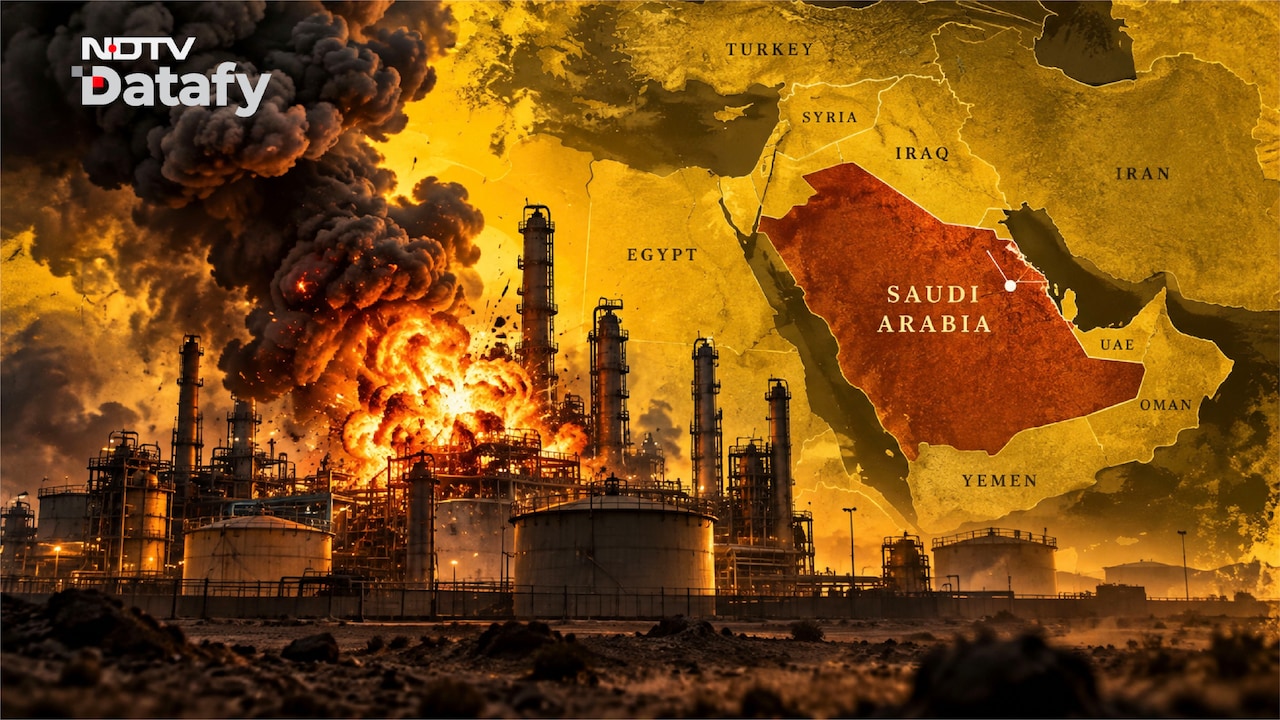
And right near the center of that tension stands Saudi Arabia.
What Empty Tanks Really Mean
Let's be honest about something most commentators gloss over because it sounds too basic: oil markets are terrified of surprises.
Crude oil isn't a finished product you pour straight into a car engine. It is a raw, thick, moody liquid pulled from deep rock formations, shipped across oceans in steel hulls, cracked and refined into gasoline, diesel, jet fuel, and petrochemical feedstocks. Because refining and shipping take time—sometimes weeks from wellhead to pump—the global economy relies on oil stocks as a shock absorber. Think of commercial and strategic crude inventories as the pantry in a busy restaurant kitchen. Even if a delivery truck hits traffic on the way from the wholesaler, the chef can still plate dinner tonight because there are flour sacks and olive oil tins on the shelves.
When oil stocks fall below seasonal norms, the pantry gets thin.
Suppose—and this is a hypothetical scenario to make the mechanics tangible—a mid-sized logistics company in Ohio runs eighty diesel trucks. Call the dispatcher Marta. Marta doesn't trade Brent crude futures. She doesn't care about contango or backwardation. What Marta cares about is whether her fuel card gets declined or whether her weekly diesel budget blows past its ceiling by twelve percent. When global crude inventories draw down faster than expected, refineries compete harder for feedstock, diesel cracks widen, and Marta has to decide whether to pass the surcharge to a local grocery chain or eat the margin and delay maintenance on a trailer. Multiply Marta by tens of thousands of fleet managers, farmers, and factory floor supervisors across five continents, and suddenly a "stock shortfall" isn't abstract anymore. It's a squeeze on real paychecks and real shelves.
I used to find oil inventory reports almost numbingly dry. Barrels per day. Million-barrel draws. Days of forward cover. For a long time, I wondered why seasoned analysts stared at weekly inventory tallies with the intensity of sailors watching a barometer. Then I watched a regional supply chain buckle during a tight winter cycle—not from a war that closed a strait overnight, just from steady, grinding depletion of buffers combined with stubborn demand. Watching how quickly confidence evaporates when reserves shrink taught me a humbling truth: scarcity doesn't wait for catastrophe to start hurting. Anxiety does the heavy lifting first.
Why Saudi Arabia Holds a Different Kind of Key
If oil stocks are the pantry, Saudi Arabia has historically played the role of the backup generator wired into the whole neighborhood.
Other major producers pump enormous volumes of crude. Shale drillers in the United States transformed global output over the past fifteen years, bringing agility and speed that older conventional fields couldn't match. Producers in South America, West Africa, the North Sea, and elsewhere keep tankers moving every day.
Yet Saudi Arabia occupies a distinct place in the architecture of global energy for two interlocking reasons: sheer scale and spare capacity.
To understand spare capacity without getting lost in jargon, picture a highway with six lanes where four are open during normal traffic. Those two closed lanes aren't wasted concrete; they are release valves. If an accident clogs the main route, opening those extra lanes lets traffic keep breathing. In oil markets, spare capacity is production capability that can be brought online relatively quickly—typically within weeks or a few months—and sustained when supply tightens or demand surges unexpectedly.
Few countries maintain meaningful, verifiable spare capacity on the scale Saudi Arabia has long held. Most oil producers pump as hard as geology, budget needs, or infrastructure allow. When a disruption hits somewhere else—a pipeline outage, a storm in the Gulf Coast, a geopolitical flare-up—many exporters simply cannot turn up the tap much further. Riyadh often can.
That gives Saudi supply decisions an outsized gravitational pull. When Saudi production rises or falls, or when the kingdom adjusts official selling prices or extends or tapers voluntary output cuts, traders aren't just reacting to today's barrels. They are repricing insurance.
Here is where a metaphor helps—and where I need to be careful not to push it past its breaking point. People often call Saudi Arabia the "central bank of oil." That captures the psychological weight of its decisions, because a signal from Riyadh can move crude prices the way a central bank rate decision moves currencies. Still, the comparison has limits. A central bank can print liquidity out of thin air. Oil isn't ink on paper. Every extra barrel of Saudi crude has to be lifted from reservoirs like Ghawar or Khurais, moved through gathering systems and pipelines, processed or loaded at terminals like Ras Tanura, and carried across water where weather, insurance rates, and maritime chokepoints all matter. Physics sets a hard ceiling on finance.
The Invisible Trade-Off Between Price and Buffer
Anyone looking closely at tight oil stocks and Saudi Arabia's critical supply role runs straight into a dilemma that has no easy, painless answer.
If oil stocks are drawn down, why not just pump more until tanks are overflowing again?
Because energy markets live inside a tug-of-war between producers who need sustainable revenue and consumers who need affordable fuel. If producers flood the market every time inventories dip, prices can slump, discouraging long-term capital investment in complex oilfields that take years and billions of dollars to develop. Underinvest for too long, and you sow the seeds of the next tight cycle years down the road. Conversely, if output stays restrained while stocks fall and demand holds firm, prices climb, inflation ripples outward, and high costs eventually slow economic growth—which in turn cools fuel demand.
It is a delicate, sometimes unforgiving balancing act. And honestly, anyone who claims they can predict the exact equilibrium point twelve months out is selling certainty that doesn't exist in commodity markets. Even seasoned veterans get blindsided when weather shifts, refining bottlenecks appear, or industrial activity surprises to the upside or downside.
Consider what happens next when a shortfall in oil stocks collides with shifting supply strategies:
- Refineries work harder to stretch tighter crude slate options. Different crudes yield different mixes of gasoline, diesel, and heavy distillates. When light or medium grades tighten, refiners adjust run rates and blends, which can create regional pockets of tightness even when headline crude numbers look manageable.
- Shipping and storage economics flip. Normally, traders like to hold inventory when forward prices sit higher than prompt prices. When stocks are tight and prompt barrels command a premium, holding extra oil becomes expensive, pulling more crude out of storage and leaving the system with thinner cushions.
- Every rumor carries extra weight. With smaller inventory buffers, the market has less room to absorb a surprise. A maintenance delay at a major facility or a shift in Saudi export allocations can spark sharp price swings because there is less slack in the system.
None of this happens in a vacuum. Global energy is in the middle of a multi-decade transition where renewables, electrification, efficiency gains, and petrochemicals are reshaping how the world uses energy. Electric vehicles are growing in many markets, grid storage is scaling, and efficiency standards keep improving. Yet modern civilization still runs heavily on liquid fuels for aviation, marine shipping, heavy trucking, agriculture, and plastics and industrial chemistry. Transition does not mean instant replacement. During the messy overlap between old systems and new ones, tight oil stocks can still bite hard.
A Quiet Morning in the Middle of the Chain
Picture a second character—again, hypothetical, drawn from real-world patterns in global shipping. Let's call him Tariq, a chief mate aboard a crude tanker waiting off a major export hub.
At sea, time feels elastic. You hear the low hum of auxiliary generators through the steel deck plates. You watch gulls ride the draft near the stern and check weather routing charts that look harmless until a squall line forms two hundred miles ahead. For Tariq, a shortfall in oil stocks isn't a chart on a screen. It's a change in charter tempo, a tighter loading window, a sudden shift in destination orders from Europe to Asia or vice versa as buyers chase barrels wherever inventories look thinnest.
Every barrel moving from Saudi terminals or competing basins passes through hands like Tariq's. Seafarers, terminal operators, pipeline engineers, refinery control-room staff. When supply chains run smoothly, their work is almost invisible. You turn the key in your car, board a flight, buy groceries, and never think about ballast water, desalter units, or crude assay tolerances.
When stocks run low and supply roles get tested, that invisibility breaks. Suddenly the chain feels stretched taut, like a cable under heavy load. You don't hear it snap, but you can tell it's carrying weight.
That is the real story behind a shortfall in oil stocks and Saudi Arabia's critical supply role. It isn't a parlor game for speculators. It is a story about buffers—how much margin for error the world keeps between its daily habits and a sudden shock. Thin buffers make everything louder. Every statistic feels sharper. Every decision out of Riyadh echoes farther.
Look at the steering wheel of a car sitting in a driveway at dusk, or the vapor trail cutting across a pale blue sky at thirty-five thousand feet—somewhere beneath all that quiet motion lies a vast, intricate web of rock, steel, salt, and human nerve keeping the world's engines turning.