Salt hangs heavy in the air off the southern coast of Iran, thick enough to coat your tongue before you even take a breath.
If you stand on the limestone cliffs of Qeshm Island at three in the morning, looking south across the pitch-black water of the Strait of Hormuz, the world feels deceptively calm. Container ships blink like slow-moving constellations on the horizon. Fishing dhows creak gently against wooden piers in the coves below. For centuries, this jagged, eighty-mile-long slab of rock has been defined by its quietude—a place of mangrove forests, mud-brick villages, and boatbuilders who shape teak wood by hand without a single blueprint.
Then, the sky tears open.
Silence.
Not the peaceful silence of a desert night, but the vacuum that follows a shockwave when precision-guided munitions punch into reinforced concrete bunkers miles away. When the United States military conducts what Pentagon spokespeople cleanly label "precision strikes" on an Iranian missile site on Qeshm Island in "self-defense," the headlines in Washington, London, and New York read like sterile surgical reports. A target was identified. A threat was neutralized. No boots touched the ground.
Yet sitting thousands of miles away, scrolling past a breaking news alert over morning coffee, it is almost impossible to feel the heat of that blast or hear the rattling of windowpanes in a fisherman's house three miles down the coast. We absorb geopolitical flashpoints as abstract chess moves. We forget that every square on the board is populated by people who never asked to live on a tripwire, and that every tremor in this narrow stretch of water ripples straight into the wallets, fuel tanks, and kitchen tables of families on the other side of the planet.
The Anatomy of a Narrow Chokepoint
To understand why a cluster of missile batteries on a dusty Persian Gulf island commands the immediate attention of the world's most powerful military, you have to picture the Strait of Hormuz not as a wide ocean, but as a kitchen funnel.
At its narrowest point, the channel separating Oman from Iran is barely twenty-one miles wide. Within that twenty-one-mile stretch, the actual shipping lanes—the deep-water highways capable of carrying supertankers loaded to the brim with crude oil and liquefied natural gas—are just two miles wide in each direction, separated by a two-mile buffer zone.
Imagine trying to funnel a fifth of the world's daily petroleum supply through a hallway no wider than a suburban neighborhood.
Qeshm Island sits right at the mouth of that hallway. Whoever controls the high ground on Qeshm holds a magnifying glass—and potentially a loaded weapon—over the jugular vein of the global economy. Over the past decade, military analysts and satellite imagery have documented the steady transformation of parts of Qeshm from quiet coastal scrubland into hardened coastal defense zones, complete with subterranean tunnels, mobile anti-ship cruise missile launchers, and radar arrays capable of tracking every vessel entering or exiting the Persian Gulf.
When Washington announces a strike in "self-defense," the phrase carries a very specific legal and military weight under Article 51 of the United Nations Charter. In the vocabulary of modern warfare, self-defense does not always mean waiting for an incoming warhead to strike a hull. Often, it means preempting an imminent launch—acting on intelligence showing that fuel is being pumped into ballistic missiles, that radar locks are painting coalition warships, or that proxy forces in the region are receiving targeting data directly from coastal command posts.
From a purely tactical standpoint, a precision strike is designed to be a scalpel rather than a sledgehammer. Satellite-guided bombs and Tomahawk cruise missiles use inertial navigation and GPS coordinates to thread the needle through ventilation shafts or bunker doors, theoretically destroying the launcher while leaving the surrounding terrain intact.
On paper, it looks clean. In reality, war never stays inside the lines drawn by engineers.
Two Lives on the Edge of the Blast Radius
Consider a hypothetical scenario, grounded entirely in the daily realities of the people who actually inhabit this corridor.
Meet Tariq, a fictional composite based on the thousands of traditional lenj boatbuilders and fishermen who call Qeshm home. Tariq does not care about enrichment centrifuges, naval deterrence postures, or congressional authorizations for the use of military force. His universe is measured in tides, diesel prices, and the weight of silver pomfret hauled into his nets before dawn. When the horizon flashes bright orange and the low, rolling thunder of distant explosions vibrates through the wooden hull of his boat, Tariq does not think about surgical precision. He thinks about whether he can take his boat out tomorrow without being mistaken for a fast-attack craft, and whether the ferry to Bandar Abbas on the mainland will run so his daughter can reach her university exams.
Now shift seven thousand miles west to Sarah, an equally real-to-life composite of a mid-sized logistics manager sitting at a desk in Ohio. Sarah has never heard of Qeshm Island. She couldn't point to the Strait of Hormuz on an unlabeled map if her job depended on it.
Yet forty-eight hours after the smoke clears over the Persian Gulf, Sarah stares at a spreadsheet on her monitor in quiet panic. Marine war-risk insurance premiums for vessels transiting the Gulf have just spiked by three hundred percent overnight. Two major container lines have ordered their ships to drop anchor outside the Gulf of Oman until naval escorts can be arranged. The resin pellets her plastics factory needs to fulfill a quarterly contract are sitting on one of those anchored ships. By Friday, her shipping costs will double; by next month, the grocery store down the street from her house will quietly raise the price of milk, bread, and produce to cover the jump in diesel freight rates.
This is the invisible tether connecting Qeshm Island to Main Street. We like to believe that distant conflicts happen in a sealed vacuum, contained by oceans and diplomatic statements. They don't. The global supply chain is an intricate nervous system, and the Strait of Hormuz is its spinal cord. You cannot pinch it without the extremities going numb.
The Illusion of the "Limited" Strike
I have spent years watching how military escalations unfold in the Middle East, and if there is one hard truth burned into my memory, it is that "limited" is a word politicians use to reassure themselves before reality intervenes.
In the immediate aftermath of a strike on Iranian soil—and Qeshm is indisputably sovereign Iranian territory, not an offshore proxy outpost in Syria, Iraq, or Yemen—the airwaves fill with confident predictions. Pundits draw neat charts showing escalation ladders. They explain that a calibrated response restores deterrence without triggering a full-scale regional war. They speak with the reassuring certainty of people who have never had to guess what a grieving or humiliated commander on the ground might decide to do at two in the morning.
Look at the history of the Gulf, and a very different pattern emerges.
During the Tanker War of the 1980s, neither Washington nor Tehran set out to turn the Persian Gulf into a burning graveyard of commercial shipping. It happened incrementally. One mine laid in the dark. One retaliatory strike on an oil platform. One radar operator misreading a blip on a green phosphor screen. Within months, hundreds of merchant vessels were attacked, global oil markets convulsed, and the margin for human error shrank to zero.
Today, the technology is infinitely faster, and the margin for error is even thinner.
A hypersonic or supersonic anti-ship missile launched from the cliffs of Qeshm can cross the shipping lanes in less than two minutes. That leaves naval commanders aboard destroyers in the Gulf with mere seconds to distinguish between a commercial airliner ascending out of Dubai, a training exercise, and a lethal swarm attack. When tension spikes, every shadow on the water looks like a threat. Every unannounced boat engine sounds like an ambush.
And here is the uncomfortable admission that rarely makes it into official briefings: nobody actually knows where the ceiling is anymore. Strategic deterrence relies on both sides reading the same rulebook, understanding the same signals, and valuing the same outcomes. When domestic politics, regional alliances, and bruised national pride enter the room, the rulebook goes out the window.
Why "Self-Defense" Is the Most Contested Word in Diplomacy
When a government invokes self-defense to justify striking a missile site, it is engaging in a high-stakes battle over legitimacy before the rest of the world even digests the news.
Under international law, the right to self-defense is sacred, yet its boundaries are fiercely disputed. Traditional doctrine required an actual armed attack to occur before a nation could strike back. In the nuclear and missile age, waiting to absorb the first blow can mean losing your ability to respond at all. Consequently, modern military doctrine relies heavily on the concept of anticipatory self-defense—striking a capability when the threat is deemed imminent and overwhelming.
But "imminent" is a slippery word when viewed through classified satellite imagery.
To an intelligence analyst in Tampa or Langley, thermal signatures around a bunker on Qeshm Island, combined with intercepted radio chatter, look like an unmistakable countdown to an attack on commercial shipping or regional bases. Acting first isn't aggression; it is saving lives before missiles ever leave their rails.
To a resident of Tehran—or an observer in Beijing, Brussels, or Cairo—an unannounced bombardment of coastal defenses looks entirely different. Without seeing the classified intercepts, the public sees only the craters. The strike becomes proof of foreign aggression, handing hardliners inside Iran the exact rallying cry they need to justify expanding their missile programs, tightening their grip on domestic dissent, and activating allied militias across the Levant and the Red Sea.
Both narratives can feel entirely logical to the people holding them. That is precisely what makes these moments so treacherous. Each side views its own actions as purely defensive, reluctant, and measured, while viewing the other side's actions as reckless, provocative, and existential.
Living With the Tremor
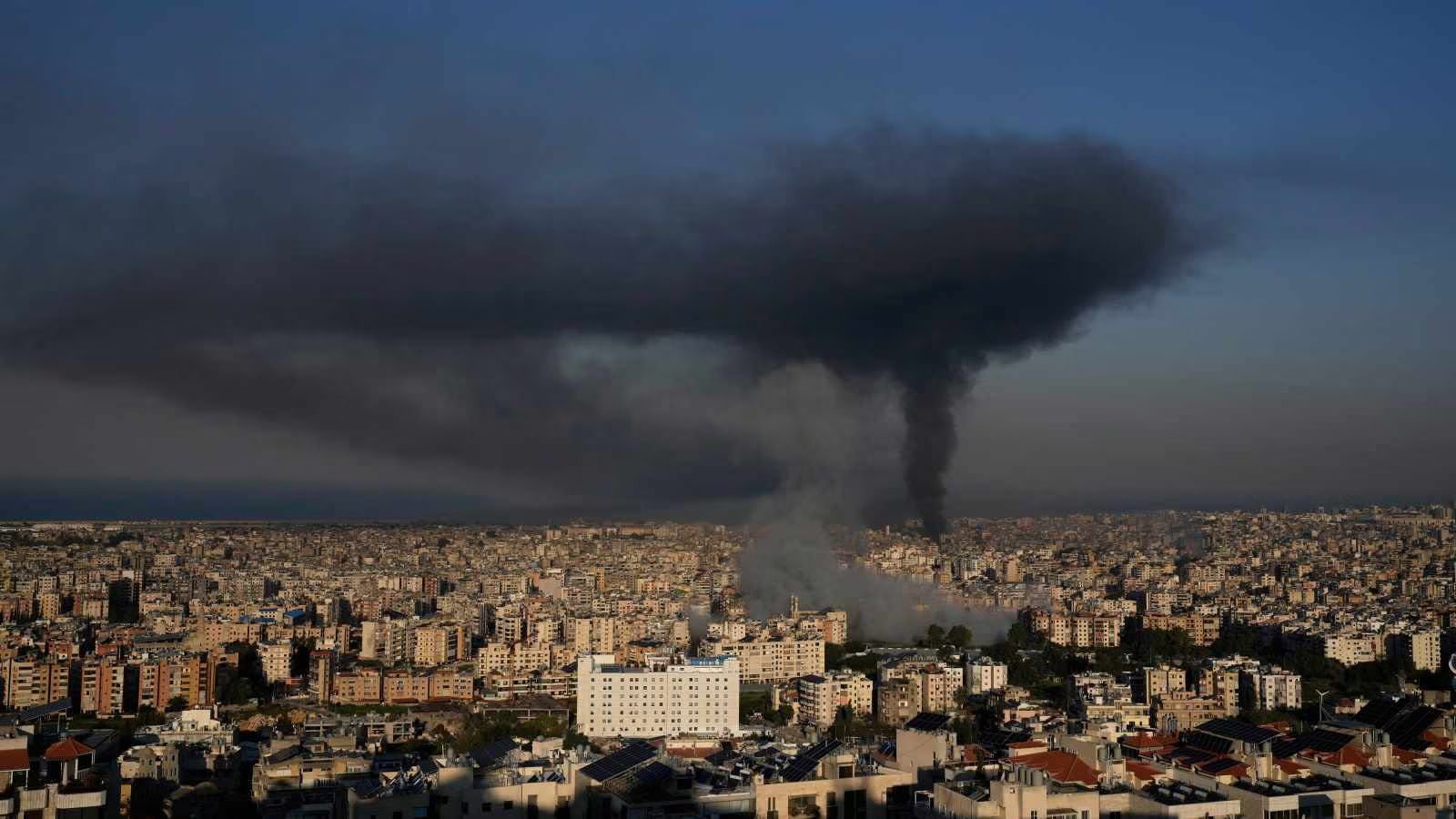
By sunrise on Qeshm Island, the dust has settled over the scorched limestone.
The smoke drifts lazily out over the turquoise water, fading into the morning haze before the sun climbs high enough to bake the rocks. Down in the harbor, the wooden lenj boats still bob on the swell. Out in the deep-water channel, the massive hulls of oil tankers continue their slow, steady procession toward the open ocean, watched closely by gray naval frigates gliding quietly along their flanks.
Nothing looks dramatically different from thirty thousand feet up. The maps haven't changed. The borders remain where they were drawn decades ago.
Yet beneath the surface, something vital has shifted. A threshold has been crossed. A precedent has been set on Iranian soil, proving that even hardened coastal bastions are within reach, while simultaneously reminding the world how fragile the peace holding global commerce together truly is.
We like to imagine that the world runs on certainty—on contracts, schedules, satellite links, and ironclad guarantees. In truth, the modern world runs on a quiet, unspoken agreement not to pull the trigger in narrow places. Every time a missile streaks across the dark water off Qeshm Island, that agreement grows a little thinner, and the distance between a distant flash on the horizon and the quiet hum of our own daily lives shrinks by another mile.