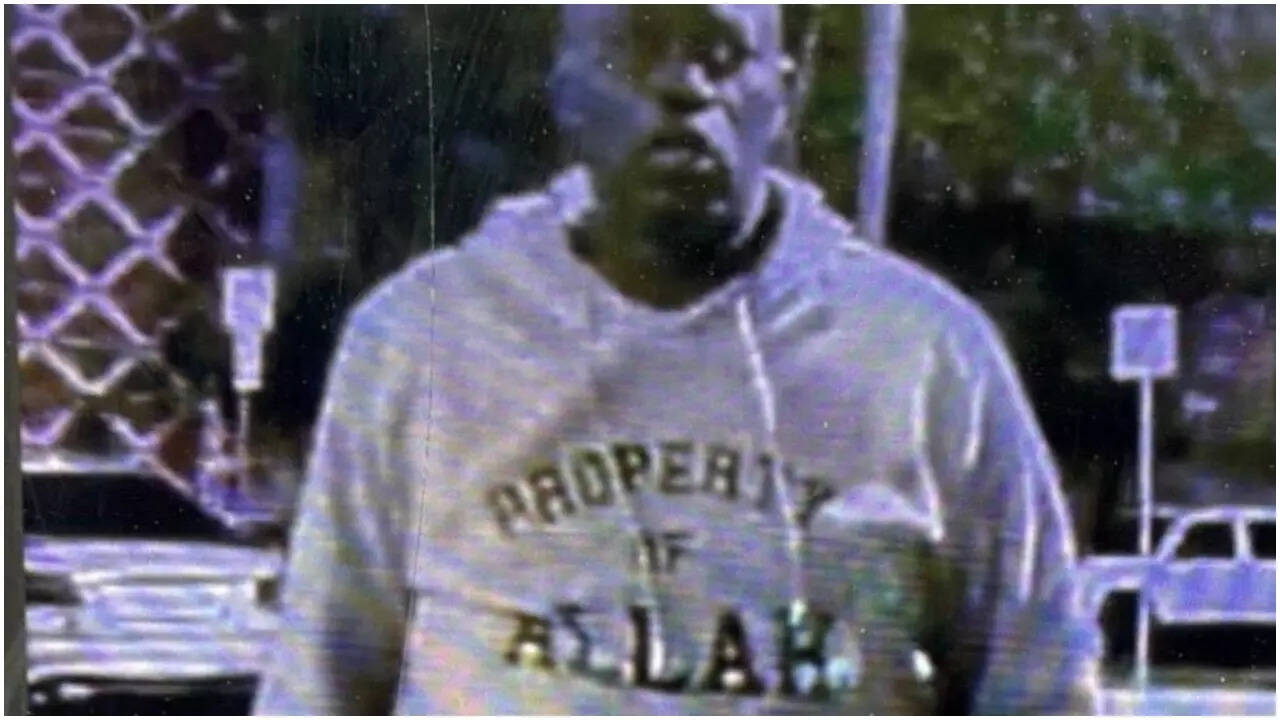
The mass shooting at a crowded bar in Houston, Texas, was not a random act of suburban violence. It was a calculated, symbolic assault. When Ndiaga Diagne opened fire, he wasn't just carrying a semi-automatic weapon; he was wearing a manifesto. Law enforcement recovered a "Property of Allah" hoodie and an undershirt explicitly referencing the Iranian regime from the scene. Inside his vehicle, a Quran sat on the passenger seat. These details have shifted the investigation from a standard homicide case into a complex autopsy of lone-wolf radicalization and the porous borders of domestic extremism.
While initial reports focused on the immediate carnage, the real story lies in the months leading up to the first shot. Diagne, a man previously off the high-level federal radar, underwent a rapid ideological shift that mirrored the precise patterns seen in modern extremist recruitment. This was not a slow burn. It was a flash-over.
The Anatomy of an Outlier
Ndiaga Diagne did not fit the traditional profile of a coordinated terror cell member. He operated in the shadows of digital forums and isolated physical spaces. Investigators are currently tracing his digital footprint to determine how a resident of Texas became so deeply aligned with foreign theological and political symbols that he felt compelled to trade his life for a headline.
The presence of the "Property of Allah" clothing suggests a desire for posthumous branding. In the world of extremist violence, the shooter is often as concerned with the "after-action" narrative as they are with the body count. By selecting specific garments, Diagne ensured that his motives would be the primary topic of conversation before the smoke even cleared. It was a deliberate attempt to link a local atrocity to a global struggle.
Historical data on lone-actor attacks shows a recurring theme: the search for a grandiose identity. Diagne’s choice of an undershirt referencing Iran is particularly telling. It points to a specific, perhaps confused, geopolitical alignment that transcends simple religious fervor. It suggests a man looking for a banner to stand under, even if that banner belonged to a nation-state thousands of miles away.
Failures in the Early Warning System
We have spent billions on surveillance and counter-terrorism since the turn of the century, yet Diagne walked into a public space with a high-capacity firearm and a clear intent to kill. The "red flags" were there, buried in the mundane realities of his daily life. Neighbors reported a man who had become increasingly reclusive, yet no formal reports were filed.
This highlights a massive gap in our current security infrastructure. We are excellent at tracking coordinated groups using encrypted apps. We are remarkably poor at identifying the "quiet" neighbor who is slowly poisoning his own mind in a one-bedroom apartment. The radicalization process has become decentralized. It no longer requires a basement meeting or a secret handshake. It requires a high-speed internet connection and a grievance.
The Evolution of the Manifesto
Diagne’s "Property of Allah" hoodie was his manifesto. In the past, attackers would write lengthy, convoluted documents to explain their actions. Now, the visual is the message. The sheer speed of the 24-hour news cycle means a single, jarring image is worth more than a hundred pages of text. Diagne understood this perfectly. He was dressing for the camera, even as he was shooting at people.
The investigation has revealed that the car was as much a part of the crime scene as the bar itself. The Quran found on the passenger seat was not just a religious text; it was placed there as a marker of his "official" justification. It was a way to claim a holy war in the middle of a mundane Texas night.
The Problem of Physical Traces
One of the most concerning aspects of the Diagne case is the accessibility of his equipment. From the semi-automatic weapon to the ideological clothing, nothing he possessed was particularly difficult to acquire. This presents a massive hurdle for law enforcement. If the tools of a potential mass casualty event are legally available or easily procured through standard commerce, the only way to stop an attack is to stop the person.
We are seeing a trend where attackers purposefully leave a trail of breadcrumbs for investigators. They want us to find the books. They want us to see the clothes. They want to be understood, even as they are reviled. This is a form of psychological warfare that targets the public's sense of safety long after the funeral services have ended.
The Recruitment of the Isolated
Who was Ndiaga Diagne before he was a shooter? He was a man who felt a profound lack of belonging. In the void left by his personal failures or social isolation, an extremist ideology found a perfect home. This is the "pull" factor that we often ignore in favor of focusing on the "push" of global politics.
A person doesn't wake up one morning and decide to wear a hoodie that identifies them as "Property of Allah." It is a slow, methodical stripping away of the self until only the ideology remains. The undershirt referring to Iran suggests he was looking for a powerful, state-level antagonist to align himself with, a way to make his small life feel like a part of a global struggle.
The Geopolitical Connection
The mention of Iran on Diagne's clothing is a red flag for federal investigators. It moves the conversation from simple domestic crime into the realm of foreign influence and potential state-sponsored radicalization. While there is currently no direct evidence of a state actor directing his actions, the mere fact that a Texas resident felt aligned with that specific regime is a significant development.
This is the new front in the war on terror. It is no longer about sleeper cells waiting for an order. It is about "open-source" radicalization where individuals pick and choose from a menu of extremist ideologies and then act on their own timeline. Diagne’s actions were a local tragedy with global fingerprints.
Lessons from the Bar Scene
The location of the shooting was not accidental. A bar represents everything that radical extremist ideologies often despise: secularism, social mixing, and personal freedom. By targeting a space of leisure and community, Diagne was attacking the very fabric of the society he had rejected. It was a symbolic choice that amplified the terror of the act.
The security at the bar was standard, but standard security is no match for a man who has already decided he is not coming home. This is the grim reality of modern security: you can have all the cameras and metal detectors in the world, but if someone is willing to die to kill others, the advantage is always with the attacker.
The Aftermath of a Premeditated Act
The physical evidence left behind by Ndiaga Diagne is a jigsaw puzzle with several missing pieces. The Quran in the car, the hoodie, and the undershirt all tell a story of a man who was deeply committed to a specific, violent worldview. The question now is whether he was the first or just the most recent in a new wave of radicalized individuals.
Law enforcement agencies across the country are now looking for "the next Diagne." But the problem is that he didn't look like a threat until he pulled the trigger. He was just another man in a hoodie. This is the terrifying core of the modern extremist threat: it is invisible until it is too late.
We are currently witnessing a shift in how these crimes are analyzed. The focus is no longer just on the "how" of the shooting—the caliber of the weapon or the layout of the building—but on the "what" of the attacker’s mind. The clothing, the books, and the digital history are the real crime scene.
The Future of the Investigation
Federal agents are currently scouring Diagne's financial records and communication logs. They are looking for a spark, a specific moment or interaction that turned a quiet man into a killer. This "moment of no return" is the holy grail of investigative work. If we can find it, we might be able to stop the next one.
The "Property of Allah" hoodie and the Iranian-themed undershirt are being analyzed for their origins. Were they custom-made? Were they purchased from a specific online retailer known for extremist merchandise? These questions are critical for understanding the support network that exists, even for a lone actor.
[Image showing the distribution network of extremist merchandise online]
The bar in Texas has become a memorial, a place where people go to remember the lives lost. But for the investigators, it remains a laboratory. Every bullet casing and every fiber of Diagne’s clothing is a data point in a much larger, much darker map of where our country is heading.
The reality is that we are in an era of personalized terrorism. Ndiaga Diagne didn't need a commander. He didn't need a training camp. He only needed a hoodie, a rifle, and a belief that his life was less important than the damage he could do.
The next time a mass shooting occurs, the first question will be about the weapon. The second will be about the motive. But the third, and most important, will be about the branding. In the case of Ndiaga Diagne, the branding was the motive. He didn't just kill people; he advertised a cause.
This is the new landscape of violence in America. It is a world where the killer is also the marketing director of his own atrocity. The investigation into Ndiaga Diagne is not just about one night in a Texas bar. It is about a fundamental shift in the way we understand and combat extremist violence in the 21st century.
We are no longer looking for the man with the bomb. We are looking for the man with the hoodie.
If you suspect someone in your community is undergoing a rapid ideological shift toward violence, the most effective tool is early intervention. Reporting unusual behavior to local authorities or mental health professionals can be the difference between a tragedy and a prevented attack.