A flashing light means stop. A lowering barrier means stay back. Yet, everyday human negligence routinely turns simple rail intersections into zones of absolute chaos.
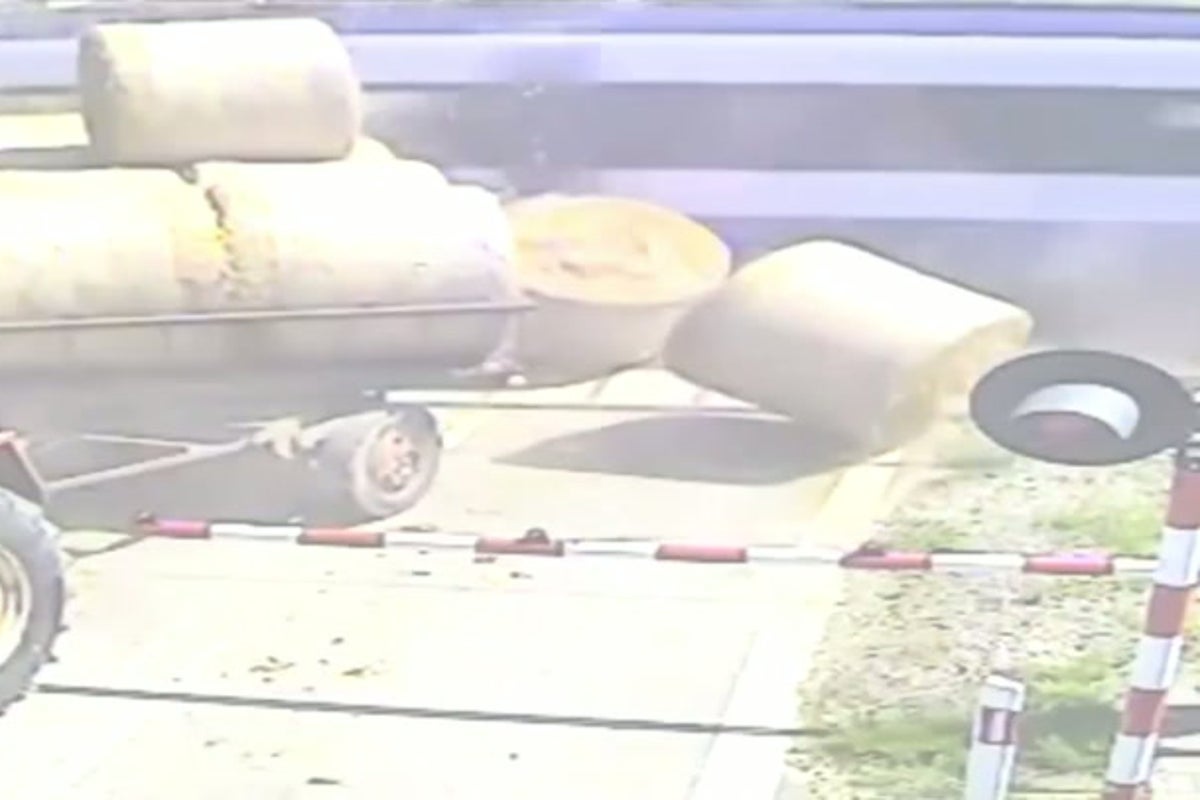
Take the recent close call captured by security cameras where a passenger train obliterated a farm trailer loaded with straw. The tractor driver had stopped right on the railway tracks. Local authorities later confirmed the driver was intoxicated. Miraculously, no one died, but nearly 500 passengers on board faced an unthinkable risk.
Incidents like this expose a terrifying disconnect between heavy machinery operators and rail safety protocols. Let us look at why these collisions happen and how infrastructure and human failure collide.
The Physics of Railway Disasters
Trains cannot stop on a dime. People forget this fundamental truth. A typical passenger train traveling at highway speeds needs up to a mile or more to come to a complete halt. When a tractor, semi-truck, or car stalls on a crossing, the engineer inside the locomotive is essentially watching an inevitable catastrophe unfold in slow motion.
Heavy farm equipment compounds the issue. Tractors move slowly. Trailers loaded with harvest materials or straw are heavy and unwieldy. If a driver misjudges the timing of a crossing or gets stuck, the weight of the load makes a quick escape impossible.
The Human Factor Behind the Controls
Impairment remains a persistent hazard on modern roads and rural paths. Operating heavy agricultural machinery requires sharp focus, precise spatial awareness, and quick decision-making. Alcohol strips all of those away.
When a driver chooses to operate equipment under the influence near active rail corridors, they gamble with hundreds of lives. In the Poland incident, automated safety systems did their job. Warning lights flashed and barriers descended. The machinery bypassed human common sense, but it could not physically push the tractor out of the way.
What to Do If Your Vehicle Stalls on the Tracks
If you ever find yourself or your vehicle stuck on a railroad crossing, survival depends on immediate, aggressive action. Do not stay inside the cab trying to restart the engine or save the vehicle.
- Get out of the vehicle immediately.
- Run away from the tracks at a 45-degree angle toward the direction the train is coming from.
- Running toward the oncoming train ensures that when the locomotive hits your vehicle, the flying debris is pushed away from you rather than toward you.
- Call emergency services immediately once you are a safe distance away.
Too many drivers make the fatal mistake of trying to push the vehicle or waiting too long to abandon ship. Property can be replaced. Lives cannot.
Accountability must be strict. Stricter penalties, better rural monitoring, and zero tolerance for substance use around transit corridors are mandatory if we want to stop treating these events as freak accidents and start recognizing them as entirely preventable choices.
MASSIVE Train Collision After Tractor Driver Stops on Railroad Tracks
This video footage captures the exact moment a passenger train crashes into a farm trailer after a tractor operator stops on the railway line.