The sound of a drone is not like the roar of a jet. It is a persistent, mechanical hum—the sound of a giant mosquito caught in the ear of the world. In the villages of Borno State, tucked away in the dusty corners of Northeast Nigeria, that sound has become a harbinger of a specific kind of dread. It is the sound of an invisible eye. It is the sound of a choice being made thousands of feet above the ground by someone who cannot smell the cooking fires or hear the laughter of children playing near the neem trees.
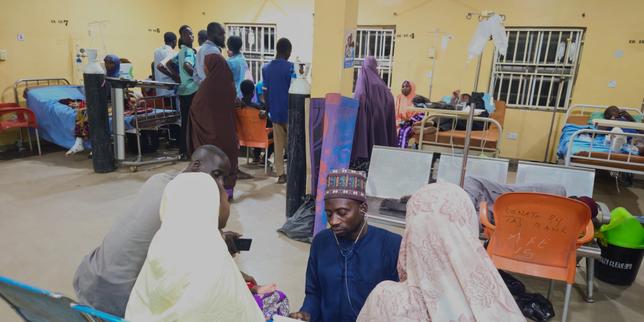
When the bombs fell on the village of Buhari in Yunusari, the sky was clear. It was a Wednesday. In this part of the world, Wednesdays are for the rhythm of life, for the slow movement of cattle and the preparation of grain. Then, the air split open.
The Nigerian military calls these "accidental engagements." The survivors call them the end of their world.
The Anatomy of a Mistake
To understand how a village becomes a target, you have to look at the map through the lens of a pilot. For over a decade, the Nigerian armed forces have been locked in a grinding, exhausting war against Boko Haram and the Islamic State West Africa Province (ISWAP). It is a war fought in shadows, in thickets of scrubland, and in the vast, shifting sands of the Lake Chad basin.
The insurgents do not wear uniforms. They do not hold traditional front lines. They dissolve into the landscape, blending into the very communities they terrorize. This is the strategic nightmare that leads to the "bavure"—the blunder.
When a pilot looks down, he sees movement. He sees a gathering. In his mind, it is a meeting of insurgents. In reality, it might be a wedding. It might be a funeral. It might be a group of farmers finally returning to fields they were forced to abandon years ago. The tragedy of the Northeast is that the Nigerian military, in its desperation to excise the cancer of insurgency, keeps cutting into the healthy flesh of the nation.
The Faces in the Dust
Consider a man like Bukar. He is not a real person in the sense of a single biography, but he is the composite of a dozen testimonies gathered from the wreckage of Yunusari and the camps in Maiduguri. Bukar has spent five years running. He ran when the insurgents came to burn his school. He ran when the famine took his youngest daughter. Finally, he thought he had found a pocket of peace, a place where the earth was quiet.
He was sitting in the shade when the first explosion occurred.
There is a specific silence that follows a localized blast. It is a vacuum of sound where the ears ring and the brain refuses to process the visual data. Bukar saw his neighbor’s house disintegrate. He saw the dust rise in a thick, choking veil. He did not hear the screams until the dust began to settle.
When the Nigerian Air Force later released a statement, they spoke of "intelligence-led operations" and "neutralizing bandits." They did not speak of the bodies that Bukar had to pull from the rubble. They did not speak of the way the red earth turns a darker, sickening shade of mahogany when it drinks human blood.
Numbers tell a story of their own, though they are often disputed. In January 2017, a strike on a displaced persons camp in Rann killed at least 115 people. In 2021, another strike in Niger State killed wedding guests. In 2023, a drone strike in Kaduna State killed nearly 100 villagers during a religious festival. The incident in the Northeast is not an anomaly; it is a pattern.
The Invisible Stakes of "Collateral"
We use the term "collateral damage" because it sounds clean. It sounds like an accounting error. It suggests that the loss of life is a secondary cost of a primary success. But in the insurgent-heavy regions of Nigeria, these mistakes are the primary drivers of the next generation of conflict.
When a government bombs its own people, it breaks a sacred, unwritten contract. The state is supposed to be the shield. When the shield becomes the sword, the people look for protection elsewhere.
Insurgents are masters of grief. They wait in the wings of these tragedies. They find the young men who have lost their fathers to a "misaligned" missile. They offer them a gun and a reason to use it. They don't need to teach these men radical theology; they only need to point toward the sky and remind them who sent the fire.
The military claims these strikes are necessary to "degrade the enemy's capabilities." But how do you measure the capability of a heart hardened by bitterness? How do you calculate the cost of a village that now fears the sound of an engine more than the threat of a raid?
The Technology of Distance
There is a profound irony in the use of high-tech surveillance and precision-guided munitions in a war where the human element is so distorted. The more technology we use to see, the less we seem to understand.
A thermal camera can detect heat signatures. It can show the warmth of a body against the cooling sand of the evening. But it cannot show intent. It cannot distinguish between the heat of a weapon and the heat of a cooking pot. The distance provided by aerial warfare creates a moral buffer for the operator. It turns the tragedy of a decimated family into a grainy video feed that can be reviewed, filed away, and eventually deleted.
This is the hidden cost of the modern air war. It is the sanitization of slaughter.
In the aftermath of the Yunusari strikes, the official response followed a familiar choreography. First, a denial. Then, a promise of an internal investigation. Finally, a quiet admission that "civilians may have been impacted," followed by a plea for the public to remain supportive of the troops.
But for those on the ground, support is a luxury they can no longer afford. They are caught between two fires. Below, the insurgents who demand their food and their sons. Above, the military that promises liberation but delivers lightning.
The Weight of the Aftermath
Night falls quickly in the North. The heat of the day escapes into the atmosphere, leaving the air thin and cold. In the villages affected by these "bavures," the night is no longer a time of rest. It is a time of looking up.
Every light in the sky is scrutinized. Is it a star? Is it a satellite? Or is it the red-and-green blink of a drone circling, waiting for a movement it doesn't understand to justify a violence it cannot take back?
The graves are usually shallow, dug in haste because the survivors are often still afraid that the "eye" will return to see the gathering at the cemetery as another target. There are no monuments here. There are no plaques with the names of the "accidentally engaged." There is only the wind, blowing the dust over the mounds of earth, and the lingering, metallic scent of burnt iron.
The war against terror is often described as a battle for hearts and minds. If that is true, then every "mistake" is a tactical defeat of catastrophic proportions. You cannot win a heart by stopping it. You cannot change a mind by shattering the world it lives in.
As the military continues its campaign, the question remains: what will be left to govern when the smoke finally clears? If the price of security is the blood of the innocent, the "peace" that follows will be nothing more than the silence of the graveyard.
The humming in the sky continues. Down below, a mother covers her child’s mouth to keep them from crying, hoping the machine above doesn't mistake a sob for a signal. The rain in the Northeast used to be a blessing. Now, when the clouds gather or the engines drone, the people simply wait for the earth to break.