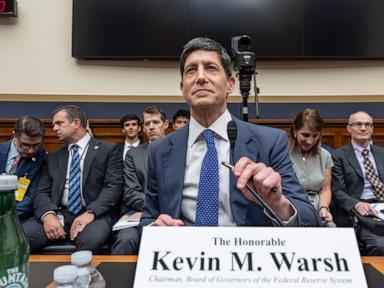
Financial media spent another morning obsessing over central bank theater. The standard commentary machine churned out predictable analysis: Kevin Warsh took the stage, declared the Federal Reserve has "no tolerance" for sticky inflation, and then left Wall Street parsing commas because he refused to promise a rate cut or a hike.
The commentary treats this radio silence as a puzzle waiting to be solved. Analysts rewatch the video footage, run transcripts through sentiment algorithms, and debate whether his tone leaned hawkish or dovish. Learn more on a related topic: this related article.
It is a complete waste of capital and brainpower.
The consensus treats central bank speeches like cryptic weather forecasts that smart traders can decode if they just pay close enough attention. The uncomfortable truth is much simpler: Fed officials do not give hints about their next move because they genuinely do not know what their next move will be. Expecting forward guidance from a panel of committee members staring at backward-looking data is like asking a driver to steer a truck at seventy miles per hour while looking strictly in the rearview mirror. Further journalism by Business Insider highlights related views on the subject.
The Forward Guidance Myth
For fifteen years, markets were addicted to central bank hand-holding. Following the 2008 financial crisis, the Fed introduced the practice of explicit forward guidance. They told markets exactly what they intended to do months in advance to keep borrowing costs artificially low and suppress market volatility.
Traders grew soft. They forgot how to manage actual uncertainty.
Now, every time an insider or former governor speaks without handing out a pre-packaged roadmap, financial journalists panic and frame it as a mystery. He provided no hints! as if he hid the master key to the bond market in his jacket pocket and forgot to hand it over.
Here is what the consensus misses about how policy actually works:
- Data dependency is an admission of ignorance, not a strategy. When central bankers claim they are "data-dependent," they are telling you they have zero predictive power over the macro economy.
- Speeches are political theater, not monetary policy. A speech by a high-profile figure like Warsh serves to anchor inflation expectations mentally, not to preview board room votes.
- The market is pricing in certainty where none exists. Rate futures move on every single adjective used in an auditorium, creating synthetic volatility over noise.
I have spent decades watching fund managers burn tens of millions of dollars trying to front-run central bank communication. The ones who survive stop listening to the speeches entirely.
"No Tolerance" Is a PR Slogan, Not a Target
Let us dissect the headline phrase that sent commentators into a frenzy: "no tolerance for high inflation."
It sounds aggressive. It sounds resolute. It is also completely meaningless without operational context.
The Federal Reserve operates under a dual mandate: maximum employment and price stability. In reality, price stability is a moving target shaped by political pressure and national debt servicing costs. When a speaker claims the Fed has zero tolerance for inflation, they are engaging in basic jawboning. They want consumers and corporations to believe price hikes will be met with brute force, hoping that belief alone suppresses wage-price spirals.
It is psychological management. Nothing more.
+-------------------------------------------------------------------+
|                     THE FORWARD GUIDANCE TRAP                     |
+-------------------------------------------------------------------+
|  1. Fed Official gives a vague speech about price stability.     |
|  2. Financial Media panics over lack of explicit rate guidance.   |
|  3. Wall Street over-indexes on sentiment analysis & noise.       |
|  4. Real economic shocks hit; backward-looking policy breaks.     |
+-------------------------------------------------------------------+
Imagine a scenario where supply chain bottlenecks suddenly spike oil to $120 a barrel tomorrow morning. Does Warsh's stance on inflation tolerance alter the physical availability of crude? Does a speech change consumer demand overnight?
No. The policy rate is a blunt instrument. Raising rates does not build oil refineries, open container ports, or create agricultural yield. Using monetary policy to fight supply-driven inflation is like trying to perform brain surgery with a sledgehammer.
Stop Asking When the Next Rate Shift Is Coming
If you are running a business or managing a portfolio based on whether the central bank shifts rates by 25 basis points in September versus November, your operational model is broken.
The market's obsession with the next rate decision creates a dangerous blind spot around structural shifts in the real economy. While analysts argue over Fed speak, they ignore the systemic forces actually driving long-term capital costs:
De-Globalisation and Reshoring
For three decades, cheap foreign labor and globalized supply chains exported deflation to the West. That cycle is over. Re-shoring manufacturing, building redundant supply chains, and navigating geopolitical fragmentation are inherently inflationary activities. A quarter-point rate tweak does not change this reality.
Fiscal Deficits
Central banks do not operate in a vacuum. Governments across the developed world are running peacetime structural deficits at levels never seen before. When fiscal policy keeps pouring money into the economy, monetary policy has to work twice as hard just to stand still. High government debt forces central banks to keep real rates lower than they otherwise should be, regardless of what speakers declare at podiums.
Structural Labor Shortages
Demographics are fixed. Aging populations across North America, Europe, and East Asia mean tight labor markets are a feature, not a bug, of the coming decade. Wage pressures will remain sticky regardless of how many speeches warn about inflation risks.
How to Trade the Fed Noise Instead of Buying It
The standard playbook tells you to tune into every speech, analyze the dot plots, and adjust your duration exposure accordingly.
That playbook is built for a low-volatility environment that no longer exists.
If you want to position capital intelligently, you need to exploit the market's irrational reaction to central bank commentary rather than participating in the speculation yourself.
1. Short the Volatility Around Fed Speeches
The financial media builds massive anticipation before any major monetary address. Implied volatility in short-dated options spikes as traders hedge against a surprise shift in tone. Once the speech ends with the usual vague truisms—"we will remain vigilant," "data will guide us"—that implied volatility collapses. Capitalizing on the predictable post-speech volatility crush offers far better risk-adjusted returns than guessing whether a speaker is a hawk or a dove.
2. Ignore Forward Guidance; Watch Long-End Yields
The Federal Reserve directly controls short-term interest rates. They do not control the long end of the bond curve. The market controls the long end. When central bank speakers waffle, look at thirty-year yields. If long yields are climbing while officials talk tough on inflation, the market is telling you it does not believe the central bank has the political stomach to hold rates high enough for long enough. Trust the bond market; ignore the microphone.
3. Build Balance Sheets for Higher Structural Cost of Capital
The real danger for corporations is not whether rates drop by 50 basis points next quarter. The danger is assuming we will ever return to the era of free money. Companies that structured their debt maturities around the assumption that zero-rate regimes were permanent are getting wiped out. The contrarian move is to operate under the assumption that benchmark rates will stay structurally higher for the next decade. If rates drop, it is a bonus. If they do not, you survive while your competitors liquidate.
The Cost of Seeking Certainty
There is a clear downside to ignoring central bank signals entirely: you run the risk of missing immediate, policy-driven liquidity swings. In the short term, a sudden, unexpected liquidity injection can send risk assets soaring, leaving disciplined, fundamental-focused investors behind.
Risking short-term underperformance is the price of long-term solvency.
Chasing central bank narratives creates a false sense of security. It convinces market participants that an institution filled with academics possesses a master blueprint for a complex, adaptive multi-trillion-dollar global economy. They do not.
The next time an insider takes the microphone, says the central bank will not tolerate inflation, and refuses to map out their next move, do not look for hidden messages. Take them at their word: they have no idea what is coming next, and you should stop pretending you do too.
Build resilient balance sheets. Stop parsing rhetoric. Trade the reality of structural inflation, not the illusion of central bank control.


