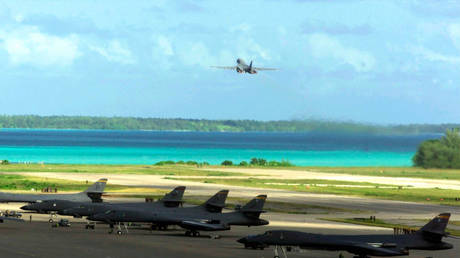
The United States Navy has officially begun interdicting commercial traffic bound for Iranian ports, a move that effectively converts a localized conflict into a global economic siege. President Donald Trump ordered the blockade at 10 a.m. EDT on Monday following the collapse of marathon weekend negotiations in Islamabad. The primary objective is to choke off the remaining lifeblood of the Iranian economy and force a nuclear capitulation that Vice President JD Vance failed to secure at the bargaining table. However, this strategy assumes the world will follow Washington’s lead—an assumption that is already crumbling.
The Islamabad Collapse
The failure in Pakistan was not a matter of missing paperwork or minor disagreements. It was a fundamental collision of realities. Vance and the American delegation entered the talks demanding a total dismantling of Iran’s nuclear infrastructure. The Iranian representatives, bolstered by a survivalist mentality after months of U.S.-Israeli strikes, refused to surrender their primary deterrent. If you found value in this article, you should check out: this related article.
When the talks hit the 21-hour mark on Sunday, the American team walked away. The subsequent order for a naval blockade is the administration's "Plan B," an attempt to use the Navy to achieve what diplomacy could not. By targeting every vessel that has paid a "transit toll" to Tehran or is heading to an Iranian terminal, the U.S. is attempting to delegitimize the Islamic Republic's sovereign control over its own coastline.
A Legal and Logistic Nightmare
A blockade is historically and legally considered an act of war. While the administration frames this as "maritime interdiction" or "law enforcement" against "extortionist tolls," the reality on the water is far more volatile. Centcom has clarified that the blockade applies specifically to Iranian ports, promising not to impede traffic moving to neutral hubs like Dubai or Kuwait. For another look on this story, see the latest coverage from TIME.
This is a distinction without a difference for a merchant mariner.
Navigating the Strait of Hormuz is already a high-stakes gamble. Now, every tanker captain must weigh the risk of being caught in a literal crossfire. If a vessel is suspected of carrying Iranian crude or having paid Iranian fees, it faces "interception, diversion, and capture" by U.S. boarding teams. Iran has responded with a chilling clarity: if their ports are not safe, no port in the Persian Gulf will be safe.
The Missing Coalition
Unlike the first Gulf War or even the "Maximum Pressure" campaign of the first Trump term, Washington is largely standing alone.
- The United Kingdom: Prime Minister Keir Starmer has explicitly refused to join the blockade, citing the need to prioritize "freedom of navigation" over escalation.
- France: Paris has mirrored London’s caution, focusing instead on independent efforts to keep the Strait open.
- China and India: As the primary consumers of regional energy, both nations view the blockade as a direct assault on their economic security.
Without the support of traditional European allies, the U.S. Navy is essentially acting as a unilateral traffic cop in the world's most dangerous neighborhood.
The Oil Market Shockwave
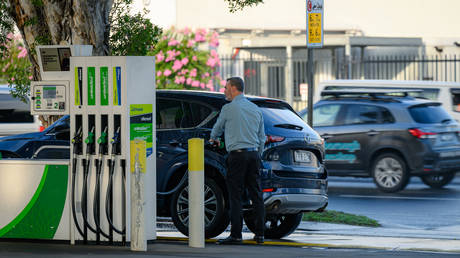
The immediate impact on global energy is already visible. Brent crude surged past $100 a barrel within hours of the announcement. This isn't just about the 1.15 million barrels per day Iran was still managing to export; it’s about the psychological terror of a full-scale maritime conflict.
The Strait of Hormuz handles roughly 20% of the world's oil and liquefied natural gas (LNG). If the U.S. begins "eliminating" Iranian fast attack ships—as the President threatened on Truth Social—the insurance premiums for tankers will become so high that shipping companies will effectively blockade themselves. We are seeing a "grocery supply emergency" in the GCC states, which rely on the Strait for nearly 80% of their food. The irony is sharp: in trying to starve the Iranian regime, the U.S. risks starving its own partners in the region.
The Mirage of Regime Change
Behind the blockade lies a deeper, more aggressive ambition nurtured by Israeli Prime Minister Benjamin Netanyahu. The administration has frequently signaled that this war is a vehicle for regime change. After the assassination of Ali Khamenei in February, the hope was that the Iranian state would implode.
It hasn't.
Instead, the hardliners have consolidated power. By killing the "moderates" within the old guard, the U.S.-Israeli strikes have left only those who are most committed to a scorched-earth defense. Trump’s claim that "regime change has already occurred" because the previous leaders are "mostly dead" ignores the fact that the institutions of the Islamic Revolutionary Guard Corps (IRGC) are designed for exactly this kind of decentralized, asymmetric survival.
The Escalation Ladder
The U.S. is now at the top of an escalation ladder with nowhere to go but a ground invasion—a scenario that neither the American public nor the Pentagon wants.
The blockade is designed to be "quick and brutal," but maritime sieges are historically slow and messy. If Iran follows through on its threat to target non-Iranian ports, the global economy will face a contraction unlike anything seen since the 1970s. The administration is betting that Tehran will break before the global market does. Given the current resilience of the Iranian military apparatus and the growing frustration of American allies, that is a bet with deteriorating odds.
The Navy can stop a tanker, but it cannot stop the economic fallout of a shuttered Strait. As the first boarding parties prepare to descend on merchant decks, the question is no longer whether Iran can survive the blockade, but whether the global economy can.
The blockade has begun, the peace talks are a memory, and the "art of the deal" has been replaced by the mechanics of a siege.