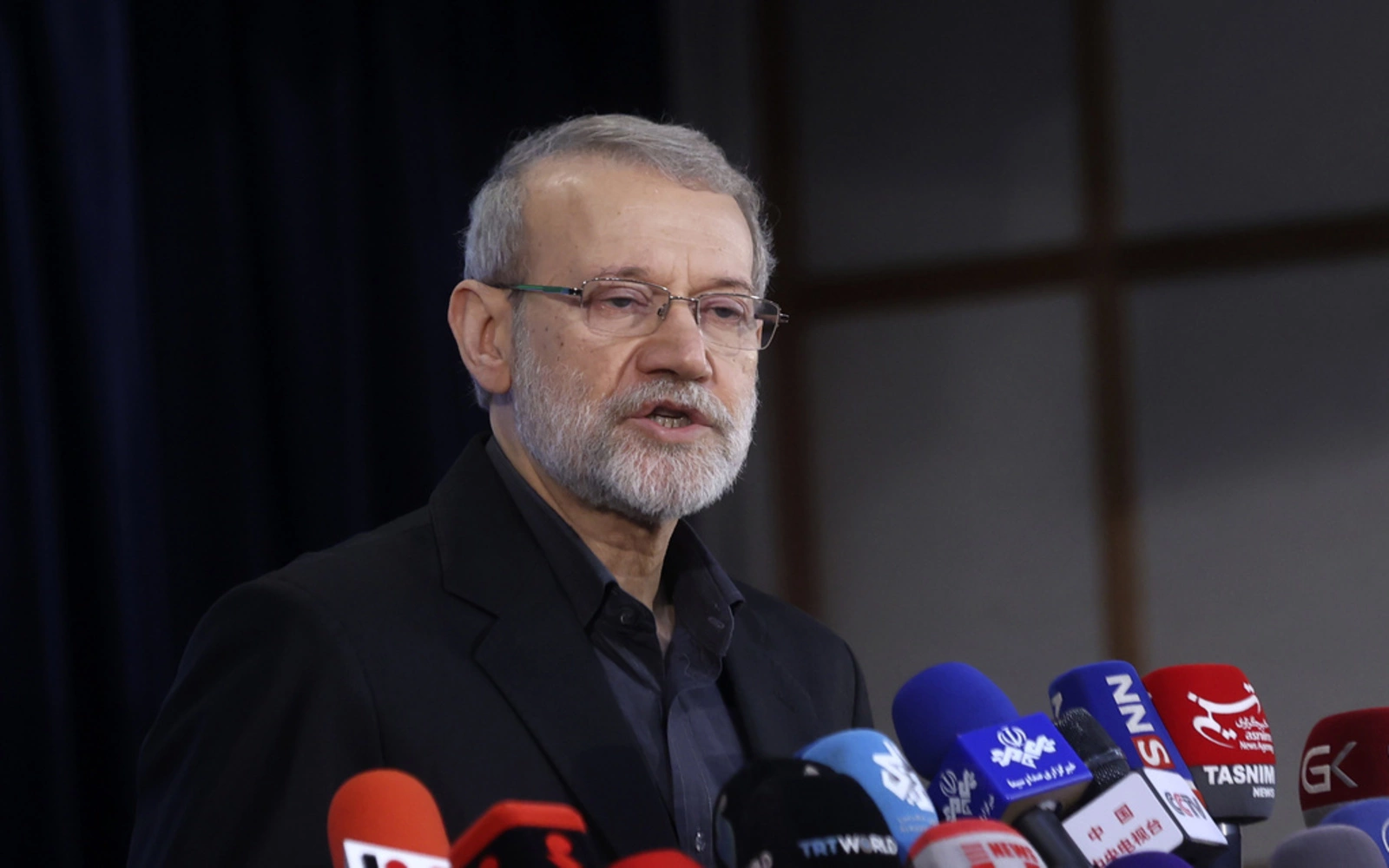
The pre-dawn explosions that rocked the outskirts of Tehran on Monday night did more than just level a reinforced safe house. According to high-level Israeli defense officials and intelligence reports, the strike successfully eliminated Ali Larijani, the Secretary of Iran’s Supreme National Security Council and the man who had become the glue holding the fractured Iranian state together since the death of Ayatollah Ali Khamenei on February 28. If confirmed, this is not just another name on a target list; it is the removal of the last adult in the room.
While the Israel Defense Forces (IDF) have officially declared the mission a success, the fallout suggests a much deeper strategy. This was not a random act of opportunity. It was a surgical removal of the regime’s operational brain. In the eighteen days since the war began, Larijani had emerged as the de facto leader, navigating the impossible terrain between a vengeful Trump administration and a domestic population that has been pushed to the breaking point. If you enjoyed this article, you might want to read: this related article.
The Vacuum at the Center of Power
Larijani was never just a bureaucrat. He was the ultimate survivor of the Iranian political machine, a former parliamentary speaker and nuclear negotiator who understood the West better than anyone in the IRGC hierarchy. His death leaves a void that the remaining hardliners, led by the largely invisible Mojtaba Khamenei, are ill-equipped to fill.
The timing of the strike is telling. It occurred just as Larijani was reportedly attempting to coordinate a unified response to the massive naval blockade in the Strait of Hormuz. By removing him, Israel has effectively decapitated the Iranian diplomatic and strategic apparatus. This forces the regime into a corner where their only remaining tools are blunt instruments: the Basij and the remnants of their ballistic missile program. For another look on this development, see the recent update from Associated Press.
A Simultaneous Blow to the Enforcers
Larijani was not the only ghost in the machine targeted last night. The Israeli military also confirmed the death of Gholamreza Soleimani, the commander of the Basij paramilitary force. If Larijani was the brain, Soleimani was the fist. The Basij are the front-line enforcers of domestic order, the ones responsible for the brutal crackdowns on protesters that have left thousands dead or detained since January.
By hitting both simultaneously, the IDF is signaling a shift in the campaign. They are no longer just degrading nuclear sites; they are dismantling the governance structure of the Islamic Republic. Without Larijani to strategize and Soleimani to suppress, the regime faces a dual crisis of external war and internal collapse.
The Intelligence Breach That Should Terrify Tehran
The most damning aspect of this strike isn't the hardware used, but the intelligence required to pull it off. For Larijani—a man who lived in the shadows and moved through a web of secure bunkers—to be pinpointed in a "precise strike" near Tehran indicates a total compromise of Iranian internal security.
The Mossad and the IDF have shown they can track the most senior figures of the regime in real-time, even deep within the capital. This suggests that the "ring of fire" Iran tried to build around Israel has been inverted. Israel is now operating with near-impunity within the heart of the Iranian state.
- The Persistence of Surveillance: It appears the Israeli military has maintained eyes on Larijani for weeks, waiting for a moment when his movement would minimize civilian collateral while maximizing the psychological impact on the IRGC.
- The Failure of Air Defense: Despite Iran’s claims of advanced S-300 and indigenous Bavar-373 systems, Israeli aircraft and drones continue to penetrate the most sensitive airspace in the country.
The Mirage of the Handwritten Note
In the hours following the announcement of Larijani’s death, Iranian state media attempted a desperate PR counter-offensive. They released an image of a handwritten note, allegedly penned by Larijani, mourning the sailors killed in a recent U.S. naval engagement. It was a classic move from the authoritarian playbook: create doubt to prevent a total collapse of morale.
However, the note lacked a timestamp that could be independently verified. Analysts have noted that the text was likely prepared in advance for the funeral of the sailors scheduled for Tuesday. It is a thin shield. The lack of a video or audio statement from a man known for his frequent media appearances speaks louder than any ink on paper.
Why This Isn't Just Another Assassination
To understand why this strike is different, you have to look at the family Larijani represented. The Larijani brothers have been the backbone of the Iranian establishment for decades. One brother ran the judiciary; Ali ran the parliament and later the security council. They were the bridge between the old-guard clerics and the modern security state.
With Ali gone, the "pragmatic" wing of the Iranian government is officially extinct. This leaves the country in the hands of the most radical elements of the Revolutionary Guard—men who view the current conflict not as a war to be negotiated, but as an apocalyptic struggle.
The removal of Larijani also complicates the position of regional players. Nations like Qatar and Oman, which have traditionally served as backchannels between Tehran and Washington, now have no one on the other end of the line with the authority to actually sign a deal.
The Closing Window for Diplomacy
We are seeing the systematic dismantling of a nation-state’s ability to function. The Israeli strategy appears to be a total "system reset." By removing the individuals who understand the nuances of international law and diplomacy, they are leaving the regime with no choice but to escalate or disintegrate.
The escalation is already happening. Missiles are falling near Dubai and Abu Dhabi, and the Strait of Hormuz is a graveyard of tankers. But without Larijani to direct these moves into a coherent political outcome, Iran is simply lashing out. It is the thrashing of a wounded animal, dangerous but lacked in direction.
The coming days will reveal whether the Iranian public sees this as an opportunity to reclaim their country or if the remaining security forces will double down on a scorched-earth policy. One thing is certain: the era of the Larijanis is over, and with it, any hope for a managed exit from this war.
The Israeli government is betting that by cutting off the head, the body will eventually stop fighting. It is a high-stakes gamble that assumes the successor won't be even more desperate and unpredictable than the man they just buried.
Would you like me to analyze the potential successors within the Iranian Supreme National Security Council who might attempt to seize control in the coming days?