The U.S. Navy is quietly scrambling to replace or supplement its flagship radar-hunting missile before the weapon even reaches full-scale operations. On July 1, 2026, Naval Air Systems Command issued a Request for Information for a brand-new weapon system designated the Advanced Emission Suppression Missile. The directive reveals an immediate need for up to 600 missiles per year, a massive leap from the 300 units projected just months ago. This urgent market pivot exposes deep-seated anxieties over industrial capacity, ongoing software and propulsion failures, and the harsh lessons of recent high-intensity expenditure.
For nearly a decade, the Navy pinned its Suppression of Enemy Air Defenses strategy on Northrop Grumman’s AGM-88G Advanced Anti-Radiation Guided Missile Extended Range. The missile promised to dismantle sophisticated air defense networks from safe distances. Yet, persistent engineering setbacks have forced the Pentagon to plan a strategic pause in purchases for Fiscal Year 2027. By throwing open the doors to a second manufacturer, the military is attempting to break a monopoly that left national security vulnerable to supply chain bottlenecks.
The Cracks in the Monopoly
Monopolies in defense acquisition often breed complacency and fragile supply chains. Northrop Grumman’s development of the AGM-88G has been plagued by a series of technical hurdles, primarily involving the solid rocket motor and guidance software. These issues delayed the weapon's Initial Operational Capability, which was originally scheduled for 2023. The Navy now hopes to reach that baseline milestone by September 2026, though industry insiders remain skeptical about whether the software updates will hold under rigorous operational testing.
The defense industrial base cannot keep pace with the realities of modern warfare. This vulnerability became glaringly obvious during the conflict in Iran earlier this year, where western forces burned through guided munitions at an unsustainable rate. A single prime contractor managing a complex, troubled assembly line cannot scale production rapidly enough to meet a sudden geopolitical crisis. By inviting competitors to submit an equivalent, mature design that has achieved Technology Readiness Level 6, the Navy is signaling that it will no longer protect underperforming programs.
Dropping Key Features to Move Fast
A close reading of the Navy’s latest requirements reveals an aggressive compromise. The Pentagon is willing to sacrifice technical ambition for raw production volume. In a previous request issued in February 2026, the Navy wanted a highly sophisticated weapon capable of engaging both air-to-air and air-to-ground targets. The new document completely drops the air-to-air requirement.
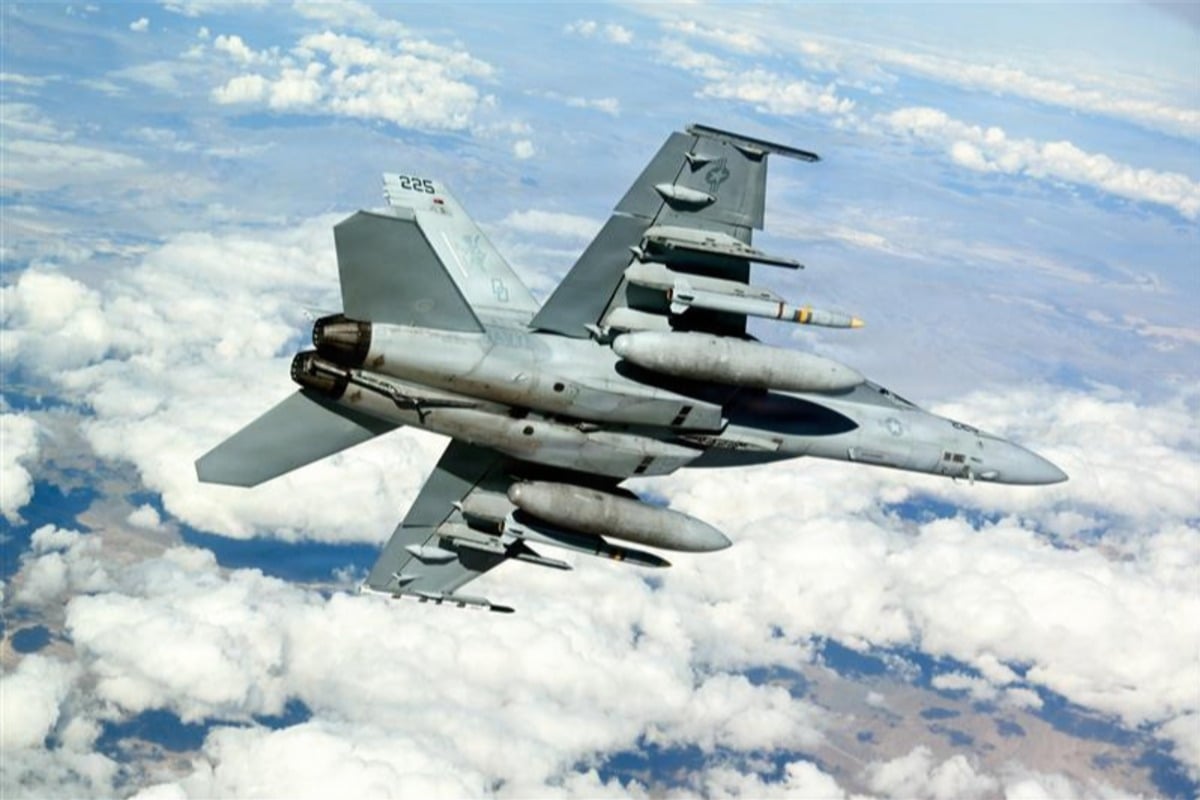
Speed of procurement is now the only metric that matters. The service is also no longer demanding a missile with a longer range than anything currently in the inventory. Instead, the focus has shifted entirely to securing a reliable, easily manufactured alternative that can fit inside the weapons bays of the F-35 Lightning II, while remaining compatible with legacy platforms like the F/A-18E/F Super Hornet and EA-18G Growler. The Navy wants a missile that works immediately, even if it lacks the exotic capabilities originally envisioned.
| Specification | February 2026 Request | July 2026 Request |
|---|---|---|
| Annual Target Volume | Up to 300 units | Up to 600 units |
| Target Flexibility | Air-to-Air and Air-to-Ground | Air-to-Ground Only |
| Range Demands | Greater than current inventory | Undisclosed standard standoff |
| Required Maturity | Early stage development | Technology Readiness Level 6+ |
The Logistics of a Stalled Stockpile
A major driver behind this sudden shift is the reality of the ongoing strategic pause. The Navy confirmed that it will halt procurement of the Northrop Grumman missile during Fiscal Year 2027 to allow the company to clear a severe backlog of over 150 missiles and iron out persistent software bugs. While the military frames this as a responsible management decision, it leaves a dangerous gap in the mid-2020s stockpile.
Air defense systems in eastern Europe and East Asia are evolving faster than the Pentagon can buy counter-measures. Modern integrated air defense networks rely on highly mobile radar arrays that switch on and off in seconds to evade detection. The aging AGM-88 High Speed Anti-Radiation Missiles transferred to international partners have proven easy to track for top-tier adversaries. If the Navy cannot field a high-volume, modern alternative that uses passive multi-mode seekers and millimeter-wave radar to lock onto targets after they turn off their transmitters, its carrier strike groups will be forced to operate outside the combat theater.
The Navy’s aggressive 48-month timeline for the new Advanced Emission Suppression Missile project underscores the desperation. The winning contractor must complete design, software integration, and delivery of the first production lot within four years of contract award. This leaves no room for experimental tech. Major defense primes like Raytheon, fresh off a massive $1.1 billion contract expansion for the AIM-9X Block II, are already positioning their existing sensor portfolios to steal the program from Northrop Grumman. The era of the single-source radar hunter is officially over, and the frantic race to secure the skies has just begun.