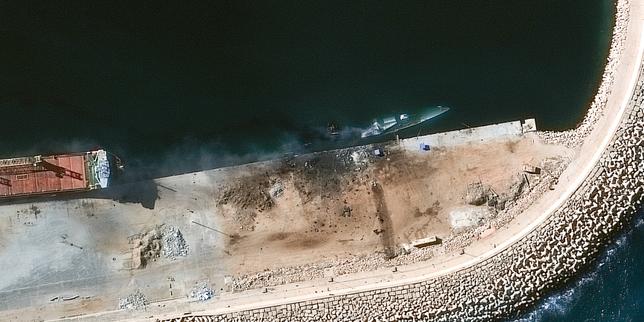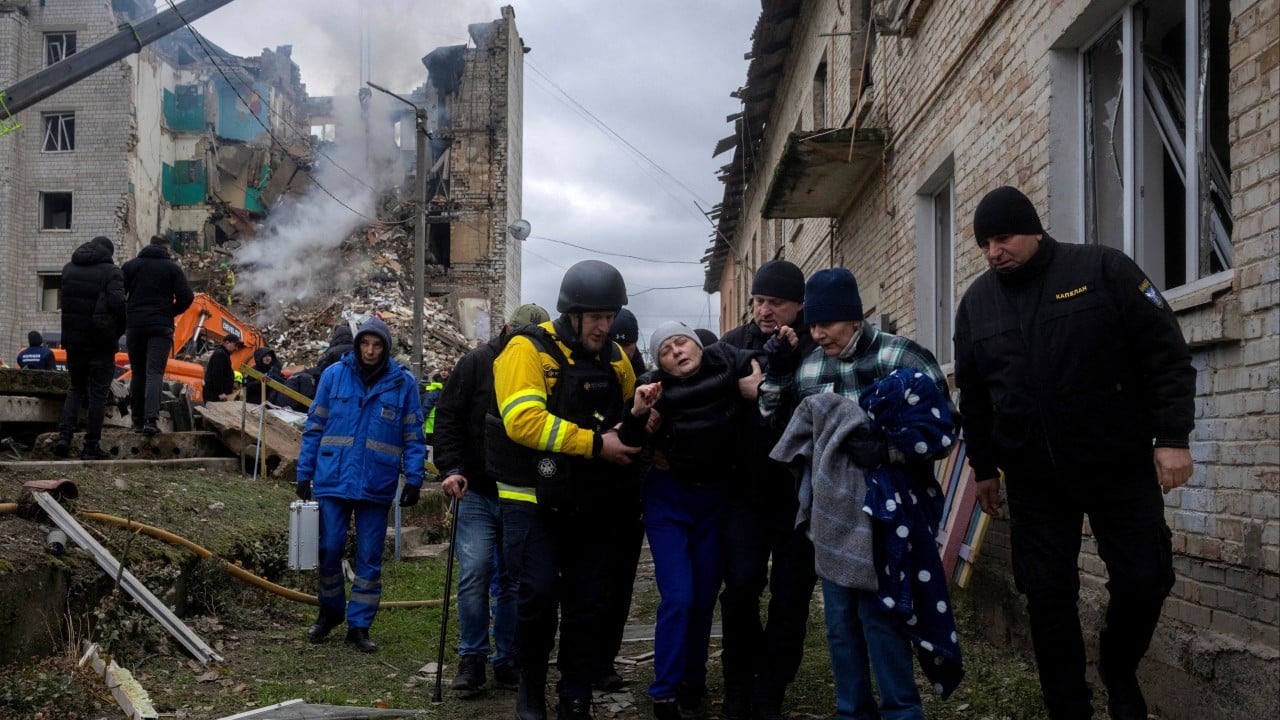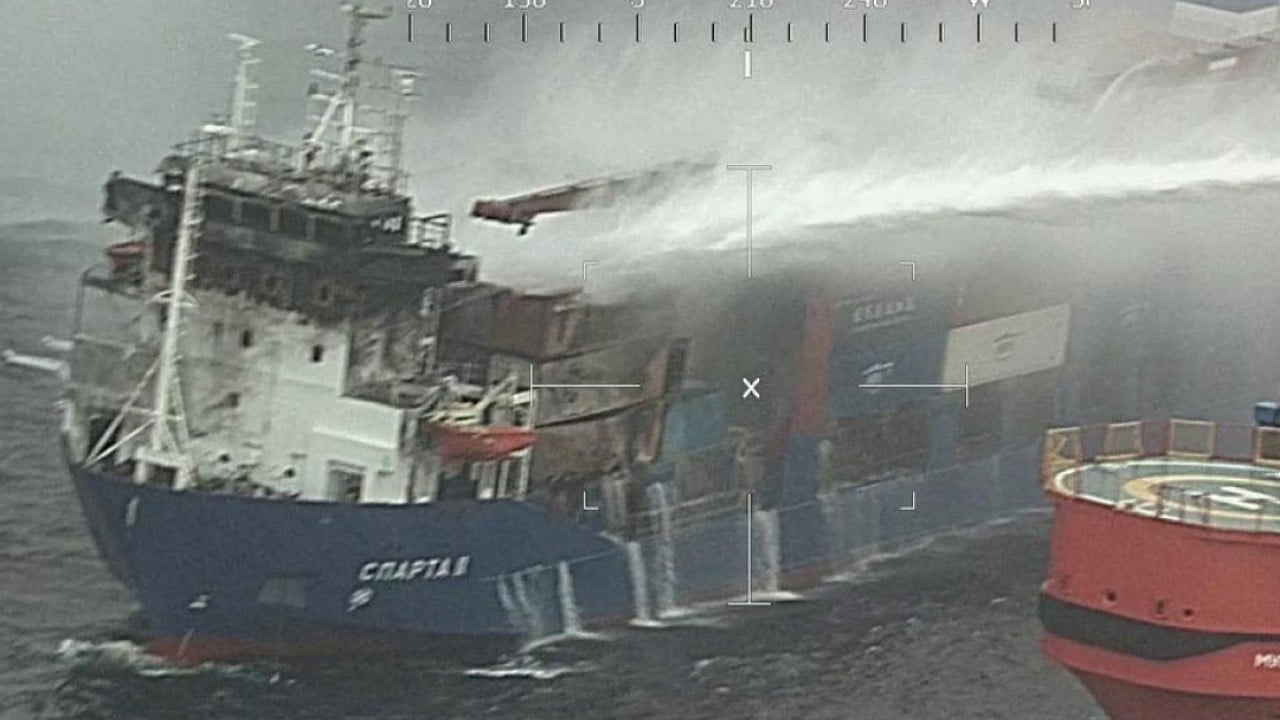
Finland has confirmed that Russian tugboats are actively towing a damaged Russian vessel out of Baltic Sea waters following a targeted drone strike. That single operational movement signals a quiet but profound shift in the maritime geography of Northern Europe. The Baltic is no longer a secure rear-area transit corridor for Moscow. Instead, it has become an exposed, contested maritime flank where vessels lacking dedicated air defense cannot operate without risking disablement or loss.
For decades, naval planners treated the Baltic Sea as a predictable choke point governed by cold-war geography and peacetime transit rules. That era is over. When unmanned systems strike a hull in northern waters and force a slow, vulnerable recovery operation under the watchful eyes of neighboring coast guards, the strategic calculus changes overnight.
Anatomy of a Baltic Salvage Operation
Towing a crippled ship across open water is never a routine chore. It is slow, noisy, and entirely transparent to every radar station, patrol aircraft, and commercial Automatic Identification System receiver in the region.
When Finnish authorities report that Russia has begun towing a vessel hit by drones in the Baltic, they are describing an operation conducted under intense international scrutiny. A vessel under tow loses its primary advantage at sea—maneuverability. Its speed drops to a crawl, often between four and seven knots, depending on sea state and hull damage. Its crew is preoccupied with damage control, dewatering, and maintaining structural stability rather than defending against secondary threats.
The towing tugs themselves become tethered targets. Their propulsion systems work under heavy strain, their turning radii widen dramatically, and their transit routes are dictated by water depth, weather windows, and proximity to friendly ports. In the confined geography of the Gulf of Finland and the broader Baltic basin, there is nowhere to hide a multi-thousand-ton hull moving at walking speed.
The Mechanics of Post-Strike Recovery
Recovering a drone-damaged vessel involves far more than attaching a hawser and heading east. Salvage teams must first stabilize the hull against progressive flooding, which requires portable pumps, collision mats, and constant monitoring of watertight bulkheads.
If the drone strike damaged steering gear or rudder assemblies, the towed vessel may yaw violently behind the lead tug. In heavy Baltic swells, that yawing forces operators to deploy a second trailing tug simply to act as a dynamic brake and keep the damaged hull tracking straight. Every additional support vessel increases the acoustic and radar signature of the convoy, turning a quiet withdrawal into a public parade monitored by NATO intelligence assets from Estonia to Sweden.
Why the Baltic Sea Was Supposed to Be Safe
To understand why this incident carries outsized weight, you have to look at how Moscow viewed the Baltic before recent drone operations shattered the illusion of distance.
For years, Russian naval and logistical planners treated the eastern Baltic—specifically the approaches to St. Petersburg and the exclave of Kaliningrad—as a protected home lake. While the Black Sea Fleet suffered repeated losses to uncrewed surface vessels and long-range aerial drones, the Baltic Fleet and associated state-linked merchant vessels operated under the assumption that geography provided natural insulation.
The distance from Ukrainian territory to the northern Baltic exceeds a thousand kilometers. Overcoming that barrier requires either long-range, terrain-hugging flight profiles capable of evading air defense radars or forward-staged launch platforms operating from clandestine positions. Both options represent a major operational headache for Russian homeland security and naval command.
The Collapse of Sanctuary Thinking
Military history shows that sanctuary thinking is almost always fatal. When a fleet believes a body of water is out of reach, its crews relax watch standards, leave close-in weapon systems offline, and transit without escorts to save fuel and engine hours.
The strike in the Baltic proves that sanctuary no longer exists in European waters. Whether a vessel is a naval auxiliary, a patrol craft, or part of the opaque commercial network moving sanctioned cargo, operating without active electronic warfare and dedicated point defense is now a gamble. Once a ship takes a hit, the subsequent tow back to Kronstadt or Baltiysk becomes a floating billboard advertising that vulnerability to every maritime nation bordering the sea.
How Long-Range Unmanned Systems Changed Naval Geography
Unmanned aerial and maritime drones have rewritten the cost-exchange ratio of naval warfare. A traditional anti-ship cruise missile costs millions of dollars, requires a sophisticated launch platform, and leaves a distinct thermal and radar trail from the moment of ignition.
Modern long-range drones operate on a completely different logic. Built from lightweight composites, powered by commercial-grade internal combustion engines or electric motors, and guided by multi-constellation satellite navigation backed by inertial systems, these platforms cost a fraction of conventional munitions. They fly low, hug coastlines, and exploit gaps between stationary radar installations.
Even when a drone carries a relatively modest warhead—typically between twenty and fifty kilograms of high explosive—its accuracy allows operators to target specific vulnerabilities. A direct hit on a ship’s bridge destroys command and communications. A strike near the waterline or engine room ventilation shafts can knock out propulsion and electrical generation without sinking the vessel outright.
Mission Kill Versus Total Loss
In naval warfare, sinking a ship is not always necessary to achieve a strategic objective. A mission kill—inflicting enough damage to force a vessel out of service and require weeks or months of dry-dock repair—often creates greater logistical friction for an adversary than an outright sinking.
A sunken ship disappears from the order of battle immediately. A damaged ship under tow consumes tugboats, ties up specialized salvage crews, occupies scarce dry-dock space, and forces naval commanders to divert escorts to protect the recovery convoy. Watching Russia tow its drone-struck ship across the Baltic illustrates this exact dynamic. The hull remains afloat, yet it has been effectively removed from operational service while draining recovery resources during its slow retreat.
The Shadow Fleet Angle and Maritime Gray Zones
Any serious look at Russian shipping in the Baltic cannot ignore the blurred line between state naval assets, state-owned commercial vessels, and the broader shadow fleet operating across northern waters.
Since the imposition of sweeping Western energy and trade sanctions, hundreds of aging tankers and cargo ships with opaque ownership structures have transited the Danish Straits and the Gulf of Finland. Many of these vessels routinely disable their transponders, conduct ship-to-ship transfers in international waters, and operate with questionable insurance coverage.
When a Russian-affiliated vessel is struck by drones and subsequently towed, the incident inevitably intersects with broader regional anxieties over maritime safety and environmental risk. Baltic littoral states—especially Finland, Estonia, Sweden, and Denmark—have repeatedly warned that poorly maintained vessels operating outside standard regulatory oversight pose a catastrophic oil-spill threat to the fragile Baltic ecosystem.
Environmental Stakes in a Shallow Basin
The Baltic Sea is uniquely vulnerable to maritime accidents. It is shallow, brackish, and nearly landlocked, with water exchange through the narrow Danish Straits taking decades to cycle completely.
An unpowered, damaged vessel being towed through busy shipping lanes carries immense environmental risk. If a towline parts during a sudden Baltic squall, a crippled ship can drift onto shoals or collide with commercial ferries and container vessels before backup tugs can regain control. Finnish border guard and coast guard units track these movements closely not merely for military intelligence, but because a hull breach in the Gulf of Finland would wash directly onto Finnish and Estonian coastlines within hours.
Finland’s Watchful Posture on the Northern Flank
Finland’s confirmation of the towing operation reflects its transformed role in European security. Since joining NATO in 2023, Helsinki has effectively turned the Gulf of Finland into a tightly monitored corridor bounded by allied territory on both its northern and southern shores.
Finnish maritime surveillance combines coastal radar chains, underwater sensor networks, patrol aircraft, and close data-sharing with Estonian and Swedish counterparts. Very little moves between St. Petersburg and the open Baltic without Helsinki knowing its exact heading, speed, and draft.
By publicly confirming that Russia has initiated towing operations on the damaged ship, Finnish authorities accomplish two things simultaneously. First, they demonstrate complete situational awareness over their maritime approaches, signaling to Moscow that covert recovery operations in the Baltic are impossible. Second, they maintain transparency with domestic and international shipping traffic navigating congested waters around a slow-moving hazard.
Maritime Domain Awareness as Deterrence
Information itself functions as a deterrent in modern maritime competition. Historically, naval powers sought to hide battle damage behind thick fogs of state secrecy, denying strikes ever occurred until repairs were quietly finished months later.
That playbook fails in the modern Baltic. Commercial synthetic aperture radar satellites can see through cloud cover at night, spotting a crippled hull and its attendant tugboats with meter-level precision. Combined with Finnish coast guard monitoring, public confirmation strips away Moscow’s ability to control the narrative. Every shipping insurer, port authority, and naval attaché in Europe can watch the retreat unfold in real time.
What Counter-Arguments and Gray Areas Matter Here
Veteran analysts know better than to jump to sweeping conclusions from a single damaged hull. While the towing of a drone-struck Russian ship in the Baltic is a clear tactical setback for Moscow, overstating its immediate military impact leads to flawed analysis.
First, a single damaged vessel does not dismantle Russia’s Baltic Fleet or halt commercial maritime traffic out of Primorsk and Ust-Luga. Russia retains substantial naval infantry, coastal missile batteries in Kaliningrad, and icebreaking and salvage infrastructure capable of recovering damaged hulls under most weather conditions.
Second, long-range drone strikes carry inherent limitations. Payload capacity remains constrained compared to anti-ship cruise missiles, meaning heavily armored warships or double-hulled vessels can often absorb a hit without catastrophic structural failure. If the vessel survives the tow and enters a Baltic shipyard, Russian engineers can eventually patch the hull, replace damaged electronics, and return the ship to service.
The Escalation and Attribution Dilemma
There is also the persistent friction of attribution and escalation management in international waters. Conducting drone operations in or near congested Baltic shipping lanes carries the ever-present risk of collateral damage to neutral merchant vessels or undersea critical infrastructure, including power cables and telecommunications lines.
Western governments walking the tightrope between supporting Ukraine’s right to strike Russian military and logistical assets and preventing a wider regional conflagration pay close attention to where and how these strikes occur. When a damaged Russian ship is towed past allied coastlines, naval commanders in Helsinki, Tallinn, and Stockholm quietly heighten readiness, fully aware that Moscow may look for asymmetric ways to respond in the gray zone—through GPS jamming, aggressive aerial intercepts, or interference with commercial navigation.
The Operational Cost of Defending Every Hull
The deeper story behind the towline stretching across the Baltic is economic and organizational strain. Modern navies are built around small numbers of expensive, high-end platforms designed to fight peer fleets—not to swat away low-cost drones appearing unexpectedly a thousand kilometers behind the front lines.
Every time a Russian vessel is struck in northern waters, naval planners in Moscow face an ugly dilemma. They can strip air defense systems, electronic warfare suites, and trained crews from other theaters to protect Baltic shipping, or they can accept ongoing attrition to their fleet and auxiliary vessels.
Neither choice is attractive. Deploying dedicated naval escorts for every high-value transit burns through hull life and maintenance budgets at an unsustainable pace. Leaving vessels unescorted invites precisely the kind of embarrassing, slow-motion retreat Finland just confirmed to the world.
Watch the tugboats pulling that crippled hull east through the Gulf of Finland—because in modern naval warfare, the side forced to spend its energy dragging broken ships back to port has already lost control of the sea.