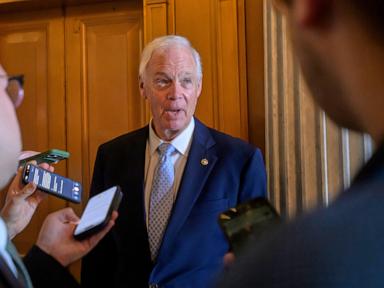
Senators headed for the exits in the predawn hours, wrapping up a bruising legislative session that exposed the absolute limits of presidential coercion inside the modern Capitol. President Donald Trump demanded that the chamber cancel its summer recess to ram through the SAVE America Act, a strict proof-of-citizenship voting bill. He wanted the filibuster obliterated. He wanted total capitulation. Instead, lawmakers packed their bags and left town, leaving the high-stakes voting legislation dead in the water for the summer while retreating to a makeshift strategy for September.
This standoff was never about a simple scheduling dispute over vacation time. It was a brutal test of institutional survival. On one side stood an executive accustomed to treating the legislative branch as an administrative extension of the White House. On the other side stood Senate Majority Leader John Thune, forced to manage a razor-thin 53-47 Republican majority that lacks the numbers to pass controversial election rules, let alone nuke the 60-vote threshold.
Thune understood a basic mathematical reality that the White House routinely chose to ignore. You cannot conjure votes out of thin air.
The Arithmetic of Defeat
The legislation at the heart of the storm, the Safeguard American Voter Eligibility (SAVE) Act, requires citizens to present specific documentation like a passport or birth certificate to register to federal elections. Proponents framed it as an airtight security measure. Critics warned it would disenfranchise millions of Americans lacking immediate access to physical paperwork.
Regardless of the ideological merits, the procedural math was fatal. To bypass the legislative filibuster, Republicans needed 60 votes. They held 53 seats, and even within their own caucus, stomach lining for detonating institutional guardrails was practically nonexistent.
When Trump took to social media to command Thune to keep the chamber locked in place, he was banking on public pressure cracking the backbone of the Senate leadership. He miscalculated. Thune responded with a blunt challenge during daylight hours, holding up his hand to count the previous failed votes.
Show me the path to victory, Thune essentially told the room. No one could.
The Rebellion Within the Ranks
The pressure campaign did not just come from the executive mansion. A faction of hardline senators, led by Utah Republican Mike Lee, took up the banner and turned the legislative calendar into an ideological battlefield. Lee argued that skipping the summer break to fight for election integrity mattered more than vacation, openly threatening leadership stability if members dared to scatter.
For nearly twenty hours of grueling overnight sessions, the floor degenerated into a pressure cooker. Leadership managed to push through a slate of administrative priorities, but the voting bill remained toxic to the 60-vote threshold.
Then came the phone call.
Late in the evening, as fatigue set in and the chamber approached a breaking point, a trio of conservative budget hardliners connected directly with Trump. Realizing that an outright floor victory was mathematically impossible before the break, they pitched a tactical retreat.
The Fallback Plan for September
The compromise reached in the dark hours before adjournment avoids immediate institutional carnage while kicking the can down the road. Instead of forcing a standalone vote that would inevitably fail on the floor, the strategy shifts toward the autumn budget cycle.
Republican leadership plans to stitch elements of the voting requirements into a broader, must-pass appropriations package when lawmakers return in September. This omnibus vehicle is designed to fund military operations and government agencies, forcing Democrats into a corner where voting against the package means shutting down vital state functions.
It is a classic Washington maneuver. Wrap a controversial policy inside a heavy financial bill and hope sheer necessity forces the opposition to swallow it.
Yet, this fallback carries its own severe risks. Tying election law to military funding and general appropriations guarantees an explosive fiscal showdown right before the midterm elections. It trades a summer headache for an autumn catastrophe.
The senators walked out the doors because physics and legislative rules ultimately triumphed over executive bluster. But the truce is fragile. The machinery of government is paused for a few weeks, waiting for the autumn collision.