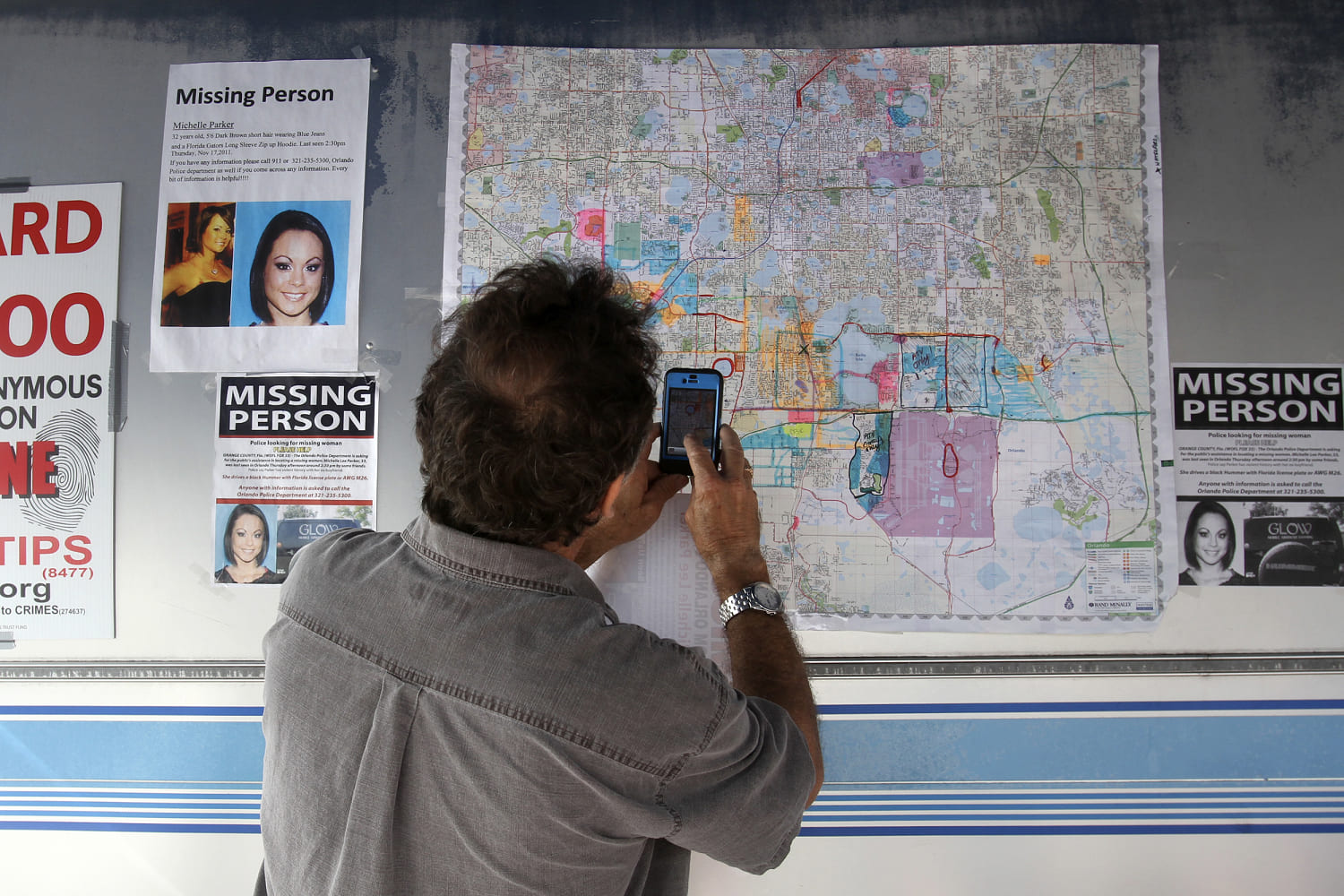
Her Hummer sat abandoned with the decal for her tanning business scraped off the window. Hours before she vanished in November 2011, Michelle Parker had appeared on The People's Court arguing with her ex-fiancé over a $5,000 engagement ring.
For nearly fifteen years, that television broadcast felt like a haunting coincidence. Now, in October 2026, Orlando police arrested Dale Smith Jr. and charged him with second-degree murder in her disappearance. You might also find this similar story insightful: When Settler Violence Hits Diplomatic Cars in Taybeh.
Most coverage of this case stops at the sensational headline. A dispute over a ring, a courtroom show, a missing mother of three, and an arrest fifteen years later. Honestly, that framing misses why long-dormant cases suddenly break open—and what else investigators are looking at right now.
Why Michelle Parker Vanished After The People's Court
People often assume the People's Court episode was filmed right before Michelle disappeared. That isn't how television production works. The episode was prerecorded and aired on November 17, 2011, the very day Michelle went missing in Orlando after dropping off her three-year-old twins at Dale Smith Jr.'s home. As reported in detailed articles by USA Today, the results are worth noting.
On the broadcast, Michelle told Judge Marilyn Milian that Smith could be "pretty malicious and vindictive" and described taking off the ring and throwing it at him. Judge Milian found both sides bore fault and ruled that Michelle owed Smith $2,500 for her half of the ring.
When Michelle didn't show up for errands or her bartending shift later that day, alarms went up fast. Her SUV turned up abandoned the next morning, and her cellphone was pulled from a lake weeks later. Still, her body was never found, and for years the case stalled without charges.
It's a classic cold-case trap. Early suspicion points in one direction, yet prosecutors can't file charges until they have enough admissible evidence to clear a high legal bar.
How Cold Cases Move After Fifteen Years
When you follow cold cases closely, you start to notice a pattern. Cases rarely break because of a single movie-style confession. They move when old files, digital records, witness accounts, and newer investigative tools finally line up into a coherent timeline.
In October 2026, Orlando law enforcement arrested 55-year-old Dale Smith Jr. on a second-degree murder charge. State Attorney Monique Worrell noted at a press briefing that the charge could even be upgraded if the evidence supports it, while Smith's attorney maintained his innocence and pointed out that Smith had spoken with police and allowed a search back when the investigation began. A judge also issued a temporary gag order as court proceedings got underway.
What makes cases like this tricky in court is the absence of a body. Prosecutors have to prove beyond a reasonable doubt that a homicide occurred and that the defendant committed it, relying heavily on circumstantial evidence, timelines, physical clues, and witness testimony rather than forensic cause of death alone.
Even family members feel the weight of that fifteen-year wait. Reports noted that one of the couple's now-18-year-old twins had recently visited the Orlando Police Department to ask whether their father remained a suspect. Imagine growing up with that question hanging over every birthday and holiday.
The Second Death Drawing Renewed Scrutiny
Here's the detail a lot of quick recaps gloss over. Following Smith's arrest in Michelle's case, investigators and true-crime reporters turned renewed attention to the 2001 death of his former wife, Shannon Collins-Smith.
Back in April 2001, 26-year-old Shannon Smith died while Dale was in military custody, and her death was ruled an accidental MDMA overdose. Yet autopsy findings also noted blunt force head trauma, including skull and vertebrae fractures. Revisiting an old ruling doesn't automatically mean charges will follow, because medical examiners and detectives have to weigh old toxicology and trauma findings carefully. Still, when a new arrest happens in a decades-old disappearance, past deaths connected to the same orbit almost always get re-examined.
What This Case Reveals About Media, Missing Persons, and Evidence
Watching a courtroom reality show clip fifteen years later makes the timeline feel eerie, almost scripted. In reality, television appearances often capture surface-level financial or personal friction while hiding deeper, messier dynamics behind closed doors.
A few practical lessons stand out whenever a high-profile missing-person case resurfaces:
- Read charging documents with care: An arrest and a murder charge are accusations that must be tested in court. Defendants are presumed innocent unless proven guilty, and gag orders or sealed affidavits can limit what is public early on.
- Don't confuse broadcast dates with filming dates: Reality court shows air weeks or months after taping, so an episode airing on the day someone disappears doesn't prove what happened behind the scenes that afternoon.
- Follow official court updates over rumors: Social media threads move fast during major arrests, especially when a case has a decade-plus backstory. Stick to official court filings, law enforcement briefings, and established outlets like ABC News and The Independent.
- Support missing-person awareness beyond headlines: Thousands of families wait years for answers in missing-person cases that never get national TV coverage. Checking verified resources like the National Missing and Unidentified Persons System (NamUs) helps keep attention on cases that still need tips and leads.
Michelle Parker's Ex-Fiancé Arrested 15 Years Later for Murder
This courtroom coverage captures the immediate developments following Dale Smith Jr.'s arrest and initial court appearance in the case.