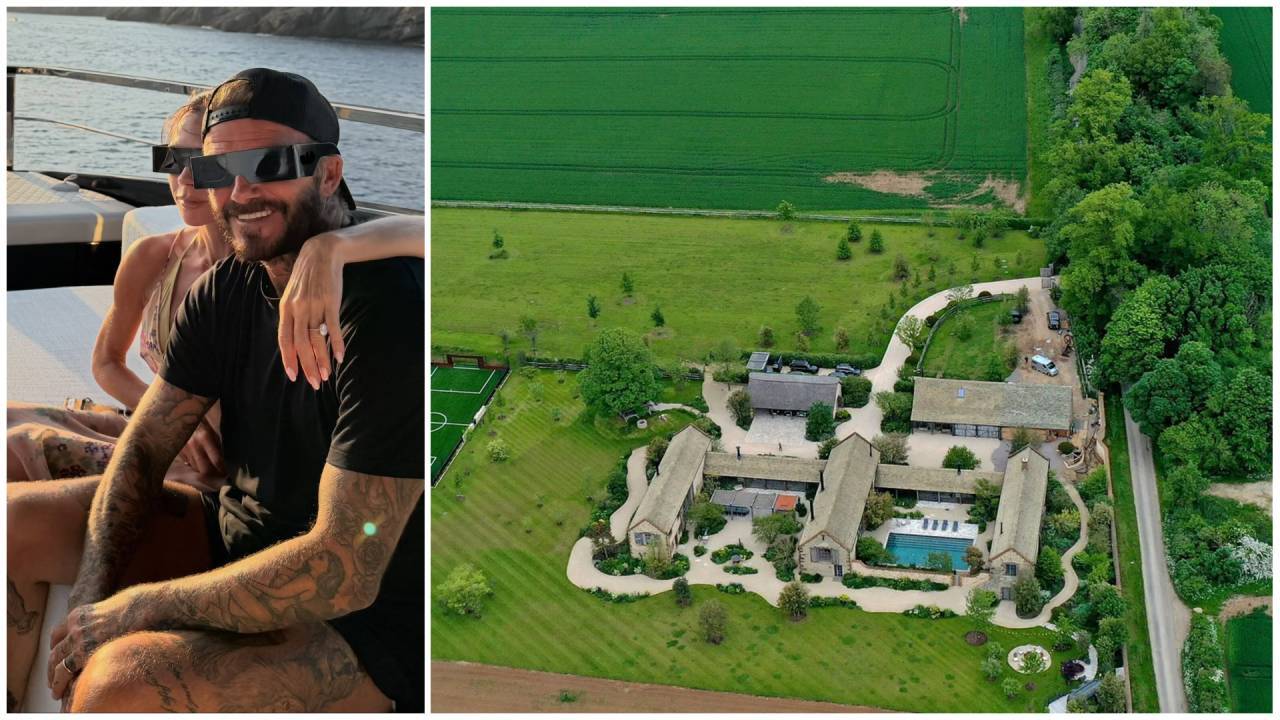
The recent approval of auxiliary landscape lighting at the Beckham estate in the Cotswolds serves as a clinical case study in the intersection of high-net-worth property management and local planning authority constraints. While public discourse focuses on the aesthetic "Blackpool-style" descriptors, the underlying reality is a technical exercise in navigating the administrative burden of land use. For owners of significant estates, the challenge is not merely capital expenditure but the incremental, often adversarial, acquisition of development rights within highly regulated landscapes.
The Mechanism of Incremental Compliance
High-value rural properties are frequently subject to stringent restrictions, particularly when they involve Grade II-listed structures or sites designated as Areas of Outstanding Natural Beauty. The recurring conflict surrounding the Beckham estate—defined by over 30 planning applications in a decade—illustrates the strategy of "incrementalism." By submitting a series of granular applications rather than a single master plan, the property owners face a recurring cycle of scrutiny.
This approach triggers a specific administrative feedback loop:
- Application Submission: Proposals are filed for individual enhancements (e.g., pond enlargement, driveway construction, lighting installation).
- Regulatory Resistance: Local stakeholders, leveraging the public nature of planning files, raise objections based on character, noise, or light pollution.
- Mitigation Mandates: Authorities impose conditions to secure approval, such as the restriction of motor-powered vessels or the implementation of specific ecological maintenance frameworks.
- Conditional Compliance: The developer satisfies these specific technical requirements to move the project to the next stage of execution.
Quantifying the Ecological Constraint
The primary barrier to large-scale residential landscape projects is the protection of biodiversity. In this instance, the planning authority required rigorous demonstration that light spillage into established wildlife corridors would be minimized. The ecology team’s intervention—specifically the requirement to remove tree-lighting elements while permitting localized boardwalk downlighters—functions as a corrective control.
Developers in this sector must treat ecological impact reports as fundamental design parameters rather than suggestions. The success of an application is rarely determined by the ambition of the vision, but by the ability to engineer compliance into the core architecture of the proposal. The removal of specific spotlights and the implementation of a five-year maintenance framework indicate that the cost of approval includes a long-term obligation to adhere to predefined environmental standards.
The Strategic Value of Administrative Persistence
The critique of "drip-feeding" applications ignores the strategic necessity of breaking complex estate development into manageable, defensible units. When a broad, ambitious proposal risks total rejection due to its cumulative impact on rural character, a modular strategy reduces the probability of a binary "yes or no" outcome.
This creates a high barrier to entry for the objection process itself. By engaging in a prolonged series of successful applications, the property owners have effectively normalized the evolution of the estate, moving from the initial structural renovations to the refinement of recreational amenities. Each approval establishes a precedent, effectively lowering the regulatory friction for subsequent requests.
Managing Stakeholder Opposition
Planning authorities operate within a legal framework that prioritizes objective, evidence-based impacts over subjective aesthetic preferences. When external objectors categorize features as "suburban" or "out of character," they often fail to move the needle unless their objections align with the specific statutory grounds for refusal, such as light intensity levels or traffic volume.
The council’s recent findings demonstrate this distinction. By focusing on technical data—minimizing light spill, ensuring no material adverse impact on the amenity of neighboring occupiers, and formalizing the use of non-motorized watercraft—the planning officers neutralized the subjective complaints. The lesson for estate managers is absolute: the resolution of planning disputes is won through technical documentation and administrative hygiene, not through public relations or architectural posturing.
Operationalizing Estate Development
To execute similar projects without inviting sustained regulatory volatility, owners must prioritize the following:
- Environmental Pre-emption: Engage independent ecological auditors prior to submitting plans. Defining the limits of light spill and biodiversity impact in the initial application reduces the likelihood of external consultants for the council recommending denial.
- Conditional Integration: Instead of viewing planning conditions as an imposition, incorporate them into the project contract. If a site requires a five-year maintenance plan, formalize that agreement as part of the initial tender.
- Data-Centric Communication: When neighbors or lobby groups object based on "character" or "lifestyle" changes, respond with site-specific data—photometric lighting studies, traffic flow simulations, and noise attenuation reports. These metrics shift the discourse from emotive territory to an objective assessment that planning authorities are equipped to approve.
- Institutionalized Transparency: Documentation for public-facing planning portals should be framed as compliance-focused. Emphasizing technical safeguards rather than lifestyle luxuries serves to minimize the surface area for, and the impact of, opposition.
Future planning success in sensitive, historic, or protected zones requires viewing the planning department not as a gatekeeper to be bypassed, but as a project manager to be satisfied. The objective is to achieve a state of regulatory equilibrium where the cumulative footprint of the property is continuously optimized within the established legal and environmental constraints.