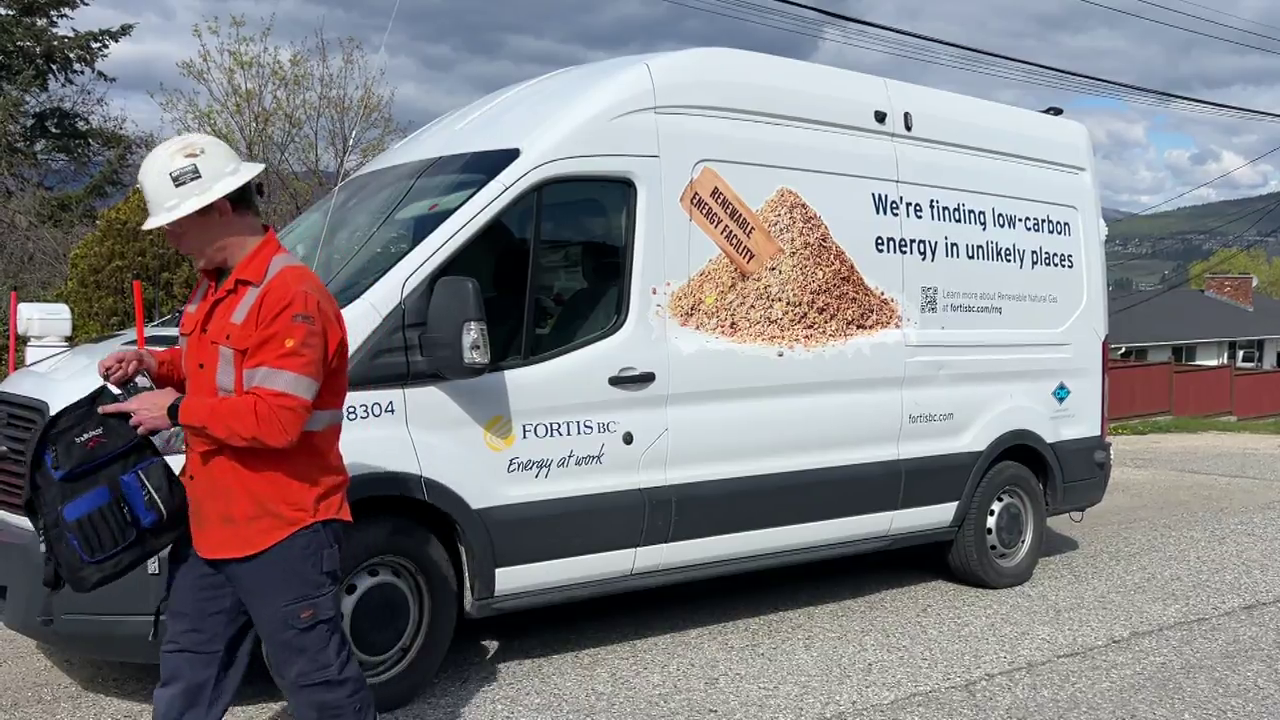
Six thousand households in Lake Country and North Kelowna are sitting in the dark, shivering, waiting for a technician to turn a literal wrench. The media frames this as a heroic "restoration effort." FortisBC is sending out updates like they are dispatching a rescue mission to Mars.
Let’s stop pretending this is a triumph of infrastructure. It is a post-mortem on a dying system. If you found value in this article, you should check out: this related article.
The "lazy consensus" suggests that the faster we get the gas back on, the safer we are. That is a lie. Every hour spent reconnecting these 6,200 customers to a centralized, fragile, combustible pipe network is an hour spent doubling down on a 19th-century liability. We aren't "restoring" service. We are re-shackling an entire community to a single point of failure that can be taken down by a single pressure drop or a mechanical glitch.
The Myth of Gas Reliability
For decades, the natural gas industry sold a specific brand of security: "When the power goes out, your stove still works." For another angle on this event, refer to the recent coverage from TIME.
That marketing pitch is rotting in real-time. In Kelowna, the gas didn't just fail; it failed in a way that requires manual, house-by-house intervention to fix. Think about the sheer logistical stupidity of that. In an era of automated grids and smart tech, we are relying on a fleet of trucks to physically visit thousands of addresses to perform a reset.
This isn't a "utility service." It's a manual labor project disguised as high-level infrastructure.
True reliability isn't about how fast you can fix a broken pipe. It’s about redundancy and decentralization. If your home’s survival depends on a pressurized tube running through a valley, you don't have a reliable heating system. You have a hostage situation.
The Pilot Light Fallacy
The "People Also Ask" section of your brain is probably wondering: How else are we supposed to heat homes in the interior of BC?
The standard answer is "gas is cheaper and more powerful for cold climates." Wrong. That premise is built on outdated data and a refusal to acknowledge the massive efficiency gains in cold-climate heat pumps.
When a gas furnace runs, it converts chemical energy into heat. Even the "high-efficiency" models top out at about 98%. Contrast that with a modern heat pump, which can reach a Coefficient of Performance (COP) of 3.0 or higher.
$$COP = \frac{Q_h}{W}$$
Where $Q_h$ is the heat delivered and $W$ is the work input. This means for every unit of electricity you put in, you get three units of heat out. Even at temperatures well below freezing, these systems outperform the "reliable" gas furnace. But we don't talk about that because it disrupts the narrative that we need the gas grid to survive a Canadian winter.
Your Home is a Liability
I’ve spent years analyzing urban infrastructure and seeing municipal budgets get swallowed by "maintenance" that is actually just frantic patchwork.
When 6,200 customers lose service, the economic hit isn't just the lost heat. It’s the opportunity cost. It’s the thousands of man-hours spent by FortisBC crews. It’s the risk of relighting pilot lights in aging ventilation systems. It’s the carbon footprint of the repair fleet itself.
We are paying a premium for a system that can be paralyzed by a single valve failure.
If you are one of those 6,200 people, you should be asking why your home is so dependent on a "single-string" utility. The contrarian move isn't to wait for the technician. The move is to realize that the gas line in your backyard is a legacy debt you are paying off every month.
The Decentralization Directive
The solution isn't "better gas infrastructure." That’s like asking for a faster horse when the Model T is already on the road. The solution is Micro-Grids and Local Generation.
Imagine a scenario where Lake Country wasn't dependent on a centralized gas feed. Imagine a neighborhood where homes are built to Passive House standards, utilizing thermal mass and localized solar-plus-storage. In that scenario, a "grid failure" is a minor inconvenience, not a regional emergency.
We keep building "dumb" suburbs and then act shocked when they fail like "dumb" systems.
The current restoration effort in Kelowna is a masterclass in sunk-cost fallacy. We spend millions to keep the old pipes alive because we are afraid to admit that the centralized gas model is obsolete. It’s high-pressure, it’s high-risk, and it’s remarkably high-maintenance.
Stop Thanking the Utility
The media wants you to feel a sense of gratitude when the gas comes back on. Don't.
You are paying for a service. When that service fails during a cold snap—the one time you actually need it—the provider hasn't "saved" you by fixing it three days later. They have failed their primary contract.
In any other industry, if a product required a physical house visit from a specialist to make it work again after a routine system hiccup, that product would be recalled. In the utility world, we call it a "dedicated restoration effort" and give them a PR pass.
The real "fresh perspective" here is uncomfortable: The gas grid is a dinosaur. It is an expensive, dangerous, and increasingly fragile way to move energy. Every time a major outage like this happens, it’s a warning shot.
The next time the pressure drops, don't look at the thermostat. Look at the wall and realize you're heating your house with a campfire in a box, fed by a straw that stretches for hundreds of miles.
If you want real security, cut the straw.
Build a home that doesn't care if a technician shows up. Build for autonomy. Because the crews working in Lake Country aren't "restoring" the future—they are just trying to keep the past from freezing to death.