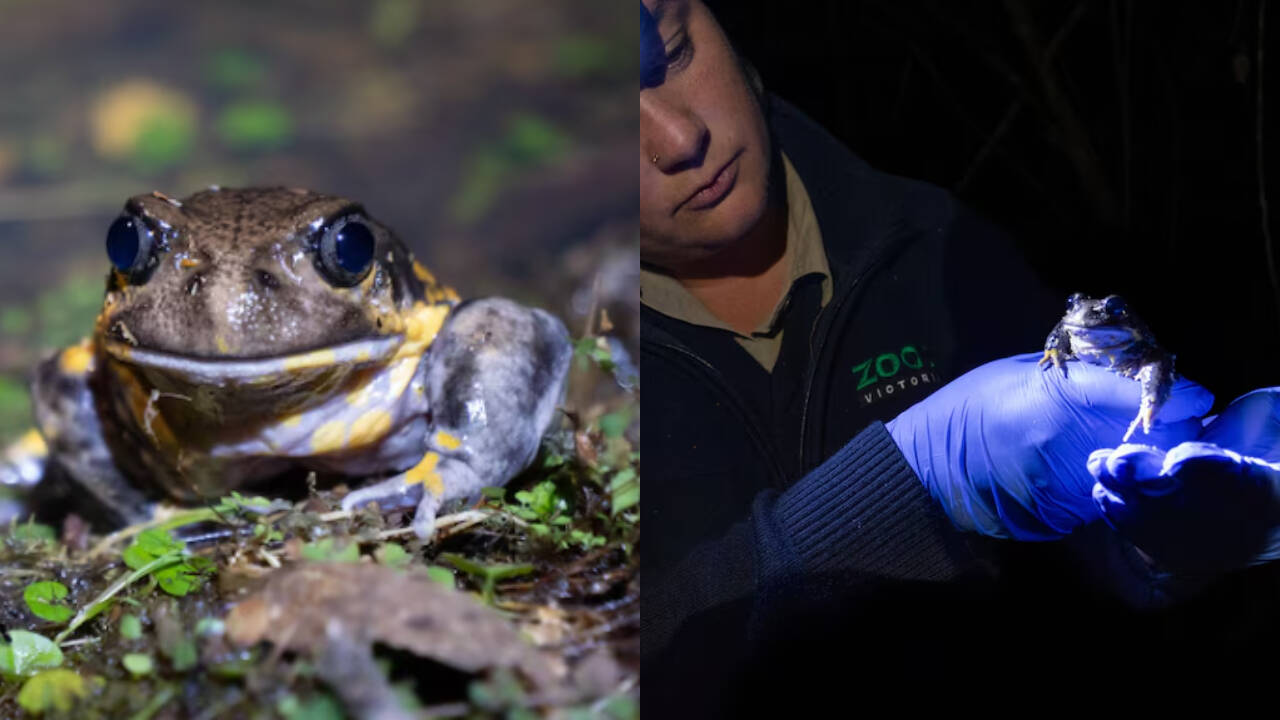
Releasing 53 captive-bred frogs into fire-damaged Australian forests is not a simple conservation victory; it is a high-stakes stress test of ecosystem viability after catastrophic thermal disturbance. Following the 2019–2020 Black Summer bushfires, which scorched over 24 million hectares across southeastern Australia, wildlife recovery shifted from passive habitat protection to active biological intervention. Standard conservation reporting treats the number 53 as a self-explanatory triumph. In ecological operations, however, a founder cohort of that size represents a narrow statistical margin against stochastic mortality, genetic bottlenecks, and altered microclimates.
To evaluate whether this reintroduction marks true recovery or temporary population supplementation, we must examine the biological mechanics of post-fire amphibian survival, the operational pipeline of captive assurance colonies, and the structural vulnerabilities of scarred forest watersheds.
The Ecological Shock of the Black Summer Megafires
Amphibians act as primary bioindicators because their permeable skin and biphasic life cycles tie them directly to both aquatic and terrestrial microhabitats. High-severity megafires disrupt both environments simultaneously, creating a compounding failure mode that standard post-fire regeneration timelines fail to capture.
During the Black Summer fires, extreme radiant heat penetrated deep into wet sclerophyll forests and alpine bogs—habitats that historically acted as fire refugia. When canopy cover burns away, the forest floor loses its thermal buffer. Daytime temperatures spike, relative humidity drops, and soil moisture evaporates rapidly. For moisture-dependent frog species, a burned forest floor becomes a desiccation trap long after the flames are extinguished.
The aquatic impact is equally severe. Post-fire rainfall events wash massive loads of ash, charcoal, and topsoil into headwater streams and breeding pools. This sediment influx triggers three distinct biological bottlenecks:
- Hypoxic Water Conditions: Ash runoff alters water pH and spikes biological oxygen demand, suffocating aquatic larvae and tadpoles that rely on dissolved oxygen.
- Substrate Smothering: Fine silt fills the interstitial spaces between gravel and submerged vegetation where many threatened Australian frogs deposit their egg masses.
- Trophic Collapse: The incineration of leaf litter and riparian underbrush eliminates the terrestrial invertebrate populations that adult frogs require for caloric intake prior to breeding seasons.
Natural recolonization from unburned perimeter zones fails when the spatial scale of the burn exceeds the dispersal capacity of the species. Many rare montane and forest frogs exhibit high site fidelity and limited terrestrial mobility, often moving only a few hundred meters over their entire lifespans. When an entire catchment burns at high intensity, local extirpation is permanent without human-assisted translocation.
The Architecture of Captive Assurance and Reintroduction
Moving 53 rare frogs from biosecure facilities back into wild catchments requires a multi-year operational pipeline designed to prevent both biological failure and pathogen transmission. Conservation teams do not simply breed animals and release them; they manage a tightly controlled demographic and microbiological transition.
The process begins with emergency salvage operations—collecting surviving adults, tadpoles, or egg masses from the path of advancing fire fronts or from degraded post-fire pools. These individuals establish an assurance colony, where husbandry specialists reverse-engineer the specific environmental cues of the species' native habitat, including seasonal temperature drops, photoperiod shifts, and water chemistry fluctuations, to induce captive spawning.
Before a single frog touches forest soil, it must pass through a strict disease-screening protocol. The primary threat to Australian amphibians is Batrachochytrium dendrobatidis, the fungal pathogen responsible for chytridiomycosis. Captive-bred amphibians raised in sterile environments often lack acquired immunity or protective skin microbiomes. Releasing immunologically naive frogs into a wild habitat where chytrid fungus persists can result in rapid, total cohort mortality.
To mitigate this risk, practitioners execute three pre-release conditioning steps:
- Microbiome Bioaugmentation: Technicians inoculate captive frogs with beneficial cutaneous bacteria native to the target release site to establish a biological barrier against fungal colonization.
- Thermal Acclimation: Enclosure temperatures are gradually aligned with the diurnal fluctuations of the destination forest to prevent metabolic shock upon release.
- Tagging and Telemetry: Individuals are marked using visible implant elastomers or passive integrated transponder tags so field biologists can distinguish released founders from wild-born recruits during subsequent nocturnal surveys.
The Mathematics of a 53-Frog Cohort
In population biology, 53 individuals is an exceptionally small starting number, governed by the mechanics of small-population paradigms. When a founder population drops below triple digits, deterministic threats like habitat loss are overtaken by stochastic events—random fluctuations in weather, predation, or breeding success that can wipe out an entire cohort in a single season.
Consider the survival funnel applied to those 53 frogs over their first 24 months in the wild:
- Initial Post-Release Attrition: Translocated amphibians experience elevated mortality during the first 30 days as they establish new home ranges and locate diurnal shelter sites under logs or rocks.
- Predation Pressure: Fire-simplified habitats offer less structural cover, increasing exposure to avian predators, snakes, and invasive species such as feral cats and foxes, which actively hunt along burned forest edges.
- Allee Effects: At low population densities, individuals struggle to locate mates during narrow breeding windows triggered by specific rainfall events. If the 53 frogs disperse too widely across a catchment, acoustic signaling fails to bring males and females together, resulting in zero reproductive output despite adult survival.
Consequently, the release of 53 frogs cannot be evaluated as a standalone event. It represents a single pulse in a multi-year supplementation strategy. True establishment requires that these founders survive to breed, their tadpoles metamorphose in restored pools, and the resulting F1 generation reaches sexual maturity without external intervention.
Structural Limitations of Habitat Restoration
A common misconception in post-disaster reporting is that vegetation regrowth equates to functional habitat recovery. Four to six years after the Black Summer fires, satellite imagery and surface photography show dense green foliage returning to affected valleys. For specialist amphibians, however, early-stage regrowth can be functionally hostile.
Eucalypt forests regenerate vigorously through epicormic budding and dense shrub germination. This thick, uniform understory consumes vast amounts of groundwater, reducing stream baseflows during dry summer months. Breeding pools that historically held water through late summer may now dry out weeks earlier, stranding slow-developing tadpoles before metamorphosis completes.
Furthermore, climate projections for southeastern Australia indicate shorter intervals between high-severity fire weather days. If a reintroduction site burns again within ten years—before the forest develops mature, moisture-retaining canopy layers and decaying coarse woody debris—the newly established frog population will lack the microrefugia needed to survive. Reintroductions executed without concurrent landscape-scale fuel management and invasive predator suppression merely restock an ecological sink.
Operational Benchmarks for Post-Fire Translocation
To move amphibian recovery from reactive rescue to durable population restoration, wildlife agencies and conservation managers must enforce strict operational thresholds before authorizing future releases:
- Hydroperiod Verification: Release sites must demonstrate at least two consecutive seasons of stable water retention across the target species' full larval development window, verified via automated water-level loggers rather than visual spot checks.
- Microhabitat Complexity Audits: Ground-layer assessments must confirm the return of deep leaf litter, subterranean root cavities, and decomposing logs capable of buffering temperatures during extreme heatwaves.
- Sequential Cohort Releases: Rather than deploying all available captive stock in a single event, facilities must stagger releases across three consecutive years to hedge against localized drought or unseasonal frost events.
- Invasive Predator Suppression: Intensive baiting and trapping grids for foxes and feral cats must operate continuously within a five-kilometer radius of the release catchment for six months prior to and twelve months following translocation.
The return of 53 rare frogs proves that captive breeding pipelines can preserve genetic lineages through catastrophic landscape failure. Whether those lineages persist in the wild depends entirely on managing the hydrology, predation pressure, and fire frequency of the forests receiving them.