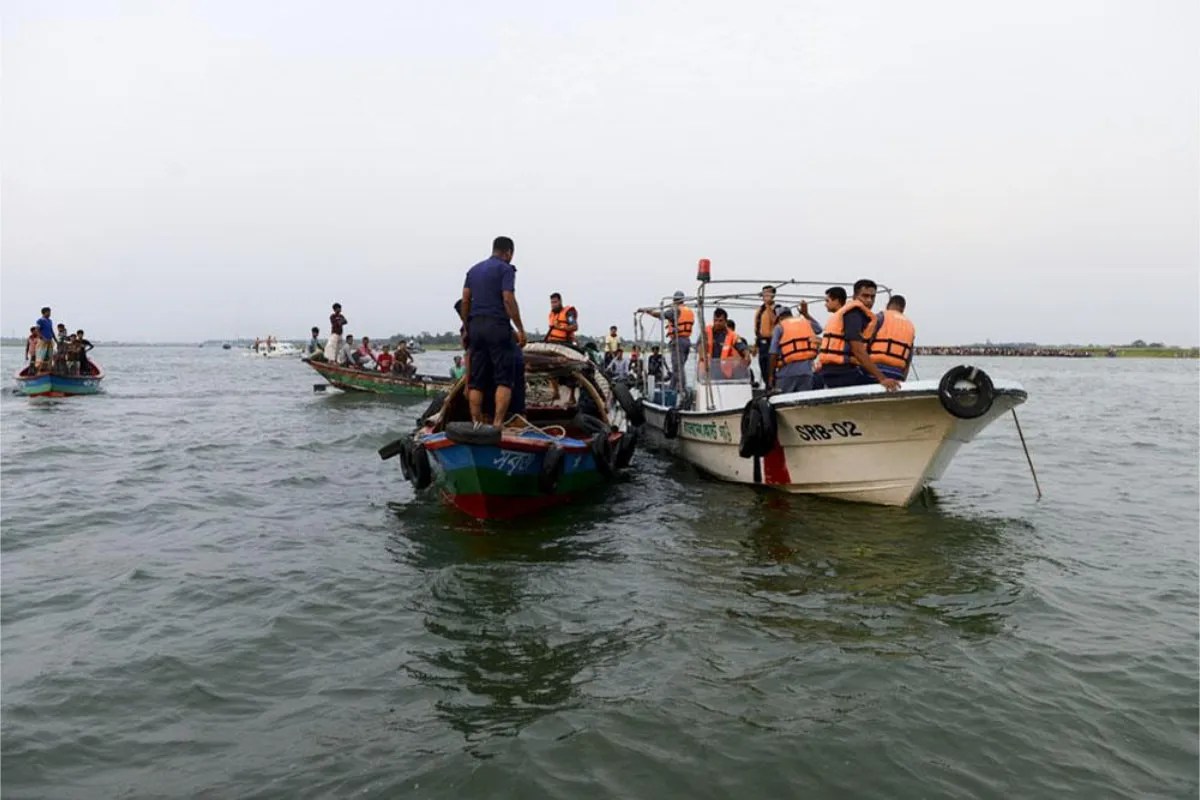
The morning mist over the Padma does not lift; it thickens, wrapping itself around the wooden pilings of the ferry terminals like a shroud. To anyone standing on the bank, the water looks deceptively calm, a vast sheet of silver gray stretching toward an invisible horizon where the sky dissolves into the river. But water in the delta does not keep secrets forever. Sooner or later, the eddies shift. The current slows near a sandbar. And something rises.
Over a span of twenty months, official records and local reports have cataloged a grim and staggering tally: nine hundred and twenty bodies pulled from the rivers of Bangladesh.
Pause on that figure. Nine hundred and twenty.
Strip away the administrative coldness of the data, and the scale becomes staggering. That is nearly forty-six bodies every single month. More than one a day, every single day, for nearly two years. They emerge from the Brahmaputra, the Meghna, the Surma, and hundreds of nameless tributaries that vein across a nation forged entirely from silt and floodwater. Each recovery represents a final, tragic punctuation mark in a life that vanished into the liquid labyrinth.
Why are the rivers coughing up the dead in such numbers?
To understand this phenomenon, one must first understand what water means in this part of the world. In Bangladesh, rivers are not merely geographical features. They are the circulatory system of the civilization. Millions live on their banks, travel across their expanses, fish their depths, and depend on their bounty. But a river that gives life with astonishing generosity can also take it away with terrifying indifference.
Generations of poets, musicians, and novelists have written about the eternal romance of Bengal's waterways. Folk songs echo across the flat green plains, celebrating the bond between the boatman and the tide. But romance cannot survive the reality of nine hundred and twenty bodies counted in less than two years. Beneath the lyrical verses and the romanticized imagery of monsoon rains lies a harsher truth: the water is a graveyard for the forgotten.
Consider the mechanics of disaster zones hidden in plain sight. Every year, millions crowd onto aging, overloaded launches—ferries that ply the choppy, unpredictable waters during monsoon storms. When a sudden squall hits, capsizing a vessel in the dead of night, the river swallows passengers before anyone can send a distress signal. Months later, long after the search operations have been called off and the headlines have faded, a fisherman checking his nets in a remote district feels a heavy drag. He pulls. The water gives up its cargo.
Not all of them are victims of ferry accidents.
Walk down to the riverbank in any rural district at dawn, and you will meet men like Dulal. Dulal has spent thirty years on a small wooden skiff, pulling debris from the water near a busy bridge piling. He does not talk about statistics. He talks about weight. He talks about the sudden, unnatural tug on his oar that tells him the river has caught something heavier than a fallen tree branch.
"You never get used to the face down," Dulal says, his hands calloused and scarred from decades of pulling wet ropes. "The river changes people. But the families—they recognize a shirt, a ring, the way a shoe is tied. That is what stays with you. The waiting on the muddy bank."
The waiting is a torture entirely its own. When a body is recovered, it enters a bureaucratic purgatory. Police stations receive frantic calls from districts miles away. Families travel for hours on crowded buses, clutching crumpled photographs of missing sons, fathers, sisters, or daughters. For every body found, there are countless others who remain missing, swallowed permanently by the shifting silt of the riverbed.
In provincial police stations across the country, officers stare at monthly crime and accident logs with quiet exhaustion. Inspector Harun has served along the banks of the Meghna for over two decades. He knows every bend in the river, every deep eddy where debris collects, and every recurring tragedy that repeats with seasonal clockwork.
"People think a river investigation is like a crime scene on dry land," Harun explains, resting a heavy hand on a worn wooden desk. "It is not. On land, footprints remain. Tire tracks tell a story. But the river destroys evidence within hours. The current carries a body twenty miles from where it entered the water. By the time it is found, identification is a guessing game based on dental work, torn cloth, or a scrap of jewelry. The water washes away the truth."
And then there are the darker currents. Despair takes many forms. In rural communities squeezed by economic precarity, crop failures, debt traps, and crushing social pressures, the rivers often serve as the final, quiet exit for those who see no other way out. Mental health support in these remote riverine regions is virtually nonexistent. When the burden becomes too heavy, the water is always there, wide and indifferent, offering a permanent silence.
Climate displacement adds another layer of invisible trauma. Every monsoon, riverbank erosion swallows entire homesteads, turning farmers into landless migrants overnight. Families forced from their ancestral soil drift toward urban peripheries, living in overcrowded slums along polluted waterways. The psychological toll of displacement—losing home, identity, and livelihood in a single afternoon—pushes many to the edge of endurance.
Beyond despair and accidental drowning lies a third, more sinister category: crime. In the murky depths where law enforcement is spread thin across vast, hard-to-reach water networks, rivers provide an untraceable disposal ground. Unsolved vendettas, gang disputes, and targeted violence leave their traces in the eddies. A body weighted down with stones breaks free months later as the bindings rot away, drifting downstream until it catches against the pylons of a rural bridge.
The sheer volume of these recoveries highlights a deeper structural vulnerability in how river safety and forensic tracking are managed. Bangladesh possesses one of the densest river networks on Earth, yet emergency response mechanisms remain fragmented. Search and rescue operations are frequently underfunded and underequipped. Forensic identification facilities in rural clinics struggle with basic DNA testing or proper record-keeping, leaving many unidentified victims to be buried in nameless graves before grieving families can even cross the district border to look for them.
In district hospitals, morgue attendants face an impossible burden. Dr. Rahim, a senior forensic pathologist in a central district bordering the Padma, speaks bluntly about the limits of his work.
"When bodies arrive after weeks in the water, decomposition has done its worst," Dr. Rahim says, adjusting his spectacles under the harsh fluorescent light of an examination room. "We perform autopsies, collect DNA samples, take photographs, and log the clothes. But storage facilities are limited. If nobody claims them within a few days, municipal authorities authorize burial. Once they are in the earth at the public cemetery, closing the case becomes nearly impossible."
We treat these deaths as isolated incidents. A local news blurb here, a police blotter entry there. But nine hundred and twenty in twenty months is not an anomaly. It is a chronic symptom of a society living intimately and dangerously with an untamed element. It reflects the intersection of poor infrastructure, inadequate maritime regulation, economic desperation, and the sheer physical power of water that defies human control.
Think of the mothers in remote villages who check the evening news every time a ferry is reported missing or a body is pulled from the water. Think of the silence that fills a home when a breadwinner goes out to fish before dawn and never returns. The statistics do not bleed. The numbers do not weep. But behind every single digit in that tally of nine hundred and twenty lies a household shattered, waiting for an answer that the river keeps locked in its murky depths.
The sun climbs higher over the Padma. The mist finally burns away, revealing the vast expanse of shimmering water, dotted with the white sails of small cargo boats and the distant silhouette of a massive steel bridge. Everything looks peaceful. The water moves steadily toward the Bay of Bengal, carrying silt, memories, and the silent, unyielding weight of lives cut short, reminding anyone willing to look that the deepest stories are often the ones buried right beneath our feet.


