Water has a long memory. It presses against the banks, rises through the reeds, and settles into the lowlands, indifferent to the schedules of the living. On the shores of Lake Kariba, that memory carries the weight of iron, wood, and breath.
Sixty-eight.
The number sits on the page like a stone dropped in a well. Behind it are sixty-eight individual worlds that folded inward and vanished. Twenty-two more bodies pulled from the dark water in a single wave of recovery. Each recovery is a retrieval, a final bringing home, an end to the agonizing suspension between hope and grief that families endure when the surface refuses to give up its secrets.
Statistics are easy to digest. They arrive in neat digits, formatted for a morning briefing or a scrolling news feed. But numbers do not capture the chill of an empty doorway at dusk. They do not measure the heavy silence of a village where half the faces are missing from the market stalls. To understand what happened when the ferry foundered, we have to look past the bureaucratic tally sheets and step back onto the deck before the water turned.
Consider a journey made out of necessity rather than leisure.
Imagine Samuel. He is thirty-four, wearing a frayed canvas jacket that smells faintly of dried maize and diesel. He has made this crossing across the vast expanse of the artificial inland sea countless times. For communities strung along the remote inlets and islands, the ferry is not an attraction. It is a lifeline. It connects markets, schools, hospitals, and relatives separated by geography and water. Samuel stands near the bow, balancing a crate of harvested cassava with one foot against the railing. The engine beneath the floorboards hums a steady, familiar vibration—a metallic heartbeat that reassures everyone on board.
The air smells of wet earth and approaching rain. In these waters, the weather shifts with terrifying speed. A placid surface can turn into a churning maze of whitecaps in minutes, driven by sudden, violent squalls sweeping down from the escarpment.
When overloading is normal, safety becomes an abstraction.
This is where the invisible machinery of disaster begins. It does not start with a dramatic explosion or a cinematic crash. It starts quietly, with economic gravity. When transport options are scarce, vessels take on more than they were engineered to bear. Passengers crowd the benches, cargo stacks higher than the gunwales, and the margin between floating and sinking shrinks to a razor's edge. Everyone sees it. No one stops it. The alternative—waiting days for the next vessel that might never come—is a luxury the poor cannot afford.
Then comes the shift.
A sudden gust of wind catches the overloaded superstructure. Cargo shifts an inch to port. The water responds instantly, finding the compromised center of gravity. There is no time for panic, only time for instinct. The frantic scramble for life jackets that are too few in number. The sudden lurch of the deck underfoot. The realization that the water, usually a source of sustenance and livelihood, has suddenly become an inescapable trap.
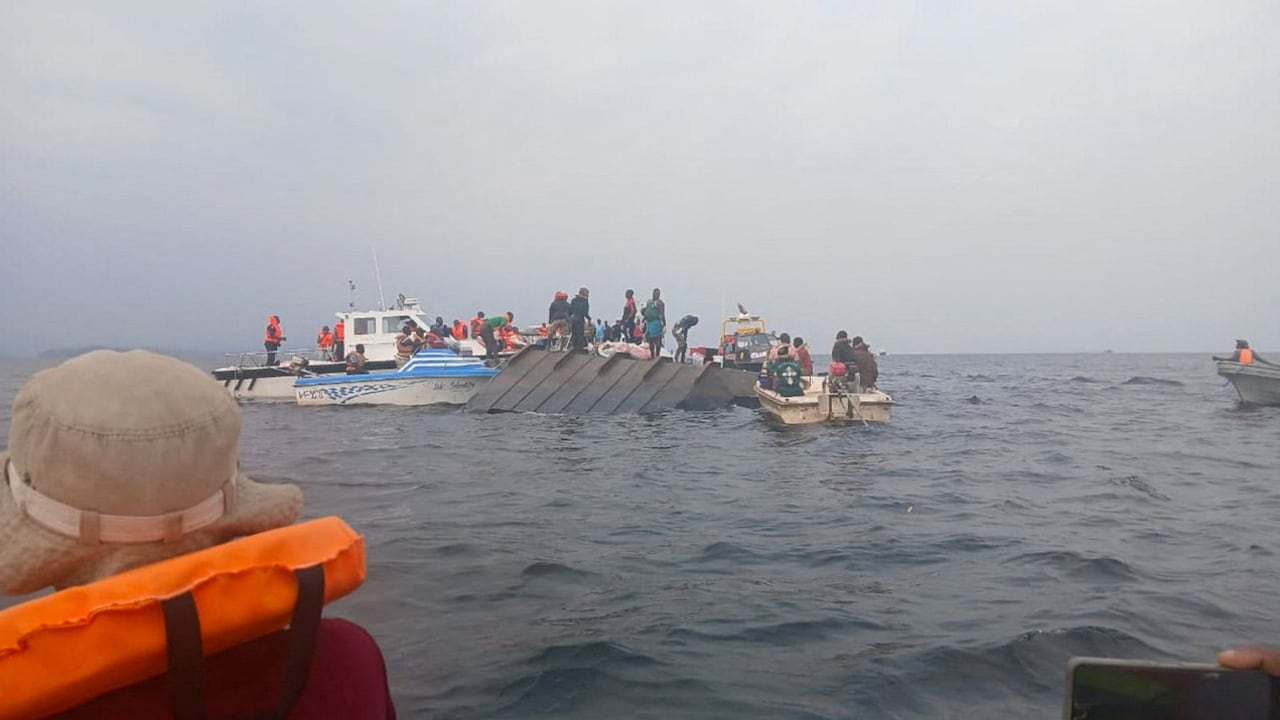
In the aftermath, the numbers climb. Twenty-two bodies recovered today, adding to the forty-six already mourned. Rescue boats cut through the gray expanse, their motors breaking the silence of the lake. Divers descend into the cold, murky depths where visibility is measured in inches, feeling along the submerged hull for those who could not escape. Every recovered body is a name restored to the grieving, a person pulled back from the anonymity of the deep.
We search for someone to blame. We look toward the operators, the regulators, the weather patterns, the lack of modern safety infrastructure. We point fingers at institutional neglect and the grinding wheels of poverty that force people onto vessels that should never have left the dock.
Yet blaming the system alone feels hollow when the rain continues to fall on the mourners gathered at the shoreline.
Accidents of this scale expose the fragile architecture of daily survival. They reveal how thin the line is between routine movement and catastrophic loss. In regions where infrastructure is strained, every routine journey carries a hidden tax paid in vulnerability. The community does not need lectures on maritime compliance; they need systems that respect human dignity, vessels that do not force a choice between risk and isolation.
The recovery operation slows as the light fades over the water. The search boats tie up to the wooden piers, their lanterns casting long, trembling reflections across the surface. On the bank, small fires flicker in the dusk. Families sit in tight circles, wrapped in blankets, speaking in low murmurs that blend with the lap of the water against the shore.
The lake is calm again. It gives nothing away. But the ripples left behind will touch every home in the valley for generations, a permanent reminder of the day the water took more than its share.