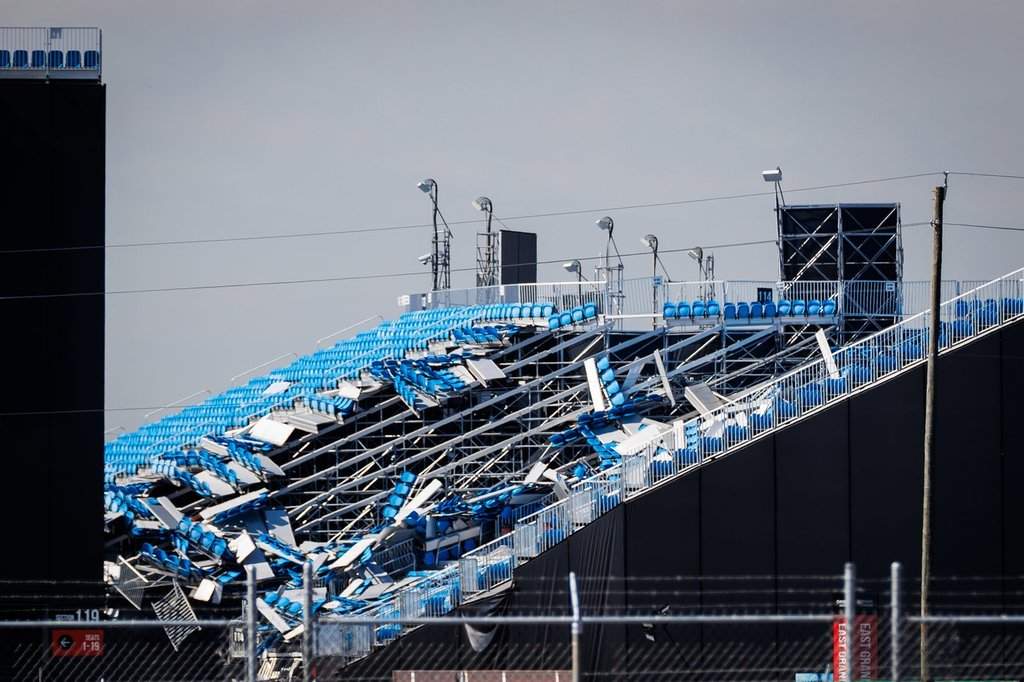
Every headline after that storm rolled through Toronto read like a funeral notice for a construction site. Media outlets tripped over themselves declaring Rogers Stadium a structural catastrophe, pointing to twisted metal and compromised tents as proof that temporary outdoor venues are an insult to engineering.
The lazy consensus is deafening. Critics claim that building open-air pop-up venues in Canada is a fool’s errand, an invitation for Mother Nature to tear down our ambitions every time a summer cold front clashes with Lake Ontario humidity. They want permanent concrete colosseums. They want roofed domes that cost a billion dollars of public money and sit empty three hundred nights a year.
They are completely wrong.
I have spent the last fifteen years watching municipalities and promoters bleed themselves dry trying to finance permanent monuments to municipal ego. They build massive amphitheaters that take a decade of bureaucratic wrangling to approve, only to find out demographic tastes have shifted by the time the ribbon is cut. Rogers Stadium isn't a failure because a severe thunderstorm managed to bend some temporary infrastructure. It is a masterclass in risk management.
When you build with steel frame tents and modular staging, damage is localized, insured, and fixable within forty-eight hours. When a concrete dome suffers structural failure or faces multi-million dollar roof retrofit overruns, cities enter fiscal purgatory.
Let us look at the mechanics of modern live event economics. A permanent stadium requires massive capital expenditure, locked-in municipal tax subsidies, and decades of amortized debt. If an economic downturn hits, or if a global health crisis shuts down live gatherings for two years—as we all just witnessed—that concrete monolith becomes a crushing financial anchor.
Temporary venues operate on an entirely different survival metric. They are built for agility, not permanence. The structural engineering of a modern touring pavilion relies on calculated yield points. When wind loads or severe weather exceed safety thresholds, elements are intentionally designed to give way or shed pressure rather than trigger a catastrophic progressive collapse of a rigid frame. What the local news anchors framed as destruction was actually a high-end kinetic safety system doing its job.
Critics love to ask whether Toronto can handle outdoor venues given our volatile climate. That is the wrong question entirely. The real question is why anyone would anchor a multi-million dollar touring schedule to a permanent piece of real estate in an era of hyper-volatile entertainment consumption patterns.
Touring scales have ballooned. Stadium acts need massive sightlines, custom LED walls that weigh as much as a freight car, and pyrotechnics that would melt the roof off a traditional arena. You cannot retrofit a fifty-year-old concrete bowl for modern production values without spending a fortune. Temporary greenfield sites give promoters a blank canvas every single season. You design the load-in paths, the crowd ingress, and the acoustic baffles from scratch based on what sells tickets today, not what a city planner guessed would be popular in 1998.
I have seen promoters blow millions on permanent acoustic fixes for concrete venues that still sound like garbage because the physics of poured cement are immutable. Meanwhile, a well-designed modular venue can adjust its speaker array geometry and soft-wall dampening overnight to optimize sound dispersion for a specific artist.
Of course, this approach has a dark side. Modular builds are unforgiving on logistics. If your trucking fleet gets delayed by weather or supply chain bottlenecks, you do not have a permanent backstage crew sitting around to fix it—you have a crisis. The margin for operational error is razor-thin. If you do not have veteran logistics directors who understand site weather monitoring and emergency strike protocols, you will lose your shirt.
The storm damage at Rogers Stadium cost money, yes. Insurance covered the remediation, the shows were rescheduled or rerouted with minimal friction, and the site was rebuilt stronger before the month was out. Try doing that when a permanent stadium roof requires structural remediation. You are looking at cancelled seasons, lawsuits, and municipal bailouts.
Stop mourning the myth of permanent infrastructure. The future belongs to those who can build fast, adapt faster, and tear it all down when the market demands a change.
Let the storms blow. The tents will go back up.