The silence inside a child’s empty bedroom does not sound like regular quiet. It has a weight. It presses against the eardrums, a thick, suffocating stillness punctuated only by the mocking tick of a wall clock that keeps moving forward while your entire universe has frozen in place.
Every parent knows the brief, heart-stopping jolt of losing sight of a child in a crowded supermarket. For three seconds, your lungs constrict. Blood rushes to your ears. Then, you spot the bright red jacket by the cereal aisle, and life resumes. Now, stretch those three seconds into three weeks. Turn them into three months. Remove the resolution. That is the reality of a missing child investigation when the trail goes cold, and the flashing blue lights drive away for the last time.
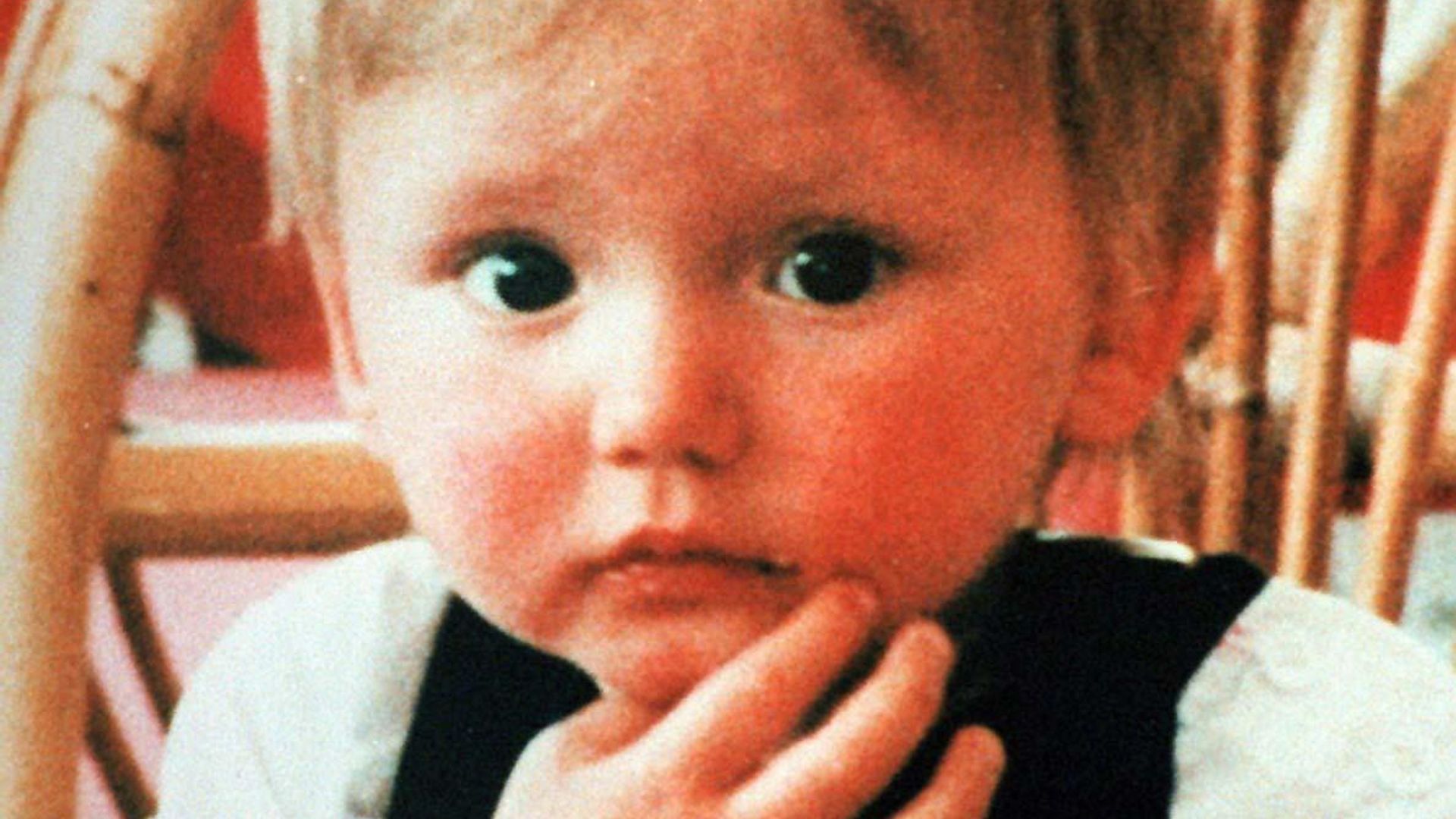
Recently, a devastating headline cut through the daily noise of the British press. A mother, hollowed out by grief, stood before microphones to announce that the police had effectively halted the active investigation into her missing toddler. The official search was over. The paperwork was being filed into a drawer. For the authorities, it was a matter of exhausted leads and stretched resources. For the mother, it was a second abandonment.
This is not just a story about bureaucratic failure. It is an exploration of a terrifying, systemic reality that sits right beneath the surface of modern society: the moment human tragedy transforms into a cold administrative statistic.
The Geography of a Vanishing
When a toddler disappears, the world shrinks to a terrifyingly small radius. Experts in forensic geography talk about the "zone of probability." For a two-year-old, that zone is usually less than a quarter of a mile. Their strides are short. Their minds are easily distracted by a bright beetle, a puddle, or an open gate.
In the initial forty-eight hours, the response is a kinetic storm.
Sniffer dogs catch scents. Drones slice through the grey sky. Volunteers walk arm-in-arm through wet fields, their eyes scanning the high grass for a scrap of denim or a tiny shoe. The community breathes as one collective, anxious organism. The collective assumption is simple: we will look until we find them.
But beneath the frantic activity, an invisible clock is ticking down.
With every sunrise, the statistical probability of a recovery drops exponentially. Search and rescue operations operate on strict logistical curves. They calculate the probability of detection against the expenditure of manpower. It sounds clinical because it has to be. Officers look at maps covered in colored grids, marking off areas searched with a yellow highlighter.
Then comes the day when the yellow marker runs out of places to go.
Consider the perspective of a lead detective on day twenty. The budget is bleeding out. The community volunteers have gone back to their jobs. The tip line, which once rang sixty times an hour, has gone entirely silent for two days straight. The detective sits at a metal desk, looking at a stack of statements that lead absolutely nowhere. They are trapped between the infinite depth of a mother's agony and the very finite limits of a police budget.
The Math of Despair
To understand why investigations stop, we have to look at the brutal arithmetic of modern law enforcement. It is an uncomfortable truth that public safety is governed by spreadsheets.
Every police force in the United Kingdom operates under severe fiscal constraints. A sustained, high-intensity missing person investigation can cost tens of thousands of pounds every single day. When specialized dive teams, forensic analysts, and digital intelligence units are deployed, those numbers skyrocket.
- The Immediate Response: Maximum deployment, high public visibility, rapid resource allocation.
- The Pivot Point: Around day ten, when active search leads dry up and the operation shifts to intelligence gathering.
- The Wind-Down: The transition from an active investigation to a reactive file, waiting for new information to trigger activity.
When a police spokesperson stands at a podium and says, "We have exhausted all current lines of inquiry," what they are actually saying is that the cost-to-benefit ratio has crossed a structural threshold. They cannot justify keeping ten detectives on a case with zero active leads when three new assaults and a domestic crisis just landed on the morning blotter.
But try explaining public sector resource allocation to a woman who still washes her missing son's favorite teddy bear because she cannot bear the thought of it smelling like dust when he comes home.
The emotional disconnect is vast. The state views the case as a file that can be opened or closed based on evidentiary thresholds. The family views the case as their beating heart, exposed and bleeding on the kitchen table. When those two perspectives collide, the resulting impact leaves scars that never truly heal.
The Fiction of Closure
We love stories that end with a neat resolution. Television dramas have conditioned us to believe that every mystery has an answer, that every villain drops a clue, and that the final five minutes of the hour will always bring clarity.
Real life is sloppy. It is cruel. Sometimes, people just vanish into thin air, leaving behind nothing but a profound, aching question mark.
The concept of "closure" is a modern myth invented by people who have never lost anything they couldn't replace. You do not close a wound like this. You learn to walk with a permanent limp.
When the police stop actively investigating, they aren't just pausing the paperwork; they are withdrawing the thin line of hope that keeps a family anchored to reality. Without the state's validation, the grief morphs into something agonizingly stagnant. It becomes ambiguous loss—a psychological state where a loved one is physically absent but psychologically present, leaving the family trapped in a permanent state of psychological purgatory.
Imagine sitting by a window every afternoon, watching the school bus drop off the neighborhood kids. You know, statistically, that your child is not on that bus. Yet, your eyes still scan the sidewalk. Your heart still flutters when a child with similar hair walks past the garden gate.
The human brain is wired to find patterns and seek conclusions. When a police force shelves a file, they are telling the family that the world has decided to stop looking for their conclusion. The world is moving on. The news cycle is shifting to the next political scandal or celebrity divorce. The universe is indifferent.
The Weight of the Unwatched Street
Walk down any suburban street in Britain, and you will see the illusion of total security. Ring doorbells blink with blue rings. CCTV cameras from local shops peer down at the pavement. Dashcams record the mundane journeys of commuting sedans. Surely, in an age of total surveillance, a toddler cannot simply disappear without a trace?
Yet, they do.
The gaps in our technological net are wider than we care to admit. A camera is only useful if it is pointing the right way at the exact micro-second it matters. A digital footprint only exists if someone leaves one. A two-year-old child leaves no phone pings, no bank transactions, and no social media check-ins. They are ghosts in the digital machine.
When the active investigation stops, the burden of surveillance shifts entirely to the haunted shoulders of the parents. They become the detectives. They spend hours scrolling through local community Facebook groups, looking for a stray comment or a misremembered detail from a neighbor. They walk the same streets at 3:00 AM, looking at the bushes, looking at the drainage ditches, looking at the sky, wondering how a whole human being can slip through the cracks of a civilized nation.
The real tragedy of the halted investigation is not that the police are malicious or lazy. The officers who walked those fields are likely dreaming about that missing child too. They carry the failure home to their own families. The tragedy lies in the systemic acceptance that some questions will simply never be answered, and that some citizens must be left to carry the heaviest burdens alone.
The kitchen clock continues its steady, rhythmic march into the evening. The sun dips below the horizon, casting long, dark shadows across an empty bedroom where a small bed remains perfectly made, its blankets unruffled, waiting for a boy who is currently nowhere, and everywhere, all at once.