The Water Square Lie
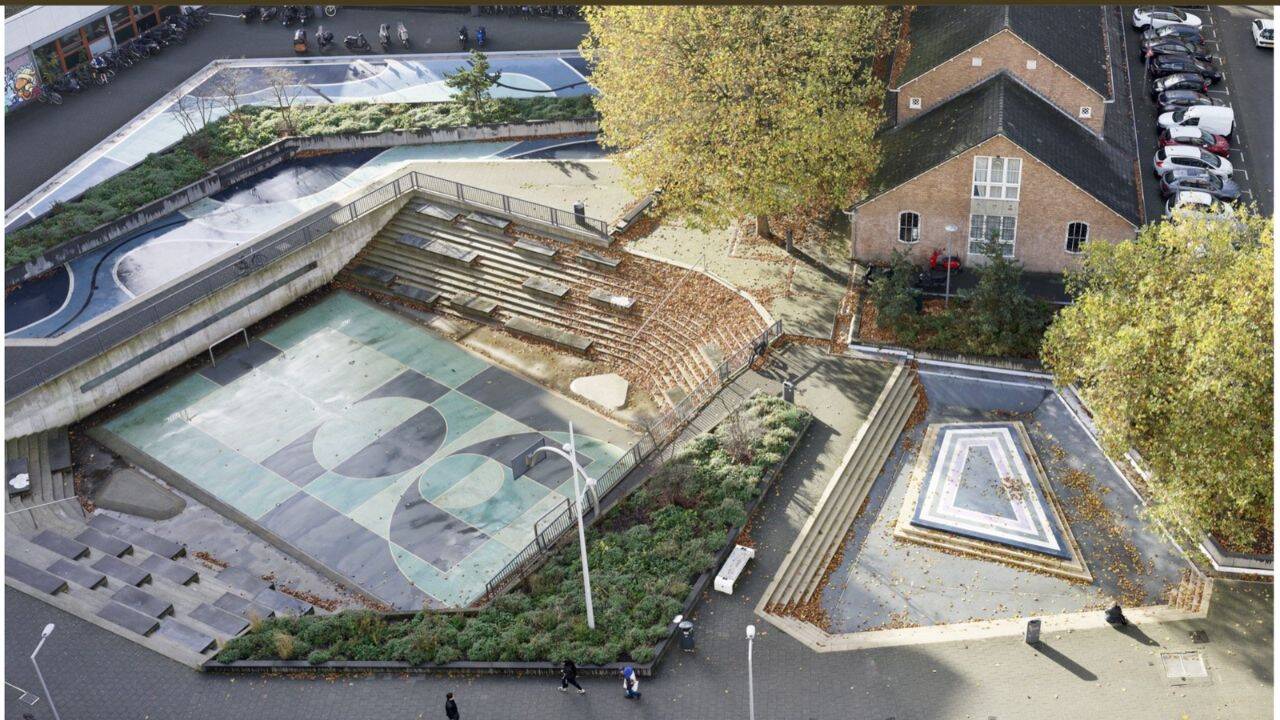
Urban planners love a good photo op. Nothing sells a municipal bond quite like a concrete basin that doubles as a basketball court for eight months of the year and a muddy stormwater cistern for the other four. It looks brilliant in architectural digests. Drone shots catch the bright blue polyurethane turf, the sleek retaining walls, and the smug smiles of local councillors standing knee-deep in two inches of runoff, congratulating themselves on solving climate change with a kickabout.
I have walked those squares in Rotterdam. I have stood on the Benthemplein basin when it is dry and baked by July heat, staring at the stark vertical walls that turn a public space into an open-air amphitheater of exclusion.
Let us drop the civic romance. Rotterdam's famous water squares are an expensive vanity project. They are localized theater masking a systemic failure to rethink civil engineering at scale. They treat urban hydrology like a plumbing problem you can solve by installing a fancy bathtub in the middle of a neighborhood and hoping teenagers do not mind playing midfield in a retention pond.
The lazy consensus in modern municipal design says we must marry stormwater management with public recreation. Double duty. Multi-functional space. Efficient use of scarce urban acreage. It sounds pragmatic until you look at the maintenance logs, the actual cubic meters of water retained during a proper 100-year cloudburst, and the social dynamics of dropping a sunken industrial basin into a dense residential grid.
We are building municipal infrastructure that requires constant scrubbing, breeds mosquitoes in stagnant puddles, and fails the moment a cloud actually opens up with intent. Cities do not need clever concrete bowls. They need ruthlessly effective sub-surface physics.
Why Surface Detention Is A Dead End
The core premise behind the water square movement is visual democratization. Make the infrastructure visible so the public understands climate resilience. Show them the water rising. Make them dodge puddles to shoot hoops.
This philosophy is paternalistic nonsense.
When a storm hits Rotterdam or any low-lying delta city, water does not politely wait for kids to clear the skate park. Intense cloudbursts overwhelm municipal sewers in minutes. A surface basin holds a fraction of a percent of a neighborhood's total runoff volume. It is a drop in a very expensive bucket.
Look at the mechanics. To store meaningful amounts of water above ground, you need massive footprints and deep vertical drops. That means fencing, sloping retaining walls, non-slip coatings that peel after two winters, and specialized drainage pumps that require diesel or grid power when the local substation is already underwater.
Conventional Surface Basin vs. Subterranean Void
[Surface Basin]: High evaporation, high vandalism, high pedestrian risk, low volume.
[Sub-surface Void]: Zero public friction, massive volume, gravity-fed infiltration, invisible.
I have watched cities spend tens of millions on architectural concrete masterpieces that handle minor Tuesday afternoon drizzle while the actual storm sewers three blocks away back up into basements. The public square looks great on Instagram while the bakery down the street is throwing out ruined drywall.
The obsession with aesthetic resilience has blinded planners to boring, invisible engineering. Real flood mitigation is underground, continuous, and integrated into the foundational substrate of the street grid, not displayed like modern art in a public park.
The Social Cost Of The Sunken Basin
Proponents argue these squares inject life into neglected neighborhoods. Give people a plaza, and community follows.
Reality disagrees.
Drop a massive concrete pit into an urban fabric, and you create a physical barrier. Walkability suffers when pedestrians have to detour around a thirty-meter-wide depression. When dry, these squares are windswept wind tunnels or blazing heat sinks trapped by concrete boundary walls. When wet, they are off-limits, fenced-off liability hazards wrapped in warning tape.
Public space should be constant. It should be available 365 days a year without operational asterisks. A park that turns into a swamp every time it rains is not a park; it is a detention basin with a basketball hoop bolted to the side.
Teens do not want to play soccer in a bowl where every missed shot sends the ball clattering down a concrete drainage channel. Skateboarding communities tolerate them because cities starved them of better spots, but maintenance departments hate the grease, the rubber scuffs, and the constant silt cleanups required after every minor overflow.
We have engineered spaces that try to do two opposing jobs at once and end up failing at both. You cannot optimize a recreation zone for high-impact sports and hydraulic surge capacity simultaneously without compromising both the turf and the drainage.
What We Should Be Doing Instead
If surface water squares are a dead end, what replaces them? Stop trying to show off your drainage.
First, decentralize at the parcel level. Every commercial roof, every parking garage, and every residential block should retain its own precipitation where it falls. Green roofs with deep substrate layers do not just look nice; they delay peak runoff by hours, buying the municipal sewer system the exact breathing room it needs without requiring a single acre of public land to be carved into a concrete trench.
Second, embrace aggressive subsurface infiltration galleries. We have the technology to pack underground void modules beneath ordinary streets, parking lots, and traditional parks. These structures hold massive volumes of water beneath the frost line, filtering particulates through geotextiles and letting the water recharge the local aquifer via gravity.
You keep the surface completely flat, completely normal, and completely usable every single day of the year. No fences. No drainage pumps. No municipal workers in neon vests hosing down silt after a storm.
Traditional Approach:
Storm -> Surface Runoff -> Concrete Basin -> Expensive Pumps -> Overwhelmed Sewers

Contrarian Approach:
Storm -> Parcel Retention -> Subsurface Void Modules -> Natural Aquifer Recharge -> Zero Surface Friction
Third, unpave. The fastest way to stop urban flooding is to stop covering the earth in asphalt. Strip the concrete off abandoned industrial tracts. Turn alleyways into bioswales using deep-root native vegetation that drinks water naturally, anchoring the soil and lowering local ambient temperatures during heatwaves.
Rotterdam wanted a monument to its own forward-thinking climate policy. They built a monument to compromise.
Stop designing parks that double as emergency plumbing. Let parks be parks, let sewers do their job underground, and stop asking children to play goalie in a flood zone.
The Bottom Line
Cities are not test tubes for urban designers with a surplus of concrete and a shortage of pragmatism. Every time a municipality builds a flashy, multi-use water square, it signals that it has given up on systemic infrastructure overhaul in favor of photogenic PR stunts.
The next time a city council proposes a sunken plaza that transforms into a retention pond, check the budget, check the actual cubic capacity against a real cloudburst, and ask them who cleans the muck out when the water recedes.
Then walk away.


