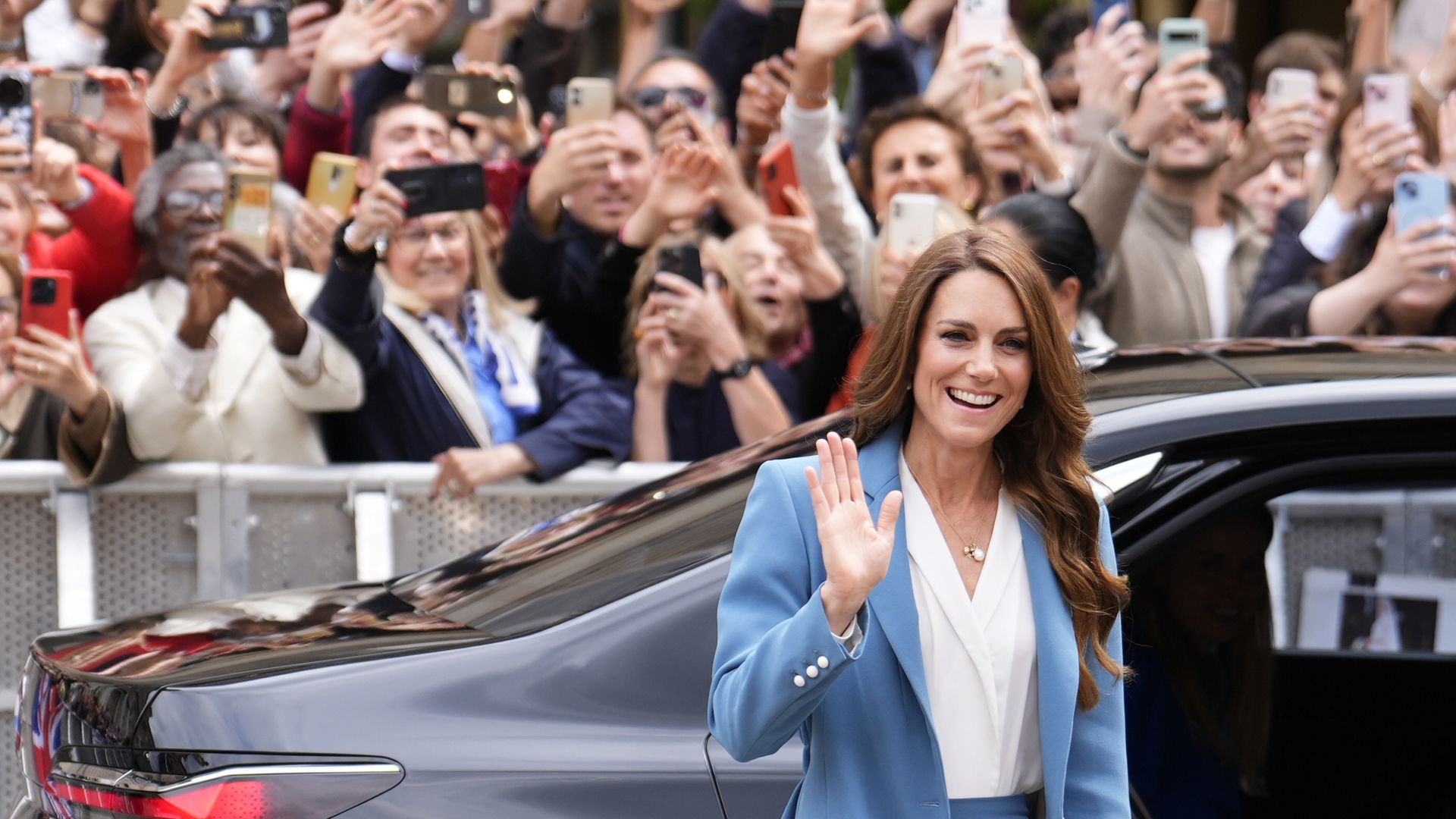
The global media apparatus just spent forty-eight hours vibrating with the same exhausted narrative. They called it a "triumph." They called it a "turning point." They treated a standard appearance by the Princess of Wales as if it were a geopolitical shift on par with a trade treaty or a change in government.
It wasn't. If you liked this post, you should check out: this related article.
What we witnessed wasn't the "return to the world stage" in any meaningful, functional sense. It was a highly controlled, surgically precise deployment of visual capital designed to stabilize a fluctuating stock price. The "stock," in this case, is the British Monarchy’s relevance in a digital age that has largely moved past the need for silent figureheads.
The lazy consensus suggests that Kate’s appearance at Trooping the Colour was a victory for the institution. In reality, it was a desperate admission of the institution's fragility. If the entire structural integrity of a thousand-year-old monarchy hinges on a single person’s ability to stand on a balcony and wave, the foundation isn't "robust"—it’s terrifyingly thin. For another perspective on this event, refer to the latest update from The New York Times.
The Illusion of Presence
Mainstream commentators are obsessed with the "optics." They talk about the dress, the carriage, and the smile as if these are indicators of organizational health. I have spent years analyzing how legacy brands—whether they are Fortune 500 companies or ancient dynasties—manage crises. The mistake everyone is making here is confusing visibility with viability.
The Crown is currently operating on a skeleton crew. With the King also navigating health issues, the "Firm" has shrunk to a degree that would be considered a "key person risk" in any other industry. When a tech company loses its visionary CEO or a star CFO to illness, shareholders demand a succession plan and a structural pivot. When the Royals lose their star player, the world holds its breath until she reappears, then exhales as if the problem is solved.
It’s a false relief. One appearance does not fix a vacancy. It merely masks the fact that the bench is empty.
The Weaponization of Silence
There is a specific kind of power in staying quiet, and the Princess of Wales is the last remaining master of it. In an era where every minor celebrity feels the need to "share their truth" via a 2,000-word Instagram caption or a six-part docuseries, Kate’s silence is her most effective weapon.
But don't mistake this silence for a lack of strategy. It is the ultimate gatekeeping mechanism. By providing almost zero data on her condition or her personal life, she forces the public to project their own hopes and anxieties onto her. She becomes a blank screen.
- The Problem: This strategy creates an unsustainable "mystery tax."
- The Reality: Every time she retreats, the cost of her next "return" goes up. The public expects more. The frenzy becomes more erratic.
I’ve seen luxury brands try to play this game of "artificial scarcity." It works for a while—think Hermès Birkin bags or limited-edition Ferraris. But those are products. Human beings cannot be managed like inventory without psychological and systemic consequences. The "significant moment" the press is cheering for is actually the tightening of a trap. She is now more "symbol" than "human," and that is a dangerous place for a person to live.
Stop Asking if She’s Okay
The most common "People Also Ask" query regarding this event is some variation of "Is Kate Middleton healthy enough to return?"
This is the wrong question. It’s a distraction from the structural reality. The question we should be asking is: "Why is the British state so reliant on the physical health of one woman to maintain its sense of national identity?"
If you look at the data on royal engagements over the last decade, the numbers were already trending downward. The "working royals" are aging. The younger generation has largely exited the chat. By focusing on the "miracle" of her return, the media is ignoring the catastrophic lack of a backup plan.
Imagine a scenario where a global logistics company loses 40% of its delivery fleet and then celebrates when one van gets a new coat of paint. That is the level of delusion we are dealing with here. The "world stage" they keep talking about is a theater where the lights are flickering and the supporting cast has walked out.
The False Narrative of the World Stage
Let’s dismantle the phrase "world stage." It’s a relic of the 20th century.
In 1995, a royal appearance could stop the world because media was centralized. Today, the "world stage" is a fragmented mess of TikTok algorithms, decentralized news cycles, and niche echo chambers. To the Gen Z demographic in the US, Nigeria, or India, a balcony appearance in London is a curiosity, not a "significant moment."
The competitor's article claims this was a moment of global unity. It wasn't. It was a moment of peak nostalgia for a specific demographic that remembers the 1980s. For everyone else, it was just content.
- Fact: Royal social media engagement spikes during crises, not during routine ceremonies.
- Insight: People aren't watching because they support the institution; they are watching to see if the institution will crack.
The press is trying to sell you a story of "continuity." I am telling you this is a story of "entropy."
The Pivot You Didn’t See
While the cameras were focused on the hat and the smile, the real story was the logistical pivot. This appearance was a "Proof of Life" exercise required to satisfy the Commonwealth and the British taxpayer. It was a corporate filing in the form of a parade.
In the business world, we call this "managing the decline." You make the high-profile moves that suggest strength while quietly scaling back operations in the background. The Princess’s statement prior to the event was a masterpiece in expectation management. She didn't promise a return to full duties; she promised to "join a few public engagements over the summer."
That is a tactical retreat, not a triumphant return.
She is effectively moving to a "part-time consultant" role while the press screams that she’s "back in the office." It’s brilliant PR, but it’s a lie. You cannot lead an institution of that magnitude on a "limited" basis when the institution itself is built on the premise of constant, dutiful presence.
The Myth of the Unsinkable Brand
We’ve been told for decades that the Monarchy is "unsinkable." They survived the 90s. They survived 2020. They’ll survive this.
But brands don't usually die in a single explosion. They die from "brand dilution." They become less and less relevant until they are a caricature of themselves. By focusing so heavily on Kate as the savior of the family, the Palace is inadvertently admitting that the rest of the family is irrelevant.
- If she is the only one who matters, what happens when she isn't there?
- If her presence is the only thing that makes the "world stage" significant, what is the value of the King? The Prince of Wales? The Duke of Edinburgh?
By over-leveraging Kate’s popularity to survive this current news cycle, the Palace has created a massive imbalance. They have put all their chips on a single number.
The Brutal Truth About "Support"
The narrative suggests that the public’s outpouring of support is a testament to the love for the Royals.
Don't be so sure.
Much of that "support" is actually a form of morbid curiosity masquerading as empathy. In the attention economy, "thoughts and prayers" are just another form of currency used to buy social standing. People want to feel part of a "moment," and the media provides the script.
I’ve seen this play out in high-stakes corporate litigation. The "hero" returns to the stand, the crowd cheers, and the lawyers claim victory. Then, six months later, the company files for restructuring anyway because the underlying fundamentals never changed.
The fundamentals of the Monarchy are currently in the red.
The tax-paying public is increasingly skeptical of the "value proposition" of a family that exists primarily to be looked at. When the looking becomes restricted—when the "product" isn't available for months at a time—the "customer" starts looking elsewhere for entertainment.
The Next Failure Point
The media is already setting up the next trap. They are looking for the "next big appearance." They are looking for a timeline.
They are treating a recovery like a press junket.
The real contrarian take? This appearance wasn't the start of a new chapter. It was the epilogue of the old one. We are entering a phase where the British Monarchy becomes a "Virtual Monarchy"—an entity that exists more in the digital imagination and through carefully curated, infrequent images than through actual service or physical presence.
This is the "Disney-fication" of the Crown.
It’s safe. It’s clean. It’s beautiful to look at. But it has no teeth. It has no real power. It is a ghost of an empire trying to haunt a world that has moved on to newer, louder spirits.
The "significant moment" wasn't that Kate returned. It was that she had to return in this specific, fragile way just to keep the lights on.
The balcony wasn't a stage. It was a life raft.
Stop celebrating the fact that the boat is still floating. Start asking why it’s taking on so much water.