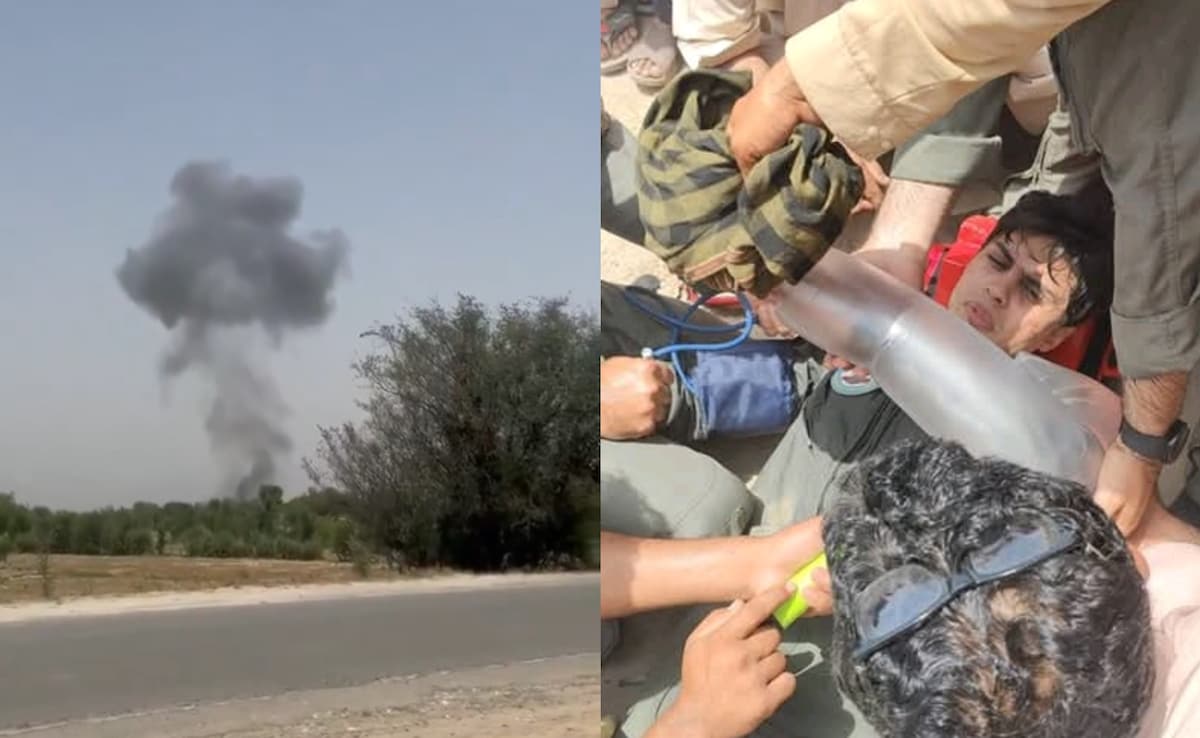
Imagine wakes up to a barrage of military drones crossing your border. They fly hundreds of miles over towns and farms, buzzing deep into your airspace. Your military scrambles fighter jets. The country braces for impact. But when the drones finally come down or get swatted out of the sky, you find out they didn't carry explosives. They were all duds.
This isn't a hypothetical drill. It actually happened in Poland, when a massive wave of nearly 20 Russian drones violated Polish airspace over a grueling seven-hour period. It happened again recently in Estonia and Latvia, where electronic jamming diverted drones and triggered frantic air alerts.
Russia isn't trying to start World War III with these incursions—at least, not yet. Moscow is executing a highly coordinated strategy of hybrid warfare designed to probe Western defense systems, drain military resources, and map out exactly how NATO reacts when its borders are breached. They are testing the alliance without firing a single live round.
If you think the threat is confined to stray drones, you're missing the bigger picture. The front lines of this conflict have quietly shifted into Western cities through sabotage, cyberattacks, and espionage networks operating right under our noses.
The Strategy Behind the Duds
When the mass drone incursion rocked eastern Poland, onlookers wondered why a major military power would launch empty decoys. Polish Foreign Minister Radoslaw Sikorski cut straight to the point. He noted that the drones were fully capable of carrying live ammunition but were intentionally left unarmed.
Moscow wanted to see what would happen.
By flying a fleet of cheap, simplified Gerbera and Shahed-type decoy drones across the border, Russian intelligence achieved several critical goals.
- Mapping Radar Coverage: They forced Polish air defenses to turn on their tracking systems, revealing the exact locations, blind spots, and frequencies of NATO sensor arrays.
- Gauging Response Times: Kremlin planners timed exactly how many minutes passed between the border breach and the scrambling of allied fighter jets.
- Testing Political Will: They wanted to see if Warsaw would invoke NATO Article 5 or if the alliance would stall in bureaucratic debate.
It's a classic gray zone tactic. If Russia sends a cruise missile into a Polish village, it triggers an immediate, devastating military response from the West. But if they send a wave of unarmed drones, the response is messy. Some allies call it an accident. Others argue over whether to shoot them down over civilian areas. That hesitation is exactly what the Kremlin wants to exploit.
Sabotage on NATO Soil
The testing doesn't stop in the skies. It's happening on the ground, and it involves citizens from NATO countries turned against their own homeland.
Just this week, Poland's Internal Security Agency (ABW) detained three Polish nationals recruited by an operative linked to Russia's Federal Security Service (FSB). These weren't internet trolls. These men, aged between 48 and 62, received actual battlefield tactics and firearms training.
Their mission? Reconnaissance on NATO troop movements, spreading aggressive wartime propaganda, and preparing physical acts of sabotage.
Poland serves as the primary logistical artery for Western military aid flowing into Ukraine. Rzeszów-Jasionka Airport, located in southeastern Poland, handles the vast majority of weapons, ammunition, and humanitarian supplies headed to the front lines. This makes the country target number one for Russian intelligence.
We've seen mysterious fires at Polish shopping centers, attempted railway bombings, and massive Distributed Denial of Service (DDoS) attacks targeting the Polish State Railways and the Polish Press Agency. Western security officials are realizing that Russia's "Phase 0" warfare relies heavily on low-cost, deniable chaos. They hire local criminals, disaffected citizens, or radicalized individuals via encrypted messaging apps to burn down warehouses, cut fiber-optic cables, and track military convoys.
The Flank is Feeling the Squeeze
Poland isn't standing alone in this vice. The Baltic states are facing the exact same pressure cookers.
A Romanian fighter jet had to shoot down a stray Ukrainian drone over Estonia after Russian electronic warfare units jammed its navigation systems, forcing it off course. Russia's UN representative, Vasily Nebenzya, openly threatened Latvia and the Baltics, claiming that NATO membership won't protect them if Ukrainian drones utilize their territory.
Look at the weaponization of migration on the Polish-Belarusian border. For months, Belarusian authorities have funneled thousands of migrants from the Middle East and Africa directly to the Polish border, forcing clashes with border guards. It looks like a humanitarian crisis on television, but it's fundamentally a military operation. It forces Poland to redeploy thousands of soldiers away from strategic defense lines to patrol a civilian fence. It drains budgets, polarizes local politics, and tests the physical resilience of the state.
Why the West Must Change Its Playbook
The current Western strategy of treating these incidents as isolated, accidental, or merely provocative isn't working. When Washington or Brussels brushes off a 19-drone intrusion as a potential navigation error, it sends a signal of weakness to Moscow.
You can believe that one or two drones veered off target during a strike on western Ukraine. But nobody should believe that dozens of drones making deep incursions over seven hours is a mistake.
NATO recently responded by deploying more fighter jets to its eastern flank and introducing strict air traffic restrictions along the Polish border. That's a decent start, but defensive posture alone won't stop gray zone aggression. Russia keeps pushing because the cost of pushing is zero. They lose a few cheap plastic decoys or a handful of recruited assets, but they gain priceless intelligence on how the West defends itself.
Concrete Steps to Harden the Border
To stop being the target of Russia's live-testing environment, Poland and its NATO allies need to adjust their rules of engagement immediately.
First, the alliance needs a clear, automated policy on border incursions. If an unidentified military asset enters NATO airspace from a conflict zone, it must be neutralized the second it crosses the threshold, without hours of political deliberation. Waiting to see if a drone is a dud before deciding how to react gives the aggressor all the initiative.
Second, European nations must aggressively crack down on the infrastructure of hybrid espionage. This means tighter monitoring of financial flows tied to sabotage plots, increased security around critical logistics hubs like Rzeszów, and treating state-sponsored cyberattacks on civilian infrastructure as acts of aggression rather than mere IT nuisances.
The Kremlin is playing a calculated game of inches. They push the boundary just far enough to see where it bends, careful not to break it entirely. If the West doesn't stiffen its spine and establish hard, unyielding boundaries in the gray zone, it will wake up to find those boundaries have been redrawn entirely.