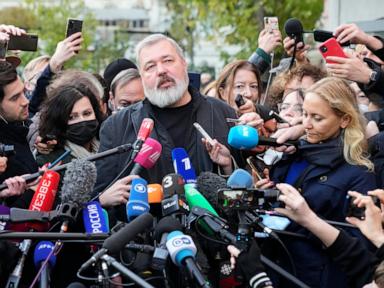
In March 2022, Novaya Gazeta—long recognized as Russia's leading independent newspaper—suspended its print and online operations following repeated warnings from the country's state media regulator, Roskomnadzor. While headlines framed the closure as an abrupt surrender to wartime censorship, the reality is far more methodical. The suspension was the culmination of a multi-year legal, financial, and administrative campaign designed to make independent journalism in Russia operationally impossible without requiring the state to physically padlock the doors.
The immediate trigger was simple enough on paper. Under Russian legislation passed shortly after the invasion of Ukraine in February 2022, media outlets were prohibited from using terms like "war" or "invasion" to describe the conflict, mandated instead to rely exclusively on official Ministry of Defense terminology such as "special military operation." Roskomnadzor issued two formal warnings to Novaya Gazeta within a single week for allegedly failing to label a nongovernmental organization mentioned in its reporting as a "foreign agent." Under Russian media law, two warnings within twelve months give regulators the legal standing to petition a court to revoke a publication's media license. Rather than wait for a foregone judicial conclusion that would strip them of their legal identity permanently, the editorial board, led by Nobel Peace Prize laureate Dmitry Muratov, halted publication until the end of hostilities.
The Architecture of Administrative Attrition
To understand how an institution that survived nearly three decades of political turbulence—and the murders of six of its journalists, including Anna Politkovskaya—was finally forced offline, one has to look past the dramatic moments of police raids and focus on bureaucratic mechanics. Modern press suppression in Russia rarely relies solely on overt censorship. Instead, it operates through a dense web of regulatory compliance, financial strangulation, and selective legal enforcement.
The primary instrument in this toolkit is the foreign agent legislation. Originally introduced in 2012 to target NGOs receiving foreign funding, the law was progressively expanded to encompass media outlets, independent journalists, and eventually any individual deemed to be under "foreign influence." The designation does not immediately ban an outlet from publishing. Rather, it imposes a crushing administrative burden. Designated entities must attach a lengthy, standardized disclaimer in all-caps to every single article, social media post, and even personal messages shared online. They are required to submit exhaustive quarterly financial audits detailing every ruble spent and received. Any minor clerical error—a missing comma in a disclaimer or a delayed filing—results in escalating fines.
For commercial media organizations, the real damage of the foreign agent label is economic. Russian advertisers, fearing secondary scrutiny from state tax authorities or regulatory bodies, immediately sever ties with designated outlets. Revenue dries up overnight. Before Novaya Gazeta suspended operations, other major independent outlets such as Meduza, TV Rain (Dozhd), and The Insider had already been designated as foreign agents, forcing them to pivot to reader-funded crowdfunding models just to pay basic salaries. When the Russian banking system was largely severed from international payment networks in early 2022, even those reader donations became nearly impossible to process.
Novaya Gazeta avoided the foreign agent designation for years, largely because its ownership structure was domestic and its funding came primarily from Russian business figures—most notably former Soviet leader Mikhail Gorbachev, who used part of his Nobel Peace Prize money to help buy the paper's first computers in 1993, and businessman Alexander Lebedev. Yet avoiding the label did not insulate the paper from the broader collapse of the advertising market or the tightening legal noose around its sources.
The Criminalization of Reporting
By early 2022, the legal environment shifted from financial attrition to direct criminal liability. Amendments to Russia's Criminal Code introduced severe penalties—up to 15 years in prison—for the dissemination of what authorities classified as "knowingly false information" about the Russian Armed Forces. Another statute criminalized actions aimed at "discrediting" the military.
The vagueness of these statutes was intentional. In practice, "false information" meant any reporting that contradicted official briefings from the Russian Ministry of Defense. Independent verification—the core function of investigative journalism—became a felony offense if the findings diverged from state narratives.
For an editorial team operating inside Moscow, this created an untenable operational dilemma. A newspaper can absorb fines. It can downsize its print run, move to a cheaper office, or ask staff to take pay cuts. It cannot ask reporters, editors, and fact-checkers to risk a decade and a half in a penal colony for publishing a verified account of civilian casualties or military logistics failures.
The editorial leadership faced three distinct choices:
- Full Compliance: Strip out all independent reporting on the conflict, publish only state-approved press releases, and survive as a hollow shell of its former self.
- Exile: Relocate the entire newsroom abroad, accept the inevitable blocking of its website inside Russia, and continue reporting for a smaller diaspora and VPN-using domestic audience.
- Suspension: Freeze domestic operations voluntarily to preserve the legal entity, protect the physical safety of staff remaining in Russia, and wait for a change in political conditions.
Muratov and his team chose suspension, though a group of journalists who left the country soon launched a separate project, Novaya Gazeta Europe, operating out of Riga, Latvia. Russian authorities quickly blocked the new outlet's website inside Russia and later labeled it an "undesirable organization"—a classification far more severe than "foreign agent," as it makes any cooperation with, or even sharing links to, the organization a criminal offense for Russian citizens.
Inside the Regulatory Squeeze
State regulators did not leave the suspended domestic paper untouched. In the months following the March 2022 suspension, Roskomnadzor pursued court action to formally strip both the print edition and the website of their media registrations. In September 2022, Moscow's Basmanny District Court revoked the print license of Novaya Gazeta, ruling in favor of Roskomnadzor's claim that the newspaper had failed to submit updated editorial statutes following a change of ownership in 2006—a technicality that had gone unchallenged for sixteen years. Days later, Russia's Supreme Court stripped the publication of its online media license as well.
This retroactive use of minor administrative discrepancies illustrates how state pressure functions in practice. When authorities decide an outlet is no longer tolerable, they do not need to invent new crimes; they simply audit years of routine corporate filings until they find a procedural lapse.
| Regulatory Mechanism | Stated Official Purpose | Operational Impact on Newsrooms |
|---|---|---|
| Roskomnadzor Warnings | Enforce compliance with media and anti-extremism laws | Two warnings within 12 months allow courts to revoke media licenses |
| Foreign Agent Registry | Ensure transparency regarding foreign funding and influence | Eliminates commercial advertising revenue; imposes heavy audit costs |
| Military Censorship Laws | Prevent disinformation and protect national security | Criminalizes independent war reporting with up to 15-year prison terms |
| Undesirable Organization Label | Counter threats to constitutional order and state security | Bans domestic operations entirely; criminalizes sources and readers who share content |
| Retroactive License Audits | Maintain accurate state media registration records | Revokes legal publishing status over decades-old technicalities |
The impact extended beyond the newsroom walls. Sources within government ministries, state corporations, and regional administrations—the lifeblood of investigative reporting—went silent. Whistleblowers who might have risked losing their jobs to leak documents about corruption or environmental negligence in 2018 now faced charges of state treason or extremism. Without access to inside sources or the ability to publish their findings safely, investigative journalism inside the country lost both its inputs and its outputs.
Counter-Arguments and the State Narrative
From the perspective of Russian officials and state media commentators, these measures were neither unprecedented nor targeted specifically at suppressing legitimate journalism. Kremlin spokespeople, including Dmitry Peskov, consistently framed the legislative tightening as a necessary wartime measure comparable to censorship regimes enforced by Western governments during major conflicts. State officials argued that Russia was facing an coordinated information war waged by foreign intelligence services and Western media conglomerates, requiring strict legal guardrails to prevent panic, subversion, and the spread of foreign propaganda within Russian society.
Proponents of the state's regulatory framework also pointed out that Novaya Gazeta had operated freely for nearly thirty years, frequently publishing harsh critiques of the Kremlin, the Federal Security Service (FSB), and regional leaders like Chechnya's Ramzan Kadyrov. In their telling, the paper was not shut down for criticizing the government; it was penalized for violating explicit, newly enacted wartime statutes that applied equally to all registered media entities in the country.
Yet independent legal analysts and press freedom organizations—including the Committee to Protect Journalists and Reporters Without Borders—noted a fundamental asymmetry in how these laws were applied. While pro-state commentators and military bloggers regularly criticized the Ministry of Defense's tactical failures without facing prosecution, independent outlets were prosecuted for reporting verifiable facts that contradicted official statements. The laws functioned less as neutral guardrails and more as discretionary tools deployed selectively against critical voices.
The Broader Vacuum in Russian Information Space
The closure of Novaya Gazeta did not happen in isolation. Within weeks of the February 2022 invasion, the Russian media ecosystem underwent its most rapid contraction since the collapse of the Soviet Union. Echo of Moscow (Ekho Moskvy), a historic liberal radio station partially owned by state gas giant Gazprom, was taken off the air and liquidated by its board. TV Rain suspended broadcasts after its signal was blocked. Foreign outlets including the BBC, Deutsche Welle, and Voice of America had their websites restricted inside Russia.
What remained was a bifurcated information environment. On one side stood state-controlled television networks and Kremlin-aligned online portals, offering a unified narrative backed by vast state subsidies. On the other side emerged a decentralized network of Telegram channels, YouTube broadcasts, and exiled newsrooms operating from Riga, Vilnius, Berlin, and Tbilisi.
This shift changed the nature of journalism itself. Exiled reporters lost direct physical access to the communities they covered. Verifying local developments required relying on open-source intelligence, satellite imagery, leaked databases, and encrypted communications with contacts still inside Russia. While audience numbers on platforms like YouTube and Telegram initially surged as Russians sought alternative perspectives, the state responded by throttling internet speeds, blocking virtual private networks (VPNs), and banning major social media platforms like Instagram and Facebook as "extremist."
Even the economics of exile proved fragile. Without access to the Russian advertising market or domestic payment systems, exiled publications became heavily dependent on Western philanthropic grants and diaspora donations. This reliance inadvertently reinforced the Kremlin's domestic propaganda narrative that independent Russian journalists were funded by foreign powers—a catch-22 that isolated exiled newsrooms further from skeptical segments of the domestic public.
What Survives When a Newsroom Closes
Despite the revocation of its licenses and the scattering of its staff, Novaya Gazeta did not vanish completely. In Moscow, a skeleton crew continued to publish a monthly magazine, Novaya Rasskaz-Gazeta, until its website was also blocked by Roskomnadzor just days after its inaugural issue. Muratov remained in Russia, auctioning off his 2021 Nobel Peace Prize medal for $103.5 million to raise funds for Ukrainian child refugees—an act that demonstrated continued defiance even after the printing presses stopped. In September 2023, the Russian Ministry of Justice added Muratov himself to the foreign agent registry, citing his use of foreign platforms to disseminate opinions aimed at forming a negative attitude toward Russia's foreign and domestic policies.
The dismantling of Novaya Gazeta serves as a case study in how modern authoritarian systems neutralize institutional opposition without staging dramatic midnight arrests of entire newsrooms. By layering financial restrictions, vague criminal liabilities, and retroactive administrative audits, authorities made the cost of compliance fatal to journalism and the cost of defiance fatal to freedom.
When a country's premier investigative newspaper is forced to choose between silence and prison, the loss is not merely symbolic. Public accountability vanishes. Local corruption goes undocumented. State narratives go unchallenged by primary-source verification. The presses in Moscow stopped rolling not because the reporters ran out of stories to tell, but because the state successfully engineered a legal reality where telling the truth became indistinguishable from committing a crime.


