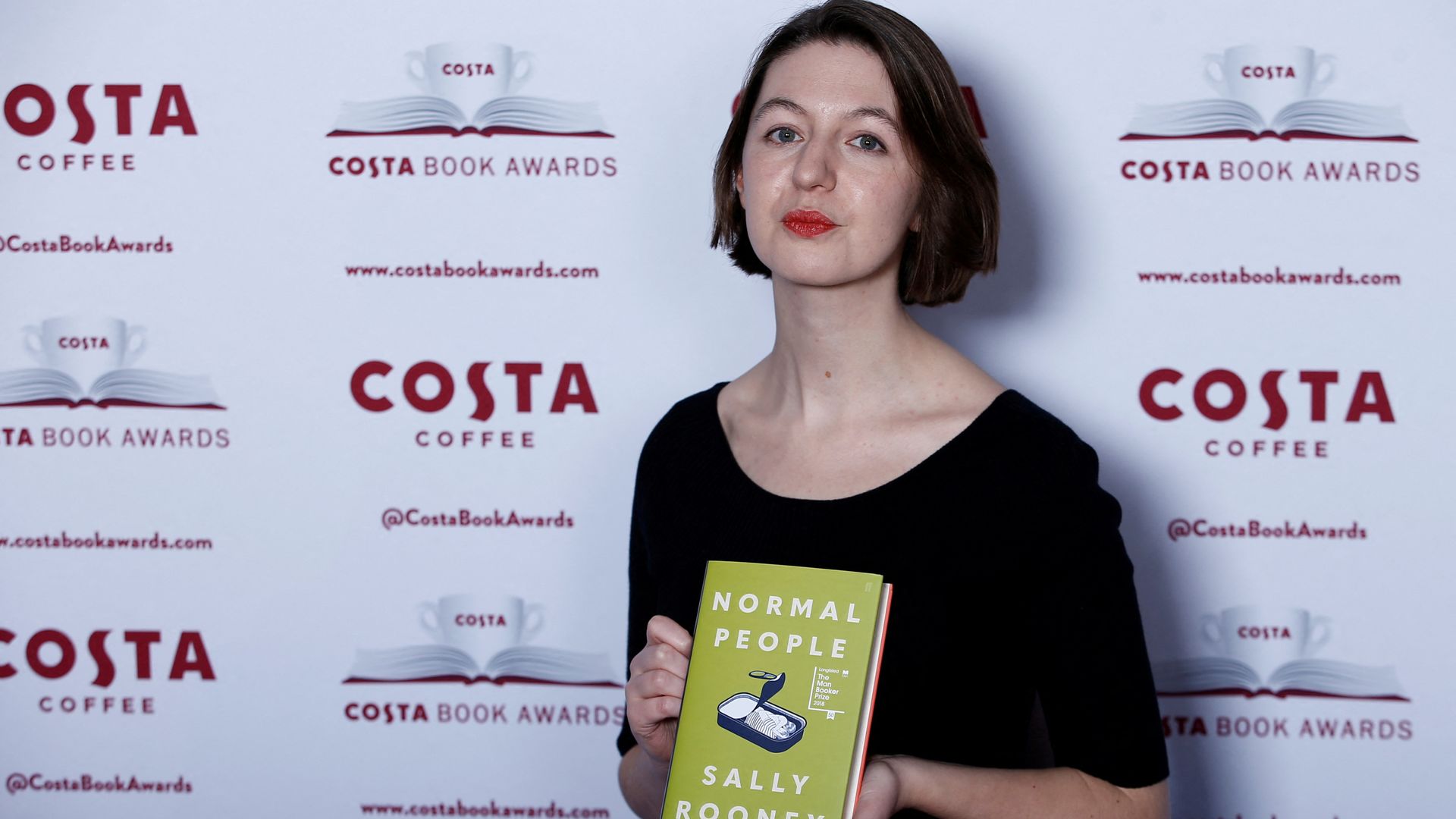
Sally Rooney books are being withdrawn from sale across the United Kingdom after her public pledge to direct proceeds from her work toward Palestine Action collided with British anti-terrorism law following a Court of Appeal ruling that upheld the group's proscription. The move, announced in October 2026 in coordination with her publisher Faber, does not stem from a formal government book ban printed on a decree. Instead, it exposes a far messier mechanism: commercial risk, royalty mechanics, and compliance anxiety turning publishing houses into unwilling enforcers of national security statutes.
Having covered publishing contracts, intellectual property rights, and media liability for decades, I have watched plenty of authors clash with censors, boards, and regulators. Usually, the friction happens at the point of expression—a line deemed defamatory, a chapter flagged as obscene, or a cover image that triggers a distributor boycott. Here, the text of Normal People, Conversations with Friends, or Intermezzo is not the target. The flashpoint is the money trail attached to an author who made her financial intentions unmistakable in print.
How Royalty Mechanics Turned Into a Legal Minefield
Most readers assume pulling a book from shelves requires a minister or magistrate to issue an order. In modern media, it rarely works that cleanly.
When an author signs a standard publishing agreement, the relationship is built on clear deliverables and predictable cash flows. The publisher manufactures, markets, and distributes physical and digital editions; the author grants rights and receives royalties calculated against net receipts or list price. Under ordinary commercial conditions, what an author does with royalty checks after they clear is an issue between the author, their accountant, and tax authorities.
Publicly tying future book proceeds to a proscribed organization alters that calculus overnight. In an August 2025 piece for The Irish Times, Rooney stated her intention to use the proceeds of her work, alongside her public platform, to support Palestine Action and direct action in whatever way she could. Once the British government proscribed Palestine Action under the Terrorism Act 2000—a designation that took effect in July 2025—routine commercial transactions around the author's catalog suddenly carried severe statutory exposure.
Under the Terrorism Act 2000 framework, financial dealings connected to proscribed groups or actions taken for their benefit expose individuals and institutions to severe criminal liability.
Faber stated that current UK legislation created circumstances in which it could not pass on UK earnings to Rooney for her work, leading to the decision to halt supplying her titles within the UK market after consultation with the author. Notice the precision of that phrasing. A mid-sized or independent publisher does not want to test the outer boundaries of counter-terrorism financing rules in court while trying to keep payroll, warehouses, and retail accounts running smoothly.
If a compliance officer or general counsel looks at a revenue stream earmarked in public commentary for a proscribed group, the safest corporate posture—right or wrong—is often to sever the commercial link in that jurisdiction. That does not mean the UK government walked into bookshops and confiscated paperback racks. It means the supply chain choked on legal risk.
The Courtroom Whiplash Behind the Proscription
To understand why this clash erupted with such force in autumn 2026, you have to look at the legal ping-pong that preceded it.
After the UK government proscribed Palestine Action in mid-2025 following direct-action campaigns targeting defense-linked facilities and military hardware, co-founder Huda Ammori challenged the ban's lawfulness. In February 2026, the High Court ruled the proscription unlawful and ordered it quashed, concluding that while some actions fell within statutory definitions, the decision was disproportionate given existing criminal offenses and the government's application of its own policy.
Four months later, in June 2026, the Court of Appeal reversed that ruling and upheld the proscription. The appellate judges emphasized that national security and public protection involve executive discretion where courts must not substitute their own view for the Home Secretary's, pointing to covert organization and serious property damage as distinguishing features from conventional protest. By November 2026, the dispute had climbed to the UK Supreme Court on human rights grounds tied to expression and association.
For writers, editors, and booksellers, that rolling legal battle creates a dizzying environment. One month a challenge gains traction; the next, appellate authority reinforces the ban and arrest statistics around proscription offenses dominate headlines. Legal counsel advising cultural institutions cannot operate on hopeful predictions about what the Supreme Court might decide months down the road. They have to advise on the law as it stands today.
Civil Liberties Critics Versus Security Enforcement
Any honest assessment of Sally Rooney books being pulled from UK sale has to grapple with two competing arguments that talk past each other almost every time they meet.
On one side sit free-expression advocates, writers' unions, and civil liberties groups. They argue that stretching counter-terrorism statutes to cover protest movements—especially groups whose tactics center on sabotage or property damage rather than mass-casualty attacks—chills political speech, dissent, and artistic freedom. When an acclaimed novelist loses access to one of the world's major English-language book markets and cancels UK travel over fear of arrest, critics see a stark warning sign about how broad anti-terror powers have become.
On the other side sit defenders of the proscription and counter-terrorism enforcement. Their argument is straightforward: once an organization is legally proscribed as a terrorist group in the UK, funding it or facilitating money intended for it crosses from political opinion into unlawful material support. From that vantage point, the issue is not that Rooney holds controversial political views or writes about systemic inequality. The issue is that she publicly vowed to channel financial proceeds toward a proscribed entity, leaving a UK publisher unable to lawfully remit royalties tied to British sales.
Both sides contain real weight, and neither resolves the friction cleanly. If you treat every disruptive direct-action campaign as terrorism, you risk eroding the boundary between aggressive protest and political violence. Yet if a state proscribes a group under active statute, expecting commercial corporations to ignore explicit public pledges about funding that group is naive. In practice, corporate compliance fills the gap left by ideological gridlock.
What Happens on the Shop Floor and in Rights Deals
Walking past a bookshop window tells you quickly how porous—and uneven—a commercial withdrawal actually is.
When Faber stops supplying UK retailers with Rooney's titles, new stock allocations from the publisher dry up. Independent booksellers may still hold existing inventory on their shelves or look at parallel import routes where territorial rights permit, while readers in neighboring markets or online spaces encounter a patchwork of availability. That is very different from a classic state bonfire or customs seizure, yet the practical effect for a British reader walking into a local shop looking for a newly released paperback can feel remarkably similar.
Territorial rights are the invisible architecture holding international publishing together. A single global novel is routinely sliced into separate territorial licenses—UK and Commonwealth, North America, Ireland, translation territories—each governed by specific royalty accounting and distribution rules. When one territory becomes legally radioactive for royalty payouts, untangling that territory from global supply chains is expensive and messy.
To see how a contract clause collides with compliance reality, consider a hypothetical example. Suppose an Irish author holds a contract paying 15% net royalties on UK print sales, and the author announces publicly that 100% of UK royalties will go to a group proscribed in Britain. Even if the publisher never writes a check directly to the group, legal advisors may warn that paying the author under circumstances linked to a proscribed organization creates unacceptable criminal or regulatory risk. Rather than litigate gray areas over royalty accounting, the publisher halts UK supply. That is a hypothetical illustration of the compliance squeeze, not a claim about confidential contract terms—and it explains why commercial caution often acts faster than government censors.
Why Cultural Gatekeepers Are Getting Squeezed
Publishing has always sat at the intersection of art and commerce, which is precisely why political shocks hit it so hard.
A novelist is not a government official, and a publisher is not a prosecutor. Yet when political activism intersects with national security law, private businesses end up making de facto decisions about what reaches the public. A bookseller might sympathize with an author or bristle at the legislation; a publisher might value an author's literary stature while refusing to gamble corporate standing on a legal edge case.
There is no painless fix sitting on anyone's desk. Narrowing anti-terrorism definitions invites pushback from security agencies warning against covert networks and escalatory sabotage. Keeping broad proscription rules in place invites prolonged court battles, thousands of contested arrests, and awkward collisions across culture, media, and finance.
Watch how international rights agreements and compliance audits are drafted over the next few years—because the real legacy of this standoff may not be a single Supreme Court verdict, but permanent caution written into the fine print of global publishing.
Sally Rooney books pulled from UK over Palestine Action support
This short video highlights the core conflict behind the withdrawal, showing how anti-terrorism royalty restrictions and the Court of Appeal ruling intersected with Rooney's public support for Palestine Action.