The sea does not care about rhetoric. It is a vast, rhythmic machine of physics and chemistry that stays indifferent to the men who claim to own it. But for a merchant sailor standing on the bridge of a VLCC—a Very Large Crude Carrier—the water in the Strait of Hormuz has started to feel heavy. It is the weight of what lies beneath the surface.
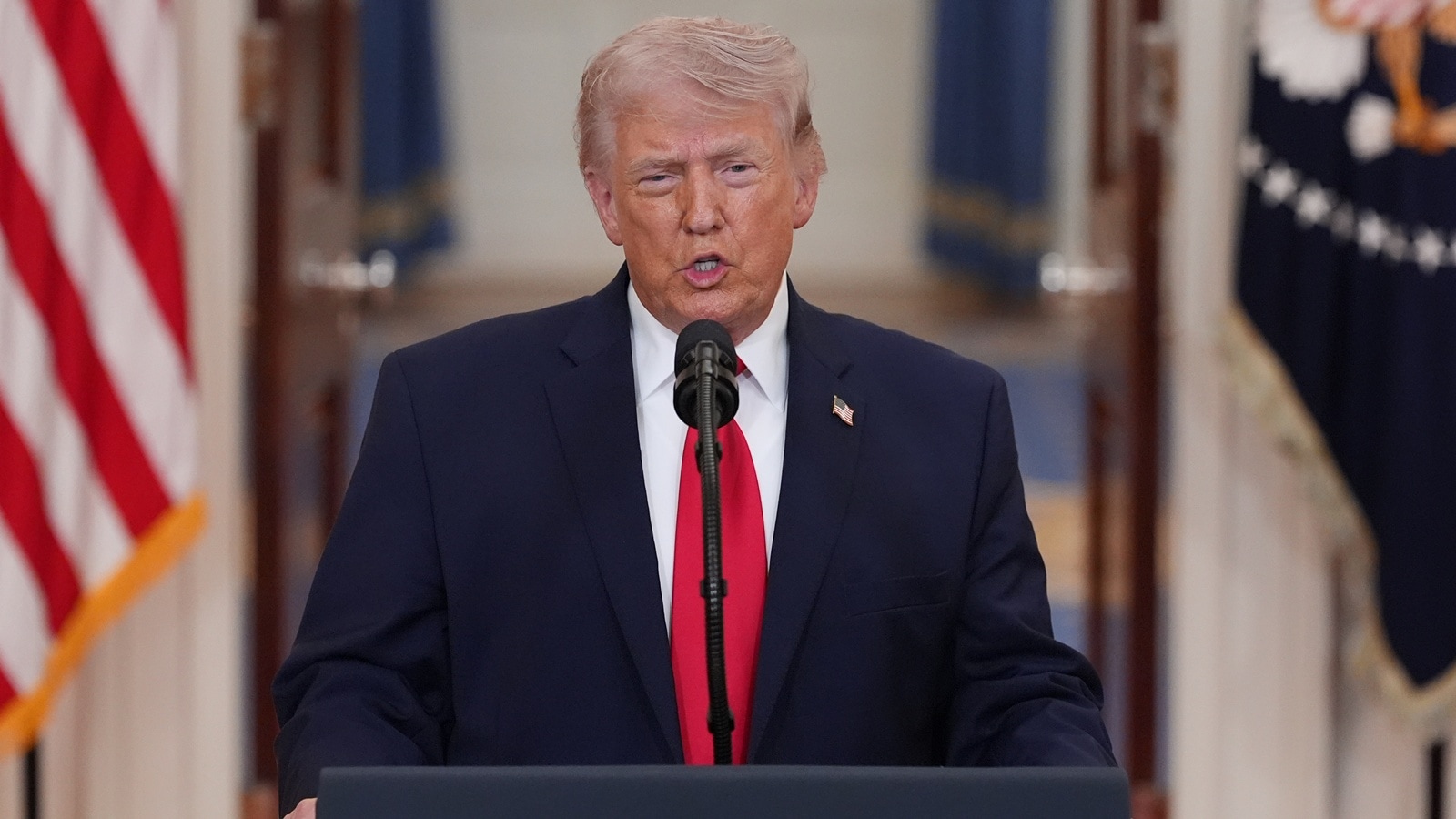
In the mahogany-paneled rooms of Islamabad, the air is thick with the scent of high-stakes diplomacy. Donald Trump speaks with a cadence that suggests a board meeting where the assets of an adversary have already been liquidated. He talks about the Iranian Navy as a ghost, a memory of a force that no longer possesses the capacity to project power. He speaks of an Air Force that has been grounded by the sheer gravity of American dominance. The message is clear: the board has been cleared.
But the board is made of water. And the water is full of mines.
The Iron Barnacles
Imagine a young deckhand named Elias. He isn't a politician. He doesn't care about the intricacies of the talks in Pakistan. He cares about the hull of his ship. To Elias, a mine is not a "geopolitical lever." It is a sphere of rust and high explosives that can turn a quarter-mile-long vessel into a funeral pyre in less than thirty seconds.
The U.S. has begun the painstaking process of clearing these "iron barnacles" from the world's most sensitive carotid artery. This is not a task for the loud or the impatient. It is the work of shadows and sonar. To understand why this matters, you have to understand the geography of a choke point. The Strait of Hormuz is barely twenty-one miles wide at its narrowest. It carries roughly a third of the world's sea-borne oil. If the Strait stops, the world slows. The lights in a small apartment in Tokyo flicker. The price of bread in a Cairo market climbs. The commute in a suburb of Ohio becomes a calculation of survival.
Trump’s claim that the Iranian Navy and Air Force are "gone" is a statement of tactical erasure. From a bird’s eye view, the carrier strike groups and the silent, nuclear-powered predators beneath the waves have created a perimeter that looks invincible. Yet, the mine is the weapon of the desperate. It is cheap. It is patient. It does not need a pilot or a captain to be lethal. It only needs to wait for a hull to pass.
The Invisible War Beneath the Blue
The clearing process is a symphony of high-tech caution. It involves the MH-53E Sea Dragon helicopters, massive machines that drag sleds through the water to trigger magnetic or acoustic sensors. It involves autonomous underwater vehicles (AUVs) that scan the seabed with the precision of a jeweler looking for a flaw in a diamond.
Consider the tension on the deck of a minesweeper. The crew knows that their job is to find the things designed to destroy them. There is a specific kind of silence that falls over a ship when it enters a suspected minefield. You begin to hear things you never noticed before. The hum of the refrigerator. The slap of a wave against the steel. The heartbeat in your own ears. Every vibration feels like a precursor to an ending.
The U.S. move to clear these waters while simultaneously engaging in talks in Islamabad is a classic exercise in "big stick" diplomacy. You offer a hand to negotiate, but you keep the other hand busy dismantling your opponent's last remaining defenses. By neutralizing the mines, the U.S. isn't just protecting trade; it is stripping away the final layer of Iran's asymmetric threat.
But the human cost of this tension is rarely discussed in the briefings. We see the maps with red and blue arrows. We hear the soundbites about "clearing the lanes." We don't see the captain of a chemical tanker who hasn't slept in forty-eight hours because he’s staring at the radar, praying that the small blip is a buoy and not a drifting explosive. We don't hear the families of the sailors who watch the news with a knot in their stomachs, wondering if their loved one is currently sailing over a piece of Cold War-era ordnance.
The Ghost of the Tanker War
This isn't the first time the Strait has been turned into a graveyard. In the 1980s, during the "Tanker War," hundreds of ships were attacked. The scars of that era still dictate the psychology of the region. When Trump says the Iranian Navy is gone, he is attempting to close a chapter of history that has haunted global energy markets for forty years.
The logistics of "clearing off" mines are staggering. It is not like sweeping a floor. It is like searching for a specific grain of sand in a desert while someone is occasionally throwing rocks at your head. The currents in the Strait are notoriously fickle. They shift the silt. They move the mines. A patch of water that was clear yesterday might be deadly today.
The U.S. Navy’s presence is a wall of steel, but the mines are a psychological fog. Even if 99% of them are removed, that remaining 1% dictates the insurance premiums of every ship in the water. It dictates the confidence of the global market.
The Quiet After the Storm
In Islamabad, the talk is of peace, or at least a cessation of the loudest forms of war. The diplomats trade pleasantries and tea, discussing the future of a region that has known little but friction. They speak in the abstract about "security frameworks" and "regional stability."
Meanwhile, out in the salt air, a diver slips into the water. The light from the surface fades into a murky green. The pressure builds against his chest. He is looking for a shape. He is looking for a tethered shadow.
When he finds it, he doesn't think about the President's speech. He doesn't think about the geopolitical shift in Islamabad. He thinks about the wrench in his hand. He thinks about the steady rhythm of his own breathing. He thinks about the fact that if he does his job correctly, a ship he will never see, filled with people he will never meet, will pass through this stretch of water tomorrow without ever knowing how close they came to the end.
The Navy might be gone. The Air Force might be a memory. But as long as one iron sphere remains anchored in the dark, the war is not over. It is just waiting.
The sun sets over the Persian Gulf, turning the water into a sheet of hammered gold. On the horizon, the silhouettes of the great tankers move in a slow, solemn procession. They look like giants, untouchable and grand. But they move with a new, tentative grace, guided by the invisible path cleared by men who work in the silence of the deep. The rhetoric of the powerful often forgets the fragility of the machine. It forgets that a single spark in a narrow hall can change the world.
The Strait is open, for now. The mines are being lifted, one by one, like teeth being pulled from a mouth that was once ready to bite.